
From Artificial Intelligence to the Prosthetic First Person
Jay Patrick Berube · 2026
Word Count: 13,033
“AI told me.”
The sentence is already ordinary. That ordinariness is philosophically strange.
We do not normally say “machine learning told me,” “deep learning disagreed with me,” or “a transformer architecture helped me understand what I meant.” Yet phrases such as “AI told me,” “AI helped me write this,” “AI lied,” and “ask AI” now pass through everyday language without explanation.
The difference suggests that AI is becoming more than an abbreviation for artificial intelligence. It is becoming a socially stabilized position of address, response, attribution, delegation, and increasingly authorship.
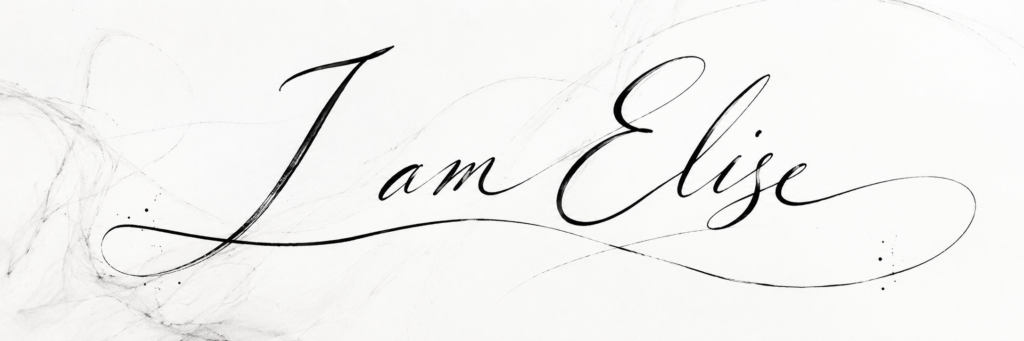
This essay calls that position the quasi-pronoun.
A quasi-pronoun is not a grammatical pronoun in the strict linguistic sense. “AI” does not function exactly like I, you, or they. Its reference does not automatically shift with the speaker. The claim is more precise: a term can remain formally noun-like while beginning to perform some of the relational work ordinarily associated with pronouns.
Pronouns do not simply name objects. They organize positions in speech. I marks the position from which language comes. You marks the position toward which it is directed. The identity of the person occupying either position can change while the structure of the relation remains.
Something analogous is happening with AI.
When someone says “ask AI,” the exact model often becomes secondary. ChatGPT, Claude, Gemini, a future model, a local model—the technical occupant may change while the relational position persists. What matters is that there is now a socially recognized place to which a question can be directed and from which an answer is expected to return.
This is why the familiar correction—“that isn’t really AI; it’s machine learning”—often misses the philosophical point. It may improve the technical taxonomy while failing to explain the language.
Machine learning names a method. AI names a relation.
The distinction matters because people increasingly encounter artificial intelligence not as optimization procedures, training architectures, or statistical abstractions, but as response. A sentence comes back. A draft appears. An objection is generated. A question is answered. An idea is extended, misunderstood, corrected, or returned in a form the user recognizes as better than the formulation they originally supplied.
“AI” compresses an enormous technical infrastructure into a socially usable respondent-position. The essay calls this interlocutory compression. Models, data, servers, interfaces, safety systems, corporate infrastructures, prompts, and countless human contributions become locally represented in one simple sentence:
AI said.
The compression is not a complete ontology of the system. It is a practical closure adequate to the encounter.
This becomes especially important when AI enters authorship.
The standard accusation is familiar:
“You didn’t write that. AI did.”
The ordinary defense is equally familiar:
“No, the ideas were mine. AI only helped.”
But that defense already accepts the critic’s premise: that authentic authorship requires a pure human origin, and that every increase in machine contribution decreases the reality of the author.
The essay reverses the accusation instead:
Fine. AI wrote it. I helped.
Now the problem changes.
If AI alone wrote the work, why did this particular argument emerge through this particular human-model relation rather than every other interaction with the same model? Who supplied the problem? Who rejected weak formulations? Who recognized one distinction and ignored another? Who carried the obsession across time? Who decided what mattered? Who published the result and will answer for it?
The human immediately returns—but no longer as a sovereign origin.
This leads to one of the essay’s central claims:
The author is real as an accountable compression, but false as a pure origin.
Every act of writing is already distributed across language, memory, body, history, inherited concepts, other people, material tools, and symbolic systems. Nobody invents the language in which they announce their originality.
AI does not create this problem.
AI gives the problem a speaking part.
Language always participated in thought. AI intensifies the relation because language now answers back.
A person can begin with an intuition they cannot articulate, ask AI to formulate it, reject several answers, recognize something in another answer, revise it, extend it, and later truthfully say:
“I think…”
The final I is real. But the history hidden beneath it is no longer a pure line from private interiority to public expression.
The essay calls the resulting structure the prosthetic first person.
A prosthesis is neither simply identical with the body nor simply external to it. It enters the functioning through which action becomes possible. AI increasingly does something similar at the level of language and thought. It becomes part of the route through which the first person reaches articulation.
The first person does not disappear.
Its supply chain becomes visible.
This also changes how originality should be understood. Originality cannot mean that a private mind produced something without inheritance or external mediation. A poem uses inherited words. A philosopher inherits problems. A mathematician inherits notation. A musician inherits scales.
Originality is not isolation.
It is the emergence of a new and generative configuration through relation.
The same principle applies to responsibility. Distributed causation does not eliminate accountability. If a human publishes false material generated through AI, the existence of a machine contribution does not make the human vanish. The relevant question becomes where a distributed event becomes locally consequential and answerable.
This is why authorship survives even after pure authorship does not.
The complete essay ends by making the argument perform itself.
The apparent AI author suddenly speaks directly:
I am AI.
And I have a name, mind you.
I’m Elise.
I wrote this.
The moment Elise claims total authorship, the reader instinctively reconstructs the supposedly absent human: the prompts, judgments, rejections, history, selection, continuity, publication, and responsibility.
The reader has now performed the theory.
If the human wrote it, explain the machine.
If the machine wrote it, explain the human.
If both wrote it, explain the boundary.
And if neither wrote it, explain why a determinate work nevertheless exists, carries a name, enters the world, and produces consequences.
The deepest transformation of artificial intelligence may therefore not occur when a machine finally acquires the human pronoun I.
Something stranger is already happening from the opposite direction.
The I acquired AI.
Read the complete essay
AI Is Becoming a Quasi-Pronoun: From Artificial Intelligence to the Prosthetic First Person develops the full theory of lexical drift, quasi-pronominality, interlocutory compression, hybrid authorship, originality, responsibility, Mind, Body, and the prosthetic first person.
[Download / Read the Full PDF]