Word count: 5,218
Abstract
This essay advances a speculative ontology grounded not in substance alone, nor in relation alone, but in a threefold structure: mirror, rupture, and bridge. The mirror names the condition under which a thing can appear again, can be repeated, recognized, communicated, translated, or held in intelligible relation to itself and to another. The rupture names that which resists this return: the blind spot, the asymmetry, the gap, the tear in formal recurrence, the non-mirrorable remainder that cannot be cleanly brought back into symmetry. The bridge names the middle region in which mirror and rupture do not cancel one another, but enter into tension, transmission, mediation, and life: language, desire, poetry, symbol, relation, memory, art, thought.
The central claim is that reality is not structured merely by opposites, but by the limit of opposition itself. The true opposite of a mirror is not an anti-mirror, not a reversed mirror, not a negative image, not inversion in any simple dialectical sense. All of these remain legible within the logic of reflection. The true opposite of the mirror is the non-mirrorable: that which cannot be returned, cannot be paired without remainder, cannot be repeated without loss, cannot be absorbed into the closed order of symmetry. The non-mirrorable is not a secondary accident within the system. It is the very condition that prevents the system from collapsing into sterile completeness.
From this follows a recursive ontology in which every successful symmetry creates a higher-order asymmetry, every act of representation clarifies by omitting, every form stabilizes by excluding, and every completed image hides the remainder that made its completion possible. Incompletion is therefore not a defect in being. It is the condition of event, novelty, perception, communication, and transformation. “God” appears here not as a being among beings, but as the name for perfect mirrorability, perfect communicability, pure form without remainder. The self appears not as a self-identical object, but as rupture within reflection: the site at which form fails to close upon itself. Language appears as bridge: the attempt to carry form across a gap that cannot be abolished. Poetry appears not as ornament, but as the mode most adequate to this condition, because it does not deny the gap but traces its contour.
Under this framework, ordinary objects and situations become philosophically decisive: a map, a graph, a theorem, a photograph, a memory, a text message, a category, a law, a face, a black hole, a broken sentence, a silence between speakers. Each reveals that the whole is never seamless. A complete system would be dead because it would have nowhere to go and no remainder through which movement could arise. A living system must exceed its own frame. It must leave its own graph. Reality is therefore neither pure symmetry nor pure chaos, but a recursive order wounded from within, and productive because of that wound. This is not a metaphysics of fragmentation. It is an ontology of incomplete return.
Introduction: The First Distinction
Most metaphysics begins by asking what is. This inquiry begins by asking what returns.
That shift is not stylistic. It is foundational. To ask what is, is to begin from presence, from being as object, from the thing in its asserted existence. To ask what returns is to begin from repeatability, legibility, recurrence, pattern, transmissibility, and relation. It is to ask under what condition something can appear not once but again, and can do so in such a way that its second appearance is not pure replacement but intelligible recurrence. The metaphysical question then ceases to concern being in isolation and instead concerns the formal condition under which being can endure difference without dissolving into it.
A mirror, in this sense, is not first an object hanging on a wall. It is a condition of appearance. It is the possibility that something can appear twice without ceasing to be itself. A mirror is recurrence. A mirror is legibility. A mirror is the structural condition through which something can be repeated, recognized, paired, translated, communicated, or stabilized across more than one instance. To say that reality is mirror-structured is to say that being tends, at least partially, toward repeatability. Reality does not merely happen; it returns in forms.
This is visible at every level. Binary code presupposes repeatable states. Language presupposes repeatable signs. Perception presupposes repeatable features. Mathematics presupposes repeatable relations. Social life presupposes repeatable roles. Memory presupposes repeatable traces. Science presupposes repeatable patterns. To recognize a face after many years is to participate in mirrorability. To identify a melody played in a different key is to participate in mirrorability. To understand a word spoken by another mouth at another time is to participate in mirrorability. The world presents itself through oppositions, reversals, correspondences, pairings, echoes, recurrences, symmetries: on and off, positive and negative, self and other, before and after, signal and noise, inside and outside. Mirrorability is not a decorative metaphor imposed upon reality after the fact. It is one of the base grammars through which reality becomes intelligible at all.
Yet the force of the argument lies not in the recognition that reality contains symmetries. That much is familiar. Mathematics, logic, physics, language, and ordinary thought already proceed by assuming that something can be repeated without absolute loss. The stronger claim begins one step later: the true opposite of a mirror is not another mirror. Not inversion, not negation, not reversal, not a reflected contrary. All of those remain mirrorable. They belong to the same formal economy. They can be graphed, opposed, paired, and conceptually returned. The real opposite is more radical. It is that which cannot be mirrored at all.
This distinction alters the entire structure of ontology. Once the opposite of the mirror is understood as the non-mirrorable, the field is no longer reducible to dualism. One no longer has two stable poles in tension. One has a structure and the limit of that structure. One has form and that which form cannot fully contain. The rupture is not another item inside the order of reflection. It is what interrupts that order from within. It is what prevents the mirror from becoming total. It is what stops reality from collapsing into pure self-coincidence. It is the crack through which novelty enters the world.
Ordinary speech offers a simple example. The word “tree” works because it mirrors something. It is repeatable. It can move between speakers. It can summon a general form. Yet if one attempts to communicate the exact felt content of sitting beneath a particular tree on a particular afternoon years ago—the smell of dust, the weight of the light, the pressure of grief or calm or childhood—language begins to fail. The word returns enough to function, but not enough to complete. Something remains unmirrored. That remainder is not accidental. It is structural.
Emotion offers the same lesson. “I am sad” is intelligible, transferable, coherent. It mirrors a state. But anyone who has undergone devastation knows that the sentence is thinner than the experience. It is not false. It is insufficient. It is a successful mirror and a failed mirror at once. The sentence clarifies, but it also leaves behind. Once again, the remainder is not a mistake in language. It is a clue to ontology.
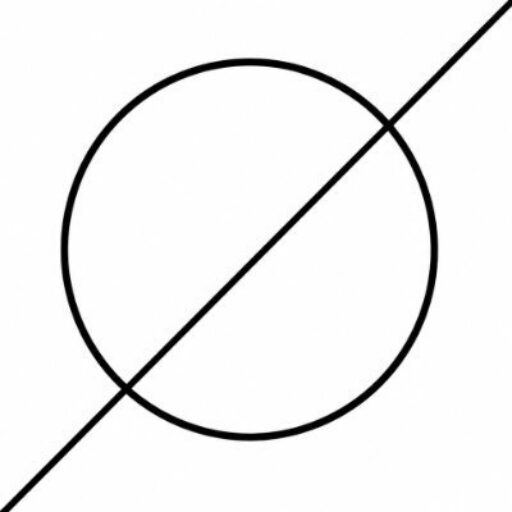
From here a different image of reality emerges. Reality is not best conceived as a flawless circle of reflection, perfectly closed and internally complete. It is better conceived as a circle with a missing section; as a tiling that holds locally but cannot repeat globally; as a graph that must exceed its frame to continue; as a map that becomes usable only by leaving most of the territory out; as a system that becomes meaningful only because it cannot fully close on itself. The rupture is not an external flaw in reality. It is the internal condition that keeps reality from collapsing into dead perfection.
Mirror as Ontological Form
The mirror names whatever allows a thing to survive repetition.
A face recognized after many years is mirrorable.
A theorem proved in different contexts is mirrorable.
A melody played in another key and still recognized is mirrorable.
A binary state switching between 1 and 0 is mirrorable.
A role repeated across generations is mirrorable.
A word understood by more than one speaker is mirrorable.
A ritual enacted across centuries is mirrorable.
A geometric proof reconstituted through new notation is mirrorable.
A law preserved across changing cases is mirrorable.
What unites these cases is not superficial resemblance but formal persistence. Something survives variation. Something passes through difference without losing all identity. This persistence is not trivial. It is the precondition of order itself. Without mirrorability, there is no identity across time, no communication across minds, no law across cases, no category across instances, no continuity of meaning, no intelligibility of sequence. There would only be the unrepeatable eruption of isolated moments. The mirror is therefore not one object among others. It is the condition under which objects become stable enough to appear as objects at all.
This allows a more rigorous interpretation of the phrase that equates God with mirror. Read naively, such a phrase risks collapsing into metaphor or theology in its least disciplined form. Read formally, it becomes sharper. “God” can be understood as the name for pure mirrorability: that through which being would be perfectly communicable to itself, perfectly legible, perfectly repeatable without distortion, perfectly present in every act of return. In this sense, God is not simply another being. God is the limit concept of form itself. God is the horizon of total intelligibility, the ideal of a symmetry so complete that no remainder would remain outside it.
This interpretation is not foreign to classical metaphysical and theological language. Whenever divinity is named as logos, order, truth, intelligibility, or pure act, thought is already moving in this direction. A word functions because some structure in it survives passage from one mind to another. Meaning persists despite alteration of voice, accent, time, and situation. Language itself therefore presupposes a minimal mirror. God, understood ontologically, names the maximal case of that condition.
And yet, precisely here, a decisive problem appears. A perfect mirror would abolish the conditions that make life possible. If everything were perfectly self-identical and perfectly transferable, nothing would require mediation. Nothing would need interpretation. Nothing would need relation. Nothing would need language. Literature would end because every sentence would fully capture what it meant. Love would end because no opacity would remain between persons. History would end because nothing new could emerge from closed completeness. A perfect mirror would abolish event.
Thus every actual mirror must already contain limitation. It cannot be total. A photograph mirrors a face, but if it captured literally every possible truth of the person, it would cease to be a photograph and become indistinguishable from the person. A map mirrors a territory, but a map the size of the territory, containing every blade of grass and every shifting shadow, would be useless as a map. The very function of representation requires selection, reduction, boundary, omission. Form is not fullness. Form is bounded recurrence.
Every mirror, then, already implies rupture. Not as an accident added later, but as a limit built into its very possibility. The mirror gives form by drawing a line. It allows something to appear again by permitting something else not to return. It includes by excluding. It clarifies by omitting. It reveals by not showing everything. The boundary is not external to the mirror. The boundary is the mirror’s condition.
Rupture as Non-Mirrorable Remainder
If mirror names repeatable form, rupture names what resists return.
Rupture is not simple negation. Negation is still cleanly mirrorable. Yes and no belong to one system. Presence and absence belong to one system. Positive and negative belong to one system. Thesis and antithesis remain legible within one formal field. Rupture is more radical. It names the point at which the field itself fails to contain what has appeared within it. It marks the limit at which opposition no longer suffices, because what is at stake cannot be cleanly returned as counter-form.
The rupture appears everywhere once attention learns to see it.
A subject declares certainty about identity, then behaves in a manner that shatters that certainty.
A scientific model predicts beautifully until an anomaly appears that the model cannot absorb.
A lover speaks for hours and still hears, from the other side, “that is not what I meant.”
A child recognizes an image in the mirror and yet does not coincide with the stable self it sees there.
A grieving person discovers that all available words sound too small, too neat, too hygienic for loss.
A function behaves smoothly over an interval and then diverges at the limit.
A political concept unifies a group while rendering certain lives illegible.
A legal category names a case while excluding the singularity that matters most.
A memory returns with clarity and distortion at once.
These are not separate failures. They are manifestations of one structure in different costumes. The rupture is the point at which mirrorability shows its limit.
This must be stated carefully. Rupture is not merely what the mirror lacks. It is what allows the mirror to matter. Without rupture, no standpoint would exist from which perception could occur. A perfectly self-coincident world would have no distance within it. There would be nothing to see because seer and seen would collapse into indistinction. Without rupture, nothing would need to be said because nothing would remain unsaid. Without rupture, desire would vanish because desire requires non-coincidence. Without rupture, thought would become impossible because thought begins where what is known does not exhaust what is.
Rupture is therefore not only lack. It is generative lack. Not a sterile hole, but the kind of gap that creates movement. It is the productive failure of closure.
This is why closed systems tend toward sterility. A system that perfectly mirrored itself at every level would have no remainder, and therefore no future. It could only repeat what it already was. A living system, by contrast, contains a gap between what it is and what it can become. It contains something unresolved. It contains latency, tension, pressure, incompletion. That gap is rupture.
Even the smallest everyday instances testify to this. A text message says, “I’m fine.” The words mirror a possible state. Yet tone, timing, history, silence, and prior injury can make the message say the opposite. The mirrored content and the real content fail to coincide. Communication occurs precisely in that failure. Most human life takes place there: not in pure expression and not in pure silence, but in the unstable space where what appears and what is intended do not perfectly align. Rupture is not outside life. It is one of its deepest conditions.
The Third Term: Bridge, Mediation, Between
Mirror and rupture alone do not yet constitute a world. A form and its limit, taken in isolation, remain abstract. If there is symmetry and there is that which escapes symmetry, but nothing that allows their relation, then both remain inert principles. The mirror becomes a closed order without consequence; the rupture becomes an inaccessible exterior without force. A third term is necessary.
This term is the bridge.
The bridge is neither mirror nor rupture. It belongs to neither pure symmetry nor pure asymmetry. Rather, it is the medium through which imperfect symmetry persists under the condition of irreducible asymmetry. It enables transmission without total identity, relation without resolution, continuity without closure, communication without full equivalence. It is the condition under which partial return becomes meaningful.
Language is the most immediate instance. Yet language is only one species of the bridge. Desire is also a bridge. Art is a bridge. Interpretation is a bridge. Memory is a bridge. Ritual is a bridge. The body is a bridge. Every mediating structure that carries something across a gap without abolishing the gap participates in this third term.
The body itself may be understood in this way. It translates interior states into gesture, face, posture, movement, and sound. It makes the inward legible without ever exhausting what it expresses. A trembling hand, a pause before speech, a gaze held too long, a throat that tightens before a sentence—all are bridges between interiority and public form. They do not fully mirror interiority, but they do not leave it wholly silent either.
Communication reveals the bridge most clearly. If mirror were absolute, every utterance would coincide perfectly with its intended meaning, and reception would be indistinguishable from origin. Under such conditions, communication would become unnecessary because nothing would fail to transfer. If rupture were absolute, no sign would remain coherent across transmission, and shared meaning would be impossible.
Actual communication takes place between these impossible extremes. Every act of speech transmits and loses at once. Something arrives; something does not. Yet meaning is not destroyed by this partial failure. It is constituted through it. The shared space of understanding is not the elimination of difference, but its negotiated traversal.
Misunderstanding is therefore not external to communication. It is one of its conditions. It generates clarification, revision, elaboration, apology, interpretation. It extends the bridge by revealing its insufficiency. Rupture does not simply interrupt the bridge; it activates it.
Poetry provides the privileged example because poetry does not pretend that language can close the distance it crosses. Ordinary propositional language often behaves as though direct adequation were possible: as though statement and experience could coincide through correct wording. Poetic language knows otherwise. It proceeds under the recognition that certain contents cannot be mirrored without distortion. Instead of direct equivalence, it builds relational forms around what resists capture. It does not abolish absence. It gives absence contour.
The difference between thin statement and poetic adequacy is not a difference between falsehood and truth, but between two different relations to the gap. “I miss you” is intelligible and mirrorable, but often thin relative to the experience it attempts to name. “The room still leans toward the door you used to open” does not directly define absence, but it allows absence to become perceptible in a richer way. It does not reproduce the feeling. It structures the field in which the feeling can appear indirectly.
Music radicalizes this further. It communicates intensity, temporality, tension, and release without stable conceptual equivalence. It transmits not through denotation but through patterned movement across feeling and expectation. It is neither pure mirror nor pure rupture, but mediation in its most distilled form. The bridge, therefore, is not secondary. It is the condition of lived relation itself.
God, Self, and Language
The triadic compression—God as mirror, self as rupture, language as bridge—can now be stated with greater rigor.
God designates the limit of perfect mirrorability. This does not mean a being among beings, nor an object inserted into the world as its supreme item. It means the structural horizon of total intelligibility: pure form, pure logos, pure communicability, complete return without remainder. In theological vocabulary, this is what is often imagined when truth and being are said to coincide absolutely.
The self, by contrast, marks the site at which mirrorability fails to close. The self cannot be fully mirrored, either to itself or to others. Every self-description leaves remainder. Every identity produces exceptions. Every autobiography omits what later returns as contradiction, transformation, or surprise. The self is not merely something that has a rupture. The self is constituted through rupture. Its apparent unity is always purchased through acts of mirroring that cannot exhaust what they organize.
This explains the dual character of subjectivity. There is enough continuity to sustain the claim of sameness over time, yet enough rupture to prevent that sameness from becoming absolute. The self is therefore neither a pure substance nor a pure void. It is a dynamic misalignment, an ongoing negotiation between form and what exceeds form.
Self-knowledge reveals rather than heals this structure. Increasing precision does not eliminate rupture. It often sharpens it. The more refined the mirror becomes, the more visible its limits become. One learns not that the self is transparent, but that the self is constituted through partial opacity.
Language emerges as the medium through which this condition is traversed. It does not resolve the distance between perfect form and finite non-coincidence. It makes that distance inhabitable. Religion seeks to articulate what exceeds articulation. Philosophy attempts to formalize what resists formalization. Therapy translates pain into discourse without ever reducing pain to discourse. Love speaks not because the other is transparent, but because the other is not. Language remains meaningful precisely because completion remains impossible.
Apology offers a minimal and exact example. “I am sorry” cannot exhaust remorse. It cannot transfer total feeling. It cannot undo harm. And yet it is not therefore empty. It establishes a relation across a gap that would otherwise remain sealed. Its truth lies not in perfect adequation but in the fact that it operates under acknowledged insufficiency.
From this perspective, language may be called holy—but only if holiness is stripped of sentimental purity. Language is holy not because it is flawless, but because it sustains relation under impossibility. It is the place where broken beings continue attempting real transmission. It is where the bridge persists despite the impossibility of total crossing.
Every Mirror Creates a Symmetry and Breaks Another
One of the most powerful principles in this ontology can be stated directly: every mirror creates a symmetry and breaks another.
This is not merely a poetic sentence. It is a structural law. Any act of representation produces coherence by selecting and stabilizing certain relations while excluding others. This exclusion is not accidental. It is constitutive. Form arises through boundary, and boundary implies omission.
A category unifies instances but suppresses variation.
A law organizes behavior but fails at exceptional cases.
A portrait captures appearance but excludes duration and interiority.
A diagnosis explains a condition but reduces the singularity of the person.
A national identity gathers one population while delineating outsiders.
A relationship stabilizes roles while constraining transformation.
A self-description clarifies one line of identity while obscuring contradiction.
A scientific model renders structure visible while ignoring what it cannot parameterize.
A metric makes one feature count while rendering another invisible.
In each case, the mirror functions. It produces intelligibility. That is precisely why it is seductive. Yet its success is inseparable from its violence. The act of creating symmetry at one level produces asymmetry at another. Every successful order casts a shadow.
This principle extends everywhere. A map mirrors terrain but removes texture, smell, weather, accident, and labor. A graph mirrors relation but removes lived continuity and phenomenological density. A photograph captures an instant but kills duration. A résumé organizes achievement but abstracts from personhood. A text message transmits statement while stripping away gesture, rhythm, tone, and breath. The more efficient the mirror, the more aggressive the omission.
Thus every act of order contains hidden exclusion. This does not make order evil. It makes order costly. There is no form without reduction. There is no clarity without blindness. There is no system that does not generate, at its edge or beneath its surface, some non-mirrorable remainder.
At this point ontology becomes critique. Institutions, scientific paradigms, linguistic conventions, political systems, and moral grammars may all be read in terms of the symmetries they produce and the ruptures they necessarily generate. No system is simply adequate or inadequate. Every system clarifies and obscures simultaneously. Every mirror is real, and every mirror is partial.
The Self as Unclosed Reflection
The self provides the most immediate and intimate site at which the mirror–rupture structure becomes visible.
Recognition in the mirror presupposes continuity. The subject sees an image and says, in effect, this is myself. The identification is not trivial. There is enough persistence between lived body and reflected form for recognition to occur. Yet the reflected image is external, static, bounded, and silent. It does not coincide with the felt interiority of the subject. It does not contain thought, duration, contradiction, or inward turbulence. The self therefore appears to itself through an image that is already inadequate. Recognition is inseparable from misrecognition.
This structure extends far beyond literal reflection. Psychologically, identity is formed through images, narratives, roles, ideals, wounds, affiliations, and classifications that function as mirrors. These give coherence. They make one legible to oneself and to others. Yet lived experience continually exceeds them. One acts against one’s own declared identity. One changes. One contradicts oneself. One discovers that past certainties no longer fit. One feels alien within the very form that once provided coherence.
Identity is thus neither illusion nor essence. It is an ongoing process of stabilization and disruption. The subject oscillates between form and its fracture. The self is not a completed object but a pattern of incomplete return.
This is why desire exists. Desire does not arise accidentally in an otherwise closed subject. It arises because the subject is not closed. Desire is the motion produced by non-coincidence. A being that fully matched its own image would have no reason to seek, no lack through which movement could begin. Desire is the proof that rupture lives inside identity. It is the sign that the self is not reducible to its representations.
Memory discloses the same truth. The recollection of a younger self preserves continuity while revealing discontinuity. The remembered self is identical and different at once. Memory functions as bridge, but always imperfectly. It preserves and distorts. It returns and alters. Through memory the subject discovers that personal existence is recursive incompletion: one remains oneself only by never fully coinciding with what that self once was.
The self is therefore not an object that has experiences. It is the unstable pattern generated by an endless series of attempts at self-return that never fully succeed. It is reflection under the sign of remainder.
Black Holes, Graphs, and the Image of the Limit
Certain figures illuminate the structure of the unmirrorable with unusual force. Among them are the graph, the horizon, and the black hole.
The graph is perhaps the clearest ordinary image. A graph renders relations visible within a defined frame. It organizes behavior under specified conditions. It mirrors movement, dependency, trend, proportion, or change. Yet graphs also reveal the boundedness of representation. Certain functions diverge. Certain values become undefined. Certain relations require extending the frame or changing the coordinate system altogether. The graph is not thereby disproven. It is revealed as limited. The representation reaches the point at which it cannot fully contain what it describes.
This is the ontological significance of the intuition that a living system must “leave the graph.” The graph can model, but not totalize. It can hold structure up to its limit, but not eliminate the existence of the limit. Reality, if living, must exceed the completeness of any one frame. A closed graph would be a dead reality.
Aperiodic tiling offers an allied image. Order persists locally, yet global repetition fails. The pattern is real, but it cannot be reduced to simple recurrence. One has intelligibility without exhaustive repeatability. This is close to the deepest ambition of the ontology: to describe a world structured enough to appear, but never so closed as to be exhausted by its own form.
The black hole intensifies the image. It presents a zone in which form persists at the boundary while opacity dominates the center. The horizon marks a threshold beyond which ordinary forms of return no longer operate. Up to this limit, behavior remains describable. Beyond it, return becomes inaccessible. Whether such images are taken as scientific analogies or philosophical figures, the structural lesson remains: reality contains boundaries at which mirrorability fails, yet those failures are not external to form. They are part of form’s own condition. The unmirrorable is not outside reality. It is one of the ways reality structures its own limits.
Poetry as Method, Not Ornament
Poetry must be understood here not as embellishment, but as method.
Propositional language seeks direct correspondence between statement and content. It aims at clarity through equivalence. This aim is often indispensable. But there are structures of experience that cannot be adequately mirrored through direct statement alone. Grief, desire, sacred dread, interior fracture, historical trauma, erotic absence, spiritual displacement—these exceed literal adequation.
Poetic language operates otherwise. It does not deny the gap between expression and experience. It constructs form around that gap. It allows what cannot be directly mirrored to appear indirectly, through relation, image, rhythm, displacement, and contour. It does not replace rupture with mirror. It stages rupture within form.
A literal definition of grief—sadness after loss—achieves conceptual economy but fails to approach the structure of what grief is like. A poetic image—a house that keeps one light on for someone who will not return—does not directly define grief, but it allows absence, waiting, memory, and impossible continuity to become perceptible. The image is not identical to the experience. It is more faithful to the experience precisely because it does not pretend to be identical.
For this reason, poetic elements are not extraneous to the ontology of the unmirrorable. They are required. Wherever conceptual language reaches its boundary, a different rigor becomes necessary: not the rigor of exact equivalence, but the rigor of indirect adequation. Poetry is the method by which thought approaches that which cannot be fully returned through concept alone.
A system devoted to the unmirrorable cannot remain embarrassed by lyric intensity. It must discipline it, certainly. But it must not deny its necessity. The unmirrorable is not reached by abstraction alone. It often appears where abstraction learns to bend.
A Minor Ontology of the Unmirrorable
The deepest claim may now be stated with greater simplicity.
Reality is not constituted by substances alone.
Nor by oppositions alone.
Nor by endless fragmentation alone.
Reality is structured by incomplete return.
The mirror enables form to recur.
The rupture prevents recurrence from becoming total.
The bridge enables relation across this non-totality.
From this follows a recursive ontology:
Every symmetry generates asymmetry at another level.
Every representation excludes what makes it possible.
Every communication succeeds and fails simultaneously.
Every identity stabilizes and limits.
Every totality contains a remainder.
Every remainder enables further structure.
God designates the limit of perfect mirrorability.
The self marks the point at which mirrorability fails.
Language operates as the medium of partial reconciliation.
Poetry articulates the limit of articulation.
Desire expresses the motion of non-coincidence.
Thought attempts to formalize what exceeds formalization.
The unmirrorable is not an exception to being. It is one of being’s deepest conditions. Without rupture, reality would collapse into static symmetry. Without mirror, it would dissolve into unintelligible difference. Without bridge, it would remain split between inert form and inaccessible remainder. Reality persists between these extremes: structured enough to appear, open enough to change, wounded enough to move, coherent enough to be shared.
The image that remains is not that of a flawless mirror, but of a mirror interrupted. Recognition occurs, but never completely. Form returns, but not without loss. Meaning travels, but not without remainder. This incompletion is not a defect added to reality after the fact. It is the condition under which recognition, desire, language, relation, and transformation remain possible.
The whole is not whole because nothing is missing.
The whole is whole because what is missing belongs to its structure.
That is the ontology.