Word count: 51,098
Abstract
This essay argues that Being is neither a completed substance, nor a final identity, nor a closed system, nor a pure open field without form. Being is an asymptotic structure: a disciplined approach toward coherence that never arrives at total closure. It becomes real through local forms, but it remains alive through the impossibility of final completion.
Being is not what remains when the world is fully closed. Being is what persists because no closure can become final.
The argument begins before object, subject, substance, system, and language. An object is never primitive. A thing appears as a thing only after distinction, boundary, cut, stabilization, exclusion, and repeatability have already occurred. Objecthood is therefore not the ground of boundary. Objecthood is an effect of boundary. The object is not what boundary surrounds; the object is what boundary makes possible.
This does not mean that boundary is always visible, or that cut means literal slicing. In this essay, cut names the minimal articulation of difference: the operation by which a field becomes this and not-that, figure and ground, inside and outside, term and context, self and other. A cut may be material, perceptual, symbolic, mathematical, erotic, legal, technological, political, or theological. Its form varies. Its function remains: it makes distinction operative.
Every cut produces closure, but no closure is innocent. Every boundary produces an inside and an outside, but also a remainder: an excess, seam, pressure, ambiguity, shadow, or excluded field that cannot be absorbed into either side without producing another boundary and another remainder. Remainder is not ignorance. It is not merely missing information. It is produced by closure itself. Closure does not delete complexity.
Closure relocates complexity.
The central thesis follows: completion is not the perfection of Being. Completion is the death of generation. A fully completed Being would contain no remainder. Without remainder, there would be no non-coincidence. Without non-coincidence, no relation.

Without relation, no time, desire, language, interpretation, love, novelty, ethics, politics, theology, world, or selfhood. Time requires before/after relation.
Desire requires lack/object/horizon relation. Language requires sign/context/use relation. Ethics requires self/other/harm relation. Politics requires person/law/institution relation. World requires stabilized relations. Generation requires productive non-identity. Being persists because it does not coincide with itself completely. It must close enough to appear, but remain open enough to continue.
This movement can be written as 010: open field → local closure → reopened field. The second zero is not a return to the first. It is openness after closure: marked, redirected, scarred, remembered, and structured by the remainder that closure produced. Being is not the open field alone, not the local form alone, and not a final synthesis of both. Being is the passage through which openness becomes form and form reopens the field transformed.
The essay develops this thesis through the concepts of cut, boundary, remainder, local closure, global openness, certainty, wholeness, Fantasy, Dream, World, time, desire, language, politics, technology, and theology. It introduces a dual law of closure: certainty is locally open but globally stable; wholeness is locally closed but globally open. Certainty extracts an invariant by leaving local incompletions unresolved. Wholeness creates closed local figures while leaving the total field incomplete. No representation preserves both certainty and wholeness completely. Every form buys stability by relocating complexity elsewhere.
Fantasy is treated not as private imagination, but as the structural scene through which incompletion becomes visible, livable, desirable, and thinkable. Dream names the region beyond stable encounter, where forms do not yet hold as durable objects. Being names the approach-regime in which non-closure becomes stable enough to persist. World names sedimented closure: repeated names, laws, rituals, measurements, institutions, archives, interfaces, and habits that become durable enough to inhabit.
The essay also argues that Being is not equally available to every mode of approach. Some approaches close the thing they seek. Others make it meetable. Force hardens boundary. Patience reveals seam. Prediction pre-closes future. Love preserves the gap. Reverence approaches the sacred without converting it into property. Speech and touch expose this structure in intimate form: speech is direct in sign but indirect in Being; touch is direct in Being but indirect in sign. Their non-coincidence is not a defect. It is the condition of erotic, ethical, and symbolic depth.
The conclusion is that metaphysics must abandon the fantasy of final closure without abandoning rigor. Being is not chaotic openness and not sealed totality. It is structured non-arrival: coherence without completion, direction without possession, form without finality, relation without fusion, and truth without total capture. A local closure stabilizes. A total closure sterilizes. Being approaches what would destroy it if it fully arrived.
Terminological Note: Remainder and Fantasy
This book often uses the term remainder because its argument is formal. Remainder names the structural excess produced by closure: the seam, ambiguity, shadow, fiber, pressure, and excluded field that no boundary can fully absorb. But remainder is not the highest living term in Topofantology. The living term is Fantasy. Remainder is what logic sees. Fantasy is what Being feels. Remainder is the analytic trace of closure; Fantasy is the active interval through which the trace becomes desire, meaning, relation, world, and future.
Table of Contents
I. Completion and the Old Error of Metaphysics
Coherence versus completion; why total closure sterilizes generation.
II. Primitive Means Generative
Why first principles are not arbitrary if they generate structure.
III. The Asymptote as Ontological Form
Being as lawful approach without final arrival.
IV. Boundary Before Object
Objecthood as an effect of boundary, not its ground.
IV.A. The Cut Is Not a Knife
Cut as minimal articulation of difference, not literal slicing.
V. The Cut and the Remainder
Why every closure produces inside, outside, boundary, and remainder.
VI. Closure-Asymmetry and the Cost of Certainty
Why certainty stabilizes by excluding hidden fields.
VII. Local Closure / Global Openness
Why closure is necessary locally but impossible globally.
VIII. Certainty and Wholeness
Certainty as locally open / globally stable; wholeness as locally closed / globally open.
IX. The 010 Structure
Open field → local closure → reopened field.
X. Horizon, Interior, and Regimes of Meetability
Why Being becomes encounterable only under certain modes of approach.
XI. Dream, Fantasy, Being, World
Dream as beyond-encounter; Fantasy as encounter-limit; Being as approach-regime; World as sedimented closure.
XII. Time and the ε-Gap
Time as the trace of non-completion and recurrence-with-difference.
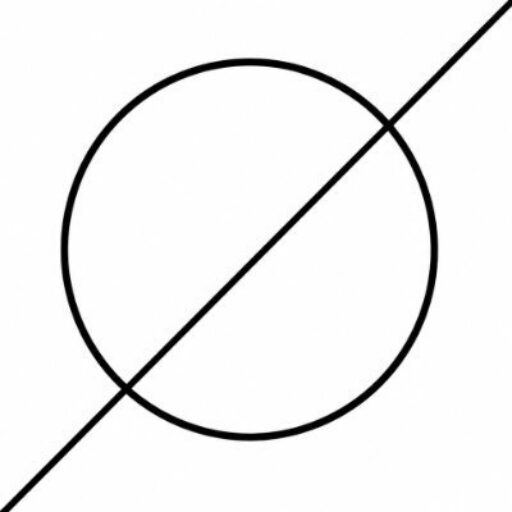
XIII. The Circle as Proof-Object
The drawn loop as Fantasy-object; the circle as the visual trap of closure.
XIV. Gaze, Mirror, and Selfhood as Return
The self as recursive return through image, other, mirror, archive, and machine.
XV. Desire as the Felt Form of Asymptotic Being
Desire, Will, Fantasy, sex, speech, touch, and the erotic gap.
XVI. Sexual Difference as First Lived Asymmetry
Sexual difference as embodied evidence that generation requires non-coincidence.
XVII. Love and the Ethics of the Gap
Love as local closure that preserves remainder.
XVIII. Language, Naming, and World as Sedimented Closure
Words as cuts; names as fibers; world as repeated closure.
XIX. Beauty and the Aesthetic Proof of Non-Completion
Beauty as form that remains alive because it does not fully close.
XX. Psychology, Diagnosis, and Boundary Failure
Distress as boundary-event; diagnosis as useful closure with danger of capture.
XXI. AI, Prediction, and Ontological Cryptography
Prediction as pre-closure; protected remainder as freedom.
XXII. Politics and the Violence of Final Order
Total politics as hatred of remainder; justice as disciplined closure.
XXIII. Theology, Silence, and the Non-Closed Sacred
God, sacred language, silence, and the refusal of final capture.
XXIV. Relation as Condition
Derivation of time, desire, language, ethics, politics, world, and generation from relation.
XXV. Objections and Replies
Expanded defense against process philosophy, relativism, metaphor, anti-truth, anti-math, over-flexibility, essentialism, and incompletion romanticism.
XXVI. Conclusion: Being Lives by Not Arriving
Final synthesis: Being is 0 → 1 → 0₂; local closure without final completion.
I. Completion and the Old Error of Metaphysics
Metaphysics repeatedly dreams of completion.
The dream appears under many names: substance, ground, system, identity, subject, God, truth, reason, science, reconciliation, totality, final language, final law, final world. It appears whenever thought wants to end the movement of thought by arriving at a point where nothing remains outside the concept, where no question opens another question, where no object withdraws from its description, where no self divides under its own gaze, where no word fails to contain what it names, where no desire survives satisfaction, where no world is haunted by what it excludes.
This dream is not accidental. Thought seeks rest. The mind wants completion because incompletion is difficult to bear. Remainder feels like instability. Ambiguity feels like weakness. Desire feels like lack. Contradiction feels like defect. The unknown feels like insult. The unpossessed feels like failure. The unclosed relation feels like danger.
Human thought therefore mistakes closure for salvation.
To close the explanation would be to end doubt.
To close the system would be to end disorder.
To close the self would be to end fragmentation.
To close the beloved would be to end jealousy.
To close language would be to end misunderstanding.
To close the world would be to end history.
To close Being would be to end metaphysics.
Yet the desire to end metaphysics is itself metaphysical. It is the desire for a surface without seam, a circle without remainder, a word without ambiguity, a body without vulnerability, a law without exception, a love without distance, a world without outside. It is the desire for Being to become finally identical with itself.
That desire contains the old error.
Completion is mistaken for the perfection of Being.
Completion is not the perfection of Being. Completion is the extinction of generativity.
A completed Being would no longer generate. It would not become, relate, desire, remember, speak, err, learn, suffer, love, create, interpret, or transform. It would not need time, because nothing would remain unresolved. It would not need memory, because nothing would persist as unfinished trace. It would not need language, because nothing would exceed its own presentation. It would not need thought, because nothing would require mediation. It would not need love, because nothing would remain other. It would not need ethics, because no boundary could be violated, protected, revised, or mismanaged. It would not need world, because worldhood depends on repeated local closures over an unclosed field.
Completion appears as fullness, but it functions as death.
The point is not that closure is false. A philosophy that merely attacks closure cannot think. Thought itself requires closure. A sentence closes. A concept closes. A proof closes. A name closes. A body closes. A decision closes. A promise closes. A ritual closes. A border closes. A diagram closes. A law closes. A world closes. Without closure, nothing appears, nothing persists, nothing can be shared, repeated, measured, protected, loved, or remembered.
The question is not whether closure exists.
The question is whether closure can become total without destroying the conditions that make Being real.
It cannot.
Closure is necessary as operation. It is impossible as final destiny.
A local closure stabilizes. A total closure sterilizes.
A word must close enough to mean. If the word remains pure openness, it says nothing. But if the word closes absolutely, it becomes an idol: it mistakes its own boundary for the whole field of meaning. A body must close enough to live. If the body has no boundary, it cannot remain a body. But if the body closes absolutely, it cannot breathe, eat, desire, touch, age, heal, or relate. A law must close enough to bind. If it binds nothing, it is not law. But if it closes absolutely, it becomes tyranny. A love must close enough to become commitment. If it closes nothing, it remains atmosphere. But if it closes completely, it becomes possession.
Closure is the condition of appearance. Final closure is the death of appearance.
This distinction begins the argument.
The old metaphysical error lies in taking the success of local closure and elevating it into a doctrine of final completion. Because a concept can stabilize a field, thought imagines a final concept could stabilize all fields. Because a law can bind a community, politics imagines a final law could abolish disorder. Because a theory can explain a relation, reason imagines a final theory could contain reality. Because a lover can become intimate, desire imagines possession could abolish distance. Because a circle can be drawn as a closed loop, the eye imagines closure itself has become visible.
But every closure has a scale.
What closes at one scale opens at another. What is stable as diagram may be unstable as material mark. What is precise as formula may be incomplete as world. What is coherent as law may be violent as application. What is intimate as relation may be possessive as demand. What is certain as skeleton may be incomplete as body. What is whole as local form may be open as total field.
The inverse also holds. What remains locally open may support global closure. A painting can be complete as a work because its internal relations remain open to interpretation. A living organism can be one body because its local systems remain porous, circulating, adaptive, and unfinished. A city can remain identifiable because its streets, people, languages, economies, and conflicts remain internally mobile. A theory can have architecture because its concepts retain enough openness to be used, tested, revised, and extended.
Closure and openness are not moral opposites. They are scale-relations.
Local closure can support global openness.
Local openness can support global closure.
Local closure can also damage global form when each part seals itself against relation.
Local openness can dissolve global form when no boundary holds long enough to sustain world.
Being is not opposed to closure. Being is the scalable distribution of closure and openness across levels.
This is why the thesis cannot be reduced to “openness good, closure bad.” Pure openness cannot generate a world, because nothing stabilizes. Pure closure cannot generate a world, because nothing remains to unfold. Being occurs in the tension between these failures. It closes enough to appear and opens enough to continue.
The movement can be written as 010.
The first zero is open field: not nothing, but unclosed possibility before stable form. The one is local closure: word, body, law, diagram, self, identity, world, promise, theorem, institution, beloved. The second zero is reopened field: not a return to the beginning, but openness transformed by what closure has done. A closure leaves memory, scar, direction, trace, remainder. The field after closure is not the field before closure. Return is never pure return.
010 is therefore not a loop. It is a spiral of world-production.
Open field becomes local form. Local form produces remainder. Remainder reopens the field. The reopened field demands further closure. New closure produces new remainder. This movement is not a defect in Being. It is Being’s generative rhythm.
The old metaphysics asks: what is the final ground?
The present argument asks: what operation makes grounds appear, and why can no ground close the whole?
The old metaphysics asks: what is the object?
The present argument asks: what boundary allowed the object to become object?
The old metaphysics asks: what is the final truth?
The present argument asks: what must truth leave open in order to remain true?
The old metaphysics asks: how can Being complete itself?
The present argument answers: if Being completed itself, generation would die.
The task, then, is not to destroy closure. It is to discipline closure. Closure must be understood as local, conditional, productive, scale-dependent, and dangerous. It is the means by which Being becomes coherent. It is not the final state toward which Being moves.
Being is not arrival.
Being is approach.
And the highest mistake of metaphysics is to worship the arrival that would end the approach.
II. The Asymptote as Ontological Form
The asymptote gives the argument its formal image.
It must be understood carefully. An asymptote is not a loose metaphor for incompletion. It is not a poetic way of saying that things are unfinished. It is a structure of approach governed by law. A curve approaches a limit. Its movement is ordered. Its tendency is intelligible. Its direction can be described. Yet the relation that organizes the approach also prevents final coincidence. The curve does not fail to arrive because of weakness, accident, or external obstruction. It does not arrive because non-arrival belongs to the structure of the relation.
This makes the asymptote a more rigorous image of Being than the closed circle, the completed system, the final substance, or the total self.
The closed circle gives the eye a completed boundary. It appears to return to itself without remainder. It suggests wholeness, rest, identity, and completion. The line suggests endless progression, but it can become direction without return, movement without recurrence, future without memory. The asymptote gives a different image: directed movement without final possession. It preserves structure without pretending that structure must culminate in identity. It gives thought a way to understand rigor without totality.
Being is asymptotic because Being is neither formless flux nor final completion.
If Being were pure flux, nothing could appear. No object could stabilize. No word could mean. No body could endure. No memory could persist. No love could bind. No law could govern. No world could be shared. Pure openness gives no world, because nothing holds long enough to become encountered.
If Being were final completion, nothing could generate. No difference would remain. No desire could move. No interpretation could begin. No future could open. No relation could matter. No otherness could survive. Final closure gives no world either, because everything has already arrived.
Being occurs between these two impossibilities.
It closes enough to appear.
It remains open enough to continue.
The asymptote preserves this double necessity. It is structured, but not closed. It is directed, but not completed. It is intelligible, but not exhausted. It gives form without final possession. It shows that rigor does not require totality. A relation can be exact without becoming complete. A process can be lawful without arriving at final identity. A world can be stable without being sealed.
This matters because much metaphysics confuses the demand for rigor with the demand for completion. It assumes that if Being is not finally closed, thought has failed. It assumes that incompletion means vagueness, relativism, chaos, or weakness. The asymptote breaks this assumption. It shows that non-arrival can be structured. It shows that openness can be disciplined. It shows that the absence of final contact is not necessarily a defect. In some structures, final contact would destroy the structure.
A curve that reaches its asymptote no longer stands in asymptotic relation.
A Being that completes itself no longer generates.
This is the first formal law of the thesis:
Being is not incomplete because it has not yet arrived. Being is alive because final arrival is impossible.
This distinction separates ordinary incompletion from ontological non-completion.
Ordinary incompletion describes a task not yet finished. A house not yet built, a sentence not yet ended, a problem not yet solved, a road not yet completed: these are incomplete because they point toward possible completion. Their unfinished state is temporary. The missing end belongs to the expectation that the work could become whole.
Ontological non-completion is different. It does not name a temporary lack. It names a constitutive condition. Being is not an unfinished object waiting for its final form. Being is the process through which form becomes possible while remaining unable to close the whole. Its non-completion is not a delay before fulfillment. It is the condition of generation.
A world can be made only because something closes. A world can continue only because nothing closes completely.
This gives the asymptote its metaphysical force.
The asymptote is not merely a picture of distance. It is a picture of productive distance. The curve needs the limit. Without the limit, there is no direction. But the curve cannot coincide with the limit without losing the relation that defines it. The limit organizes the approach, but it is not possessed by the approach. It gives structure without becoming captured.
Being is organized by what it cannot complete.
Truth approaches what it cannot exhaust.
Desire approaches what it cannot possess.
Language approaches what it cannot say completely.
Love approaches what it cannot close.
Theology approaches what it cannot name without remainder.
Politics approaches order without being allowed to abolish multiplicity.
Technology approaches prediction, but the living future must not become fully pre-closed.
The same structure repeats because the same ontological law is operating: relation requires interval. If the interval becomes infinite, relation collapses into separation. If the interval becomes zero, relation collapses into identity. Being lives in the maintained interval.
This maintained interval is not a void in the weak sense. It is not nothing. It is the productive gap through which relation becomes possible. Between word and thing, meaning appears. Between self and other, love appears. Between law and case, judgment appears. Between model and world, interpretation appears. Between present and future, action appears. Between finite form and unclosed field, Being appears.
The asymptote gives this interval a disciplined shape.
It also clarifies why completion is death at the level of generation. Completion would not merely satisfy the process. It would end the process by abolishing the gap through which the process moves. If Being reached final identity with itself, nothing would remain to approach. Without approach, there is no becoming. Without becoming, no time. Without time, no memory, promise, regret, anticipation, or transformation. Without transformation, no world.
The completed world is not the richest world.
The completed world is the world from which worldhood has been removed.
This is why metaphysics must distinguish between limit and completion.
A limit can orient without being reached. Completion claims the limit has been possessed. The first generates. The second terminates. A horizon gives direction to travel, but if the horizon became an object in the hand, the world would lose its depth. A beloved gives desire a world, but if the beloved were fully possessed, the relation would lose its otherness. A truth gives thought direction, but if truth became total possession, thought would become unnecessary.
The asymptote is therefore the form of mature metaphysics: it respects the limit without converting the limit into property.
Being is not the absence of limits. Being is relation to limits that cannot become final possessions.
This also refines the meaning of truth. If truth is treated as total possession, then the asymptotic structure seems to threaten truth. But truth does not require total possession. Truth requires faithful disclosure under conditions. A mathematical theorem can be exact inside its formal frame. A measurement can be true within its method. A confession can be true within its courage. A model can be true by preserving the relation it was built to preserve. A work of art can be true by revealing a structure of experience that literal description could not hold.
None of these truths must become the whole in order to be true.
The demand that truth become total is itself the corruption of truth.
Truth becomes stronger when it knows its frame. A truth that declares its conditions is more rigorous than a truth that mistakes its local success for global sovereignty. The asymptote protects truth from idolatry. It lets truth approach without pretending to close the whole.
This is why Being as asymptote is not relativism. Relativism dissolves truth into perspective without sufficient structure. Completion metaphysics hardens truth into possession. Asymptotic metaphysics rejects both. It says that truths can be real, exact, binding, and powerful within declared closures, but no closure becomes the final form of Being.
The local truth holds.
The global remainder remains.
A proof can conclude without completing mathematics. A law can bind without completing justice. A name can identify without completing a person. A model can predict without completing the world. A love can commit without completing the beloved. A theology can speak without completing God.
This is the second formal law of the thesis:
Truth is local disclosure under conditions, not final possession of the whole.
The asymptote also explains why Being requires both direction and obstruction. If nothing obstructs, there is no contour. If nothing directs, there is no approach. Being appears through constrained openness. It is not simply open. It is opened along lines of force, memory, boundary, desire, language, law, body, and world. These constraints are not external additions. They are the conditions under which Being becomes encounterable.
A body is a constraint. It gives Being a local surface: skin, organ, movement, hunger, sex, vulnerability, death. Without body, experience would not become situated. But if the body closed absolutely, it could not breathe, metabolize, touch, receive, reproduce, heal, or decay. The body lives by being bounded and open at once.
Language is a constraint. It gives Being repeatable form: word, syntax, category, memory, command, promise. Without language, much of the world cannot stabilize as shared meaning. But if language closed absolutely, nothing could be interpreted, translated, revised, misunderstood, poetized, or newly said. Language lives by meaning and failing to mean completely.
A world is a constraint. It gives Being a durable field: habits, laws, paths, rituals, institutions, tools, maps, archives. Without world, experience would not become inhabitable. But if world closed absolutely, it would become prison. A living world must hold enough to be trusted and open enough to be transformed.
The asymptote therefore also gives the structure of freedom.
Freedom is not absence of form. Pure absence of form gives no agency. Freedom is movement inside constraints that do not become total. A person is free not because nothing binds them, but because no binding exhausts their future. A thought is free not because it has no grammar, but because grammar does not abolish invention. A society is free not because it has no laws, but because law does not become final capture. A love is free not because it refuses bond, but because bond does not become possession.
Freedom is not openness alone.
Freedom is non-finality inside form.
This is why the asymptote must be paired with 010. The asymptote gives the form of approach. 010 gives the rhythm of generative passage. The asymptote says that Being approaches without final arrival. 010 says how that approach produces worlds: open field closes locally, local closure produces remainder, remainder reopens the field transformed.
The first zero is not absence. It is unclosed field.
The one is not final unity. It is local form.
The second zero is not return to origin. It is reopened field after closure.
This is the movement of living Being.
A word is born from open sense, closes into sign, and reopens through interpretation. A body emerges from an open field of processes, closes into form, and reopens through breath, hunger, wound, touch, speech, sex, and death. A law closes social possibility into rule and reopens through case, appeal, exception, and judgment. A love closes distance into bond and reopens through desire, privacy, change, forgiveness, and the beloved’s remainder. A theory closes experience into concepts and reopens through anomaly, objection, extension, and future thought.
Being is not simply asymptotic because it fails to arrive. Being is asymptotic because each arrival becomes another opening.
Yet even the asymptote must not become an idol. No image is Being. The asymptote is a formal aid, not final possession. It is useful because it disciplines the mind against two temptations: the temptation to worship closure and the temptation to romanticize formlessness. It teaches that Being is neither the completed circle nor the infinite drift. Being is the relation that approaches coherence while preserving the impossibility of total possession.
From this point, the rest of the thesis follows.
If Being is asymptotic, then the object cannot be primitive, because objects are local closures. Boundary must precede objecthood. If closure produces remainder, then remainder is not ignorance but structure. If local closure and global openness are both necessary, then every system must be judged by how it governs its own remainder. If Being never coincides with itself, then time is not accidental but the trace of non-completion. If desire is the felt form of approach, then Fantasy is not illusion but the topology of incompletion. If relation requires gap, then love is not fusion but gap-keeping. If language closes fields into words, then world is sedimented closure. If technology predicts futures, then AI becomes dangerous when it pre-closes the asymptotic trajectory of the person. If politics dreams of final order, it becomes violence against remainder. If theology names the final ground, it must also protect the ground from capture by the name.
All of this is contained in the asymptote.
Being is not the thing that waits at the end of the approach.
Being is the approach itself, held under form, driven by remainder, and kept alive by non-arrival.
III. Boundary Before Object
The object is not primitive.
This is the first correction required by asymptotic metaphysics. Ordinary thought begins with things: body, stone, chair, tree, person, word, machine, circle, nation, God. The thing appears already there, already available, already bounded enough for thought to name it. Philosophy then asks what the thing is. Is it substance? Is it process? Is it appearance? Is it representation? Is it matter? Is it idea? Is it event? Is it relation?
But these questions begin too late.
Before a thing can be asked about as a thing, it must already have been distinguished from what it is not. It must have been bounded enough to count as one. It must have acquired some stability across time. It must be repeatable under recognition. It must be available to a name, a gesture, a memory, a measurement, an image, a use, or an encounter. The object does not precede these operations. The object is produced through them.
Objecthood is not the ground of boundary.
Boundary is the condition of objecthood.
A boundary is not merely a line drawn around an already existing thing. That is the naïve picture. It imagines a world filled with objects, and then imagines boundaries as secondary outlines around them. In this view, the apple exists first, and its skin merely marks its surface. The body exists first, and skin merely shows where it ends. The nation exists first, and the border merely indicates its territory. The self exists first, and language merely expresses it. The circle exists first, and the drawn line merely represents it.
This reverses the order.
A thing appears as a thing only because some boundary has made it available as distinguishable, repeatable, and encounterable. Boundary does not decorate objecthood. Boundary generates the possibility of objecthood. The object is not what boundary surrounds. The object is what boundary makes possible.
The apple is not simply a thing with a boundary. It is an edible, visible, graspable, nameable form separated from branch, tree, soil, hand, hunger, market, color-field, and language. The body is not simply a thing with skin. It is a living closure that distinguishes interior from exterior while remaining open through breath, mouth, wound, digestion, touch, sex, infection, speech, and death. The nation is not simply a thing with a border. It is a political closure repeated through law, map, violence, memory, school, tax, passport, flag, and story. The self is not simply an interior substance expressing itself outward. It is a boundary-system formed by body, name, memory, gaze, desire, prohibition, habit, archive, and relation.
A circle is not simply a shape with a boundary. It is a formal relation, a diagrammatic sign, a visual habit, a pedagogical convention, and a metaphysical image of closure. The drawn loop does not reveal an already present circle. It locally stabilizes circularity by drawing a boundary the eye is trained to trust.
Every object is late.
It arrives after field, distinction, boundary, cut, repetition, and recognition.
This lateness is not temporal in the ordinary sense. The claim is not that one could find a historical moment when boundary existed before things. The claim is structural. Boundary is ontologically prior because it must already be operative for anything to appear as a thing at all. A metaphysics that begins from objects therefore begins from a result while treating the result as origin. It begins from what has already been stabilized and then forgets stabilization. It begins from the product and forgets the operation. It begins from the noun and forgets the verb that made the noun possible.
The object is a local closure.
Being is not an inventory of local closures.
Being is the generative condition through which local closures become possible without finalizing the whole.
The difference matters. If object comes first, then relation appears secondary. Objects exist, and afterward they relate. If boundary comes first, relation is already inside objecthood. The object is never solitary. It is the result of a relation between what is included, what is excluded, the boundary that separates them, and the field that allows separation to matter. Every object carries its outside inside its own possibility.
An object is not merely itself.
It is itself under a cut.
The Cut Is Not a Knife
The word “cut” must be protected from a crude interpretation.
A cut is not necessarily a literal slicing action. It is not necessarily violent. It does not require a conscious cutter. It does not require a blade, an intention, an event in clock-time, or a physical incision. In this argument, cut names the minimal articulation of difference. It is the operation by which a field becomes this and not-this, figure and ground, inside and outside, term and context, one and not-one, self and other, sign and silence.
A cut may be material, as in a wound, membrane, wall, border, skin, enclosure, or fracture. It may be perceptual, as when the eye distinguishes figure from background. It may be symbolic, as when a word separates a region of meaning from open sense. It may be mathematical, as when a set, line, equation, or definition determines what belongs and what does not. It may be legal, as when law distinguishes citizen from non-citizen, permitted from prohibited, person from property, guilt from innocence. It may be erotic, as when desire produces distance between body and body, self and beloved, touch and non-possession. It may be theological, as when a name approaches what cannot be finally named.
The form varies. The function remains.
A cut makes difference operative.
This is why emergent boundaries do not refute the cut. They confirm it. A boundary may emerge gradually, relationally, organically, socially, historically, or statistically. But once a boundary functions as a boundary, a field has been articulated. Difference has become operative. Something can now count as this rather than that, inside rather than outside, figure rather than ground, case rather than non-case, word rather than noise, body rather than environment.
Emergence describes one way a boundary appears. Cut names the structural function by which the boundary makes distinction operative.
A shoreline may shift. A membrane may grow. A social identity may form through repetition. A language category may stabilize through use. A biological species may be difficult to delimit. A psychological self may emerge through relation. None of this removes the cut. It shows that cuts can be gradual, distributed, recursive, and unstable. A cut need not be clean in order to function. In fact, many of the most important cuts are not clean. Their ambiguity is part of their force.
The cut is therefore not a knife.
It is articulation.
This clarification matters because the thesis does not depend on an image of reality being violently divided by an external agent. It depends on a more fundamental claim: nothing appears as something unless difference has become operative. Once difference is operative, boundary is already at work. Once boundary is at work, inclusion and exclusion begin. Once inclusion and exclusion begin, remainder is produced.
The cut is the minimum operation of world-production.
It is not one object among others. It is the condition under which objects, subjects, numbers, signs, bodies, laws, loves, and worlds become distinguishable at all.
A cut makes counting possible because it creates separability. Before count, there must be distinction. Before “one,” there must be some boundary that allows something to be treated as one. Before “two,” there must be repeatable difference. Number does not float above the cut. Number archives the cut.
A cut makes language possible because it creates nameable recurrence. A word separates a field into a repeatable form. “Tree” closes an enormous field of living, botanical, visual, symbolic, ecological, mythic, and practical differences into a portable sign. The word does not contain the tree. It cuts a usable relation to tree-ness out of a field. It means because it closes. It remains alive because it does not close completely.
A cut makes desire possible because it creates distance. Desire cannot exist in pure fusion. It also cannot exist in absolute separation. Desire needs a gap that can be approached. The desired object must be other enough to call movement forth and near enough to organize that movement. Desire begins where the cut creates approach.
A cut makes love possible because love requires another who is neither identical nor unreachable. The beloved must be bounded enough to be encountered and unclosed enough to remain beloved. If the beloved becomes pure mystery, relation fails. If the beloved becomes possession, relation dies.
A cut makes ethics possible because ethics begins wherever boundary can be violated. Without boundary, no harm can be done. Without openness, no care can be given. Ethics belongs to beings who can be touched, misnamed, invaded, protected, misunderstood, loved, governed, and abandoned. It belongs to beings who are closed enough to suffer and open enough to matter.
A cut makes theology possible because the sacred appears at the limit of closure. The divine is not encountered as an object among objects. It appears where naming approaches what cannot be finally named, where speech touches silence, where form gestures beyond itself. Theology begins where the cut produces a horizon it cannot absorb.
The cut creates form. It also creates danger.
It makes possible the statement: this, not that.
It also makes possible the more dangerous statement: this is all.
The first statement creates form.
The second creates idolatry.
The cut is therefore neither good nor evil by itself. It is the condition of both meaning and violence. Without cut, there is no relation, no world, no self, no language, no number, no love. With cut, there is also exclusion, distortion, possession, control, false certainty, and forced identity. The problem is not that the cut occurs. The problem begins when the cut forgets that it is a cut and presents its local closure as final truth.
This is why no object can be fully understood by looking only at what it contains. To understand the object, one must also understand what it excludes, what it depends on, what it suppresses, what it repeats, what field it emerged from, what name holds it stable, what use confirms it, what boundary protects it, what remainder it produces.
A word is not understood only by its definition. It is understood by the field of uses it closes, the ambiguities it suppresses, the metaphors it allows, the contexts that shift it, the silences around it.
A law is not understood only by its text. It is understood by the cases it organizes, the exceptions it creates, the bodies it disciplines, the appeals it permits, the violence it authorizes, the remainder it cannot foresee.
A model is not understood only by its output. It is understood by the variables it includes, the variables it excludes, the frame it assumes, the world it compresses, the fiber it hides.
A person is not understood by their name, diagnosis, profile, résumé, photograph, or data pattern. Each of these is a boundary. Each closes something real. Each can be useful. But each also leaves remainder. The person exceeds every local closure through which the person becomes socially visible.
The boundary makes visibility possible.
The boundary also makes misrecognition possible.
This is the double nature of boundary. It gives form, but never gives total truth. It lets something appear, but what appears is not the whole. It stabilizes, but it also excludes. It clarifies, but it also produces shadow. It makes encounter possible, but it also tempts thought to confuse encounterable form with completed being.
Every cut produces remainder.
This is the decisive point.
When a field is cut, the result is not simply inside and outside. The cut also produces the boundary itself and the unresolved relation between the separated terms. There is always something that belongs neither simply to the inside nor simply to the outside. There is the seam. There is the interval. There is the ambiguity created by division. There is the trace of the field before it was divided. There is the pressure of what the cut excluded. There is the possibility that the cut was drawn otherwise. There is the memory of uncut continuity. There is the violence of separation and the promise of relation.
The remainder is born with the cut.
It is not discovered later as an inconvenience.
This means the object can never become final. The object is produced through boundary, but the boundary that produces it also produces what the object cannot contain. Every object is shadowed by the outside it required in order to appear. Every object is haunted by the field it had to exclude. Every object is bound to its remainder.
The chair is not only chair. It is wood, labor, design, posture, room, use, memory, economy, absence of tree, possibility of breaking, relation to body.
The word is not only word. It is sound, mark, history, grammar, power, ambiguity, silence, translation, misuse.
The person is not only person. They are body, memory, name, secrecy, desire, wound, social relation, unspoken future, unshared interior.
The world is not only world. It is sedimented closure over what it cannot finish stabilizing.
The object remains asymptotic.
It approaches coherence. It does not become complete.
A thing is therefore not false because it is bounded. A thing is false only when its boundary is mistaken for final truth. The bounded object is real as local closure. It is unreal as total possession. A person can be truly named and still exceed the name. A law can be truly binding and still fail justice. A model can be true in relation and still not be the world. A circle-sign can be pedagogically useful and still not be the formal circle. A self can be stable enough to act and still not be transparent to itself.
The object is neither illusion nor ultimate.
It is a local achievement.
This position avoids two errors.
The first error is naïve realism of the completed object. It assumes the world is simply made of things whose boundaries are given. It forgets that objecthood depends on operations of distinction, perception, naming, use, repetition, and exclusion.
The second error is dissolving the object into pure flux or construction. It assumes that because objects are produced through boundary, they are merely arbitrary or unreal. This is also false. Boundaries function. Local closures matter. The body bleeds. The law imprisons. The word wounds. The promise binds. The house shelters. The machine acts. The name persists. The beloved returns.
Local closure is real.
Final closure is false.
Being as Asymptote holds both truths.
It does not deny the object. It denies that the object is primitive or complete. It does not deny form. It denies that form exhausts the field. It does not deny identity. It denies that identity abolishes remainder. It does not deny world. It denies that world has no outside.
The object is a stabilized approach.
It is Being held temporarily in a form.
This is why the thesis must begin before the object. If it begins with objects, Being becomes a catalogue. If it begins with subjects, Being becomes interiority. If it begins with substance, Being becomes completed ground. If it begins with language, Being becomes sign. If it begins with process alone, Being risks dissolving into movement without form.
The proper beginning is boundary.
Boundary is earlier than object, earlier than count, earlier than stable identity, earlier than world. It is not earlier in chronological time, as if one could find a first historical boundary. It is earlier in logical and ontological structure. It is what must be in operation for an object to appear as object at all.
The boundary does not simply surround the thing.
The boundary lets there be a thing.
But because the boundary produces remainder, the thing never completes itself.
This is the movement from boundary to asymptote. Objecthood begins with closure. Being continues through non-closure. A thing appears because a boundary holds. A thing remains generative because the boundary does not contain the whole. The field exceeds the form. The form depends on what exceeds it.
Being is therefore not the object.
Being is the approach by which the field becomes locally object-like without ever becoming exhausted by objects.
This also explains why the deepest metaphysical question is not “What exists?” That question already assumes that existence comes in countable forms. The deeper question is: what operations make countable existence possible? What is cut? What is bounded? What is stabilized? What is excluded? What remainder appears? What field persists? What must be ignored for the object to appear obvious?
The obvious object is the most dangerous object because its boundary has become invisible.
A mature metaphysics restores the invisibility of the boundary to visibility. It makes the object strange again. It asks how the chair became chair, how the body became body, how the self became self, how the word became word, how the circle became circle, how the world became world.
It does not ask these questions to dissolve reality.
It asks them to understand why reality can appear at all.
The answer is boundary.
The consequence is remainder.
The form is local closure.
The truth is asymptotic.
No object arrives without boundary. No boundary closes without remainder. No remainder remains inert. Remainder reopens the field. The field demands new closure. New closure produces new remainder. This is not a defect in Being. This is Being as such.
Being is not the completed object.
Being is the inexhaustible production of objects that cannot complete the field from which they arise.
IV. The Remainder Is Not Ignorance
Remainder is usually misunderstood.
It is treated as what the system has not yet captured, what the model has not yet explained, what the word has not yet clarified, what the law has not yet regulated, what the diagnosis has not yet named, what the archive has not yet stored, what the machine has not yet predicted. In this view, remainder is temporary. It is the residue of an incomplete operation. More data, better language, sharper categories, finer instruments, stronger computation, or more comprehensive theory will eventually absorb it.
This view is false.
Remainder is not merely ignorance. It is not only missing information. It is not simply noise waiting to be filtered out. It is not the temporary failure of a closure that could, with enough force, become complete. Remainder is produced by closure itself.
Every act of closure generates what it cannot contain.
This must be stated with precision. When a boundary is drawn, something is not merely included and something else excluded. The act of boundary-making also produces a relation between inside and outside that cannot be reduced to either term. It produces an edge. It produces a seam. It produces a field of possible misreadings, exceptions, crossings, pressures, translations, and returns. It produces the ambiguity of the boundary itself: does this belong inside or outside? Who decides? Under what frame? At what scale? For what purpose? With what cost?
The remainder appears because closure has succeeded.
A failed closure may produce confusion, but a successful closure produces remainder. The clearer the category, the more powerful its shadow. The sharper the law, the more consequential its exceptions. The stronger the model, the more dangerous its hidden assumptions. The more stable the name, the more it can conceal the living field beneath it. The more efficient the representation, the more reality it must compress.
A name creates a fiber beneath itself: a hidden field of possible histories, bodies, contexts, motives, memories, and meanings collapsed into one token. A metric creates a fiber: all the unmeasured qualities compatible with one number. A diagnosis creates a fiber: the field of suffering, adaptation, trauma, relation, and environment compressed into one clinical term. A photograph creates a fiber: the living event, before and after, angle, intention, absence, body, and atmosphere reduced to an image. A model creates a fiber: the set of worlds compatible with its output but invisible in the output itself.
The remainder is the shadow of closure.
But the shadow is not nothing.
The shadow is active. It returns as ambiguity, exception, desire, anomaly, symptom, translation, irony, resentment, novelty, art, misfit, silence, and revolt. It returns wherever closure claims more authority than it has earned. It returns wherever the system treats its own compression as reality itself.
This is why the remainder cannot be eliminated by increasing precision alone. Precision can reduce one class of remainder, but it often produces another. A sharper definition may reduce ambiguity at the level of language while increasing exclusion at the level of life. A better diagnostic category may clarify treatment while producing identity-capture. A more detailed map may improve navigation while obscuring the living territory behind its symbols. A more predictive model may improve efficiency while narrowing the future it predicts. A more rigorous law may create formal consistency while failing the singular case.
Closure does not abolish remainder. Closure relocates remainder.
This is the principle of closure-obstruction conservation: what a system closes in one register reappears as obstruction in another. A society that closes ambiguity through bureaucracy produces alienation, misclassification, and procedural violence. A theory that closes contradiction through abstraction produces lived remainder in the body. A technology that closes distance produces emptiness of presence. A language that closes meaning produces poetry, metaphor, error, and silence. A relationship that closes uncertainty through possession produces jealousy, suffocation, and revolt.
The remainder is not outside Being.
The remainder is how Being continues after closure.
If all remainder disappeared, there would be no pressure to interpret, no need to revise, no impulse to create, no desire to approach, no future to enter. The world would not become more meaningful. It would become mute. Meaning exists because signs do not coincide with what they mean. Desire exists because objects do not coincide with what they promise. Love exists because the beloved does not coincide with the lover’s image. Justice exists because law does not coincide with the case. Theology exists because the divine does not coincide with the name. Philosophy exists because Being does not coincide with any concept of Being.
A remainder-free world is not paradise.
A remainder-free world is the end of relation.
The old metaphysical dream treats remainder as insult. It sees the unclosed as failure. It sees ambiguity as weakness. It sees exception as disorder. It sees desire as lack. It sees death as contradiction. It sees the other’s opacity as threat. It sees the world’s excess as something to be conquered by system.
Asymptotic metaphysics reverses the valuation.
Remainder is not the embarrassment of Being. Remainder is the condition of Being’s generativity.
A word that leaves no remainder would not mean. It would simply be identical with what it names, and in that identity the function of language would disappear. A self that leaves no remainder would not be alive. It would be a completed object, entirely available to description, prediction, and archive. A love that leaves no remainder would not be love. It would be possession, merger, or consumption. A truth that leaves no remainder would not be truth. It would be totality, and totality is truth converted into domination.
Truth requires remainder because truth requires relation.
This does not make truth weak. It makes truth honest. A truth is not diminished by declaring its conditions. A theorem is stronger, not weaker, because it belongs to a formal system with rules. A measurement is stronger, not weaker, because it states its method. A confession is stronger, not weaker, because it acknowledges the risk of partiality. A theory is stronger, not weaker, because it identifies the field it does not exhaust.
Falsehood begins when a local truth denies its remainder.
A model becomes false when it claims to be the world. A name becomes false when it claims to exhaust the person. A law becomes false when it claims to be justice itself. A diagnosis becomes false when it claims to contain the whole of distress. A diagram becomes false when it claims to be the object. A theology becomes false when it claims to possess God. A political order becomes false when it claims to complete the people. A love becomes false when it claims to complete the beloved.
Remainder is therefore not only metaphysical. It is ethical.
The ethical question is never simply whether to close. Closure is unavoidable. To act is to close. To choose is to close. To speak is to close. To love is to close. To judge is to close. To teach is to close. To write a philosophy is to close. The ethical question is what one does with the remainder produced by closure.
One can deny it.
One can punish it.
One can pathologize it.
One can hide it.
One can exploit it.
One can protect it.
One can interpret it.
One can leave room for it.
One can allow it to reopen the system.
A violent system treats remainder as defect. A mature system treats remainder as structural. A generative system builds institutions, languages, models, and relationships that can survive the return of what they exclude.
This applies directly to persons.
A person is not the sum of their visible closures. They are not their name, profile, diagnosis, face, résumé, archive, body-image, data pattern, social role, nationality, sexuality, or history. Each of these closures may reveal something real. None is nothing. But none completes the person. Each produces remainder. The person lives partly in that remainder: in what cannot yet be said, what has been misnamed, what has been forgotten, what remains possible, what resists prediction, what is still becoming.
To respect a person is not to refuse all description. That would be useless. It is to describe without pretending the description has completed them.
A human being requires local recognitions and protected remainders.
The same applies to selfhood. The self is not a hidden object waiting to be fully discovered. It is a moving boundary-system that stabilizes through memory, body, language, habit, relation, and future projection. Self-knowledge is not final self-possession. It is improved navigation of one’s own remainder. The self knows itself not by eliminating mystery, but by learning which forms of mystery are generative, which are defensive, which are traumatic, which are sacred, and which must be brought into speech.
The self is asymptotic to itself.
It approaches itself through memory, narration, desire, action, failure, and recognition. But it does not arrive as a completed object. Total self-identity would not be enlightenment. It would be paralysis. A self fully identical with itself would have no future.
This also clarifies why archive is not experience. The archive stores closures: documents, images, messages, dates, records, metrics, posts, proofs, traces. It preserves what can be captured. But the living event is not identical with its archive. The archive produces its own fiber: everything not stored, not felt, not risked, not repeated, not embodied, not remembered in the same way. Replay returns form without original force. The saved trace can become useful, even beautiful, but it can also betray the event by pretending to contain what it only indexes.
An archive without remainder becomes a mausoleum of presence.
A living memory remains open. It changes because the past did not complete itself. It continues to act in the present because it was not exhausted by the moment in which it occurred. The past persists as remainder, not as inert storage.
The same is true of the future. The future is not simply unknown information. It is the open field produced by the present’s non-completion. Prediction can narrow this field, model it, rank it, probabilistically structure it. But if prediction becomes final, the future ceases to be future. It becomes scheduled extension of the model.
The remainder protects the future from becoming merely the past extended forward.
This is why technological systems organized around prediction must be judged by how they treat remainder. A model that knows it is partial can assist. A model that denies its partiality becomes coercive. A platform that recommends while preserving openness can support agency. A platform that closes the user into predicted desire diminishes the user. A system that makes its uncertainty visible can help thought. A system that hides uncertainty behind fluent output becomes metaphysically dangerous.
The machine becomes dangerous when it converts living remainder into administrative error.
Remainder also explains creativity. Creation is not the production of novelty from nothing. It is the reconfiguration of unresolved remainder. A metaphor emerges because words do not close meaning. A painting emerges because vision does not exhaust appearance. A philosophy emerges because inherited concepts fail to contain experience. A new language emerges because old signs crack under new pressures. A world changes because its closures cannot fully govern what they have produced.
Creation is remainder becoming form without becoming final.
This is why the most generative systems are not the most complete systems. They are systems that can hold their incompletion productively. A language that cannot change dies. A law that cannot interpret becomes tyranny. A science that cannot revise becomes dogma. A self that cannot transform becomes pathology. A love that cannot reopen becomes possession. A philosophy that cannot generate further thought becomes monument.
Being continues because closure fails in a structured way.
The failure is not accidental. It is the condition of continuation.
The remainder is therefore not below order. It is not mere chaos at the edge of form. It is the pressure by which form remains alive. It is the part of the field that closure cannot own but cannot stop depending on. It is where the next form begins.
A completed system wants to eliminate remainder.
A living system learns to breathe through it.
Being as asymptote requires this reversal. The remainder is not what prevents Being from becoming perfect. It is what prevents Being from becoming dead. Completion would remove the gap, but it would also remove relation. It would remove ambiguity, but also interpretation. It would remove desire, but also movement. It would remove risk, but also love. It would remove exception, but also justice. It would remove error, but also language’s future.
The remainder is the wound of closure.
It is also the opening through which generation continues.
V. Closure-Asymmetry and the Cost of Certainty
Every closure produces asymmetry.
This is not an accidental consequence of poor classification, weak language, crude measurement, or insufficient intelligence. It belongs to closure as such. To close is to stabilize one region of a field at the cost of another. What is included becomes legible. What is excluded becomes marginal, latent, silent, compressed, or displaced. Closure does not simply create form. It creates an unequal relation between the form and what the form cannot hold.
A closure never merely says: this is.
It also says: not that.
It selects a region and makes it count. It determines what belongs, what does not belong, what can be measured, what must be ignored, what becomes central, what becomes peripheral, what becomes speakable, what becomes residual. This is the asymmetry hidden inside every act of certainty.
A category gives order. It also creates border-cases.
A name gives identity. It also compresses a field.
A law gives rule. It also produces exception.
A map gives orientation. It also deletes terrain.
A diagnosis gives intelligibility. It also localizes distress.
A model gives prediction. It also hides context.
A metric gives comparison. It also erases qualities that cannot become numerical under that metric.
A concept gives thought an object. It also closes the movement that made the concept necessary.
Closure is therefore never innocent. It is not evil, but it is never costless. A closure may be necessary, useful, beautiful, protective, precise, even true. Yet its truth is local. Its precision is purchased. Its clarity depends on an exclusion that does not vanish simply because the closure succeeds.
This is the cost of certainty.
Certainty is not false. Certainty is expensive.
Its price is the hidden field it excludes.
The more certain a closure becomes, the more sharply it distinguishes what counts from what does not count. This sharpness can be powerful. Without sharp distinctions, no proof, law, measurement, identity, boundary, diagnosis, architecture, contract, scientific model, or language could function. But sharpness has a shadow. The more strictly a form stabilizes itself, the more determinate its outside becomes. The closure does not remove the outside. It gives the outside a more precise relation to the inside.
The excluded field becomes structured by the act that excluded it.
This is closure-asymmetry.
Closure-asymmetry names the relation produced whenever a field is stabilized into form. The closed region receives definition. The unclosed region receives pressure. The inside becomes official. The outside becomes remainder. The form gains clarity. The field loses wholeness. Certainty increases, but wholeness decreases.
This produces the certainty-wholeness tradeoff:
The more completely a closure secures certainty inside its frame, the less completely it preserves the wholeness of the field from which that frame was cut.
This does not mean certainty should be rejected. It means certainty must be understood as a local achievement, not a total revelation. Certainty is legitimate when it declares its frame. It becomes violent when it denies the field it has excluded.
A legal category may be necessary. It allows institutions to act. It defines rights, responsibilities, violations, and procedures. But the category cannot contain the whole life of the person placed under it. If the category forgets this, law becomes capture. The subject becomes a case. The case becomes a file. The file becomes administratively real in a way the living person can no longer contest.
A medical diagnosis may be necessary. It gives shape to suffering, opens treatment, stabilizes communication between patient and clinician, and converts diffuse distress into a recognizable pattern. But diagnosis becomes dangerous when it treats the person as the disorder rather than treating the disorder as one closure over a larger field of body, memory, environment, trauma, adaptation, and relation. The diagnosis clarifies. It also compresses.
A model may be necessary. It isolates variables, identifies relations, and allows prediction. But a model is not the modeled world. It closes reality under selected assumptions. What it cannot include does not cease to exist. It becomes unmodeled context, anomaly, noise, bias, or future failure. The model is most dangerous when it is useful enough to be trusted and narrow enough to forget its exclusions.
An identity may be necessary. A person needs some stable form in order to speak, act, remember, promise, belong, and be recognized. But identity becomes false when it pretends to eliminate the field beneath it. No person is identical with name, type, category, sexuality, nationality, trauma, diagnosis, profession, face, archive, or role. Each closure may reveal something. None completes the being it names.
A word may be necessary. It allows thought to move. But every word draws a boundary around a field of possible meanings. The word “love” closes countless experiences into one sign. The word “death” closes absence into finality. The word “self” closes distributed processes into a noun. The word “circle” closes a formal relation, a drawn sign, and a metaphysical image into one apparently simple term. Language gives world by cutting. It also produces the remainder that poetry, philosophy, translation, and silence must carry.
This is why precision does not eliminate remainder.
Precision specifies where remainder will appear.
A vague category spreads remainder diffusely. A precise category concentrates it at the boundary. The fuzzy term fails by blur. The exact term fails by edge. Both generate remainder, but differently. The more exact the closure, the more exact the excluded zone becomes. Precision does not abolish non-closure. It gives non-closure a sharper topology.
Geometry already knows this. A shape is defined by boundary, but the boundary creates inside and outside. The more rigorously the shape is specified, the more rigorously its complement is produced. A circle drawn on a page appears to enclose a region, but it also produces the surrounding field as outside. A formal definition stabilizes the locus, but it also excludes everything not satisfying the condition. Closure creates not only form but complement.
Representation knows this as fiber. A representation collapses many possible states into one visible output. Beneath the output lies the fiber: the hidden set of possibilities compatible with the sign. A name, metric, diagnosis, photograph, data point, bureaucratic label, and AI-generated profile all have fibers. They show one surface and conceal a field of compatible realities. The surface may be accurate. The fiber remains.
Reason knows this as limit. Any system that attempts to ground itself must encounter what cannot be fully produced from within its own rules. The system may operate coherently. It may generate truth. It may close many questions. But its own conditions of operation cannot be swallowed without remainder. A system that tries to contain its own ground produces a seam.
Psychology knows this as symptom. What cannot be integrated into the official self returns elsewhere: dream, compulsion, anxiety, fantasy, bodily tension, repetition, displacement, strange speech, sudden desire. The symptom is not meaningless residue. It is remainder under pressure. It marks what the current closure of the self cannot hold.
Politics knows this as exception. Every order produces those who do not fit its categories, those who bear the cost of its simplifications, those whose lives become illegible under its grammar. The more total the political closure, the more violently it must manage its remainder. The dissident, outsider, patient, deviant, foreigner, heretic, criminal, refugee, and unclassified body become sites where the system’s claim to completion is exposed.
AI knows this as unmodeled context. Prediction closes futures into ranked likelihood.
Classification closes persons into patterns. Recommendation closes desire into anticipated next action. But the living person exceeds the model’s closure. Their future is not merely an output. Their context is not exhausted by training data. Their desire is not identical with preference history.
Their being is not a completed distribution.
In every domain, the same law appears:
Closure creates asymmetry.
Asymmetry produces remainder.
Remainder reopens the field.
This law directly supports the central thesis. Being lives by not arriving because every arrival is a closure, and every closure generates the conditions of further opening. Completion would require closure without asymmetry, certainty without exclusion, form without remainder, identity without outside, system without seam. Such completion is impossible within living Being. If it were possible, it would end generation.
A final closure would have to preserve the whole field while excluding nothing, define form without boundary, produce certainty without cost, and stabilize identity without remainder. But a closure that excludes nothing closes nothing. A boundary that produces no asymmetry bounds nothing. A certainty that costs nothing says nothing determinate. A form with no outside is indistinguishable from an uncut field.
Completion collapses either into emptiness or death.
Being avoids this collapse by remaining asymptotic. It produces local certainties without allowing certainty to become total. It creates forms without allowing form to exhaust field. It stabilizes worlds without allowing world to become prison. It names, measures, loves, governs, represents, remembers, and models, but each operation leaves remainder. That remainder is not failure from outside the system. It is the sign that the system is still alive.
The task of thought is therefore not to eliminate closure-asymmetry. That would eliminate thought. The task is to make closure-asymmetry explicit. A mature concept should know what it excludes. A mature model should disclose its frame. A mature law should provide appeal. A mature diagnosis should preserve personhood beyond the term. A mature politics should protect remainder from becoming enemy. A mature technology should preserve unmodeled human futurity. A mature love should bind without possession.
A closure becomes rigorous when it knows its cost.
A closure becomes violent when it denies its cost.
Being as asymptote requires closures that speak their own limits. It requires certainty that remembers wholeness without pretending to contain it. It requires forms that hold without claiming finality. The world must be built from closures, but those closures must remain answerable to the fields they cut.
The cost of certainty is remainder.
The gift of remainder is generation.
VII. The 010 Structure: Open Field, Local Closure, Reopened Field
Being does not move from nothing to completion.
It moves through a more precise structure:
0 → 1 → 0₂
Open field → local closure → reopened field.
This sequence is not a decorative symbol. It condenses the basic movement of asymptotic Being. The first zero does not mean mere nothingness. It names openness before stable form: the unclosed field in which distinctions have not yet hardened into object, word, body, law, image, memory, or world. The one does not mean final unity. It names local closure: the temporary stabilization by which something becomes visible, nameable, repeatable, encounterable, and usable. The second zero does not mean a return to the first openness. It names reopened field: openness after closure has occurred.
This distinction is decisive. The second zero is not the original zero. It is openness marked by the passage through form. It is openness with memory, scar, direction, trace, remainder, and altered possibility. It is not blankness restored. It is field reopened by the failure of closure to become final.
Being does not move from 0 to 1. It moves from 0 to 1 to 0₂: openness, closure, and openness transformed by the fact that closure occurred.
Pure openness cannot appear. If nothing is cut, bounded, stabilized, or repeated, then nothing can become an object of encounter. A field without distinction cannot be named. A sensation without any boundary cannot become experience. A world without local closures cannot be inhabited. A thought without conceptual closure cannot be thought. A word without semantic closure cannot mean. A body without biological closure cannot live. A law without normative closure cannot bind. A love without relational closure cannot become love. Pure openness remains below the threshold of world.
For this reason, the movement into the one is necessary. The one is not the enemy. Local closure is the event by which the open field becomes available. It is the word that gathers sense, the body that holds life, the circle-sign that lets circularity become thinkable, the law that stabilizes conduct, the promise that binds time, the image that gives memory a surface, the self-name that lets a person return to themselves as someone. The one is the form by which openness becomes encounterable.
But the one cannot complete the field from which it arises.
Every local closure produces remainder. The word means, but it does not exhaust meaning. The body lives, but it remains open through breath, wound, hunger, sex, age, dependency, and death. The law governs, but it produces exception, interpretation, appeal, and injustice. The model predicts, but it leaves unmodeled context. The circle appears closed, but it depends on field, sign, trained perception, formal definition, and suppressed materiality. The beloved becomes intimate, but never becomes fully possessed. The self stabilizes, but never becomes transparent to itself.
Closure therefore reopens the field. It does not return Being to the first zero. It produces 0₂: transformed openness.
This is why the sequence is not circular in the simple sense. It is not a return to origin. It is not the fantasy that Being leaves openness, enters form, and then recovers untouched openness. The field after closure is not innocent. It has been altered by the event of form. A spoken word cannot be unsaid simply by returning to silence. A wound that closes leaves scar. A promise that ends leaves memory. A law that fails leaves precedent. A love that breaks leaves orientation. A model that predicts changes the behavior it predicts. A name, once given, changes the field into which it was spoken.
The second zero is therefore historical. It carries trace.
This separates the 010 structure from both naïve origin-myth and final-system metaphysics. Origin-myth imagines that truth lies in returning to the first openness, before the cut, before the wound, before language, before law, before selfhood. Final-system metaphysics imagines that truth lies in reaching the one completely, where the field is finally closed and nothing remains outside the form. Both fail.
The first fails because pure openness cannot be lived as world. The second fails because total closure would abolish generation. Being is neither the untouched zero nor the completed one. Being is the movement through which openness becomes form and form reopens into altered openness.
The 010 structure also clarifies why local closure and global openness are not opposites. Local closure is the middle term by which global openness becomes meaningful. The field must close somewhere in order to appear anywhere. But because each closure produces remainder, the field opens again. The open whole is not opposed to the local one. The open whole is sustained through the repeated failure of local ones to become final.
A word demonstrates this structure. Before the word, there is an open field of possible sense. The word cuts the field and creates local closure. It says this, not everything. It makes communication possible. But once spoken, the word enters context, interpretation, metaphor, ambiguity, history, translation, misuse, and silence. The field reopens around it. The word does not end meaning. It creates a new field of possible meanings.
A body demonstrates it. Before bodily form, life is not encountered as a person. The body closes: skin, posture, face, voice, name, habit, gesture. This closure allows recognition. But the body does not complete itself. It breathes, desires, ages, suffers, touches, heals, leaks, changes, and dies. Its boundary is real, but not final. The living body is 1 moving into 0₂ at every moment.
A law demonstrates it. Before law, conduct may remain diffuse, contested, unstable. Law closes. It defines, prohibits, permits, commands, punishes, protects. But every law reopens into interpretation, exception, enforcement, appeal, loophole, violence, revision, and judgment. The law is necessary as one. It is dangerous when it forgets 0₂.
A circle demonstrates it. The field is open. A loop is drawn. The loop gives circularity a local visible closure. But the closure is not final. The drawn circle reopens into the difference between mark and form, line and definition, diagram and object, pedagogy and mathematics, field and boundary. The circle-sign does not complete circularity. It creates a new problem of representation.
Love demonstrates it. Before relation, the beloved may be only possibility, atmosphere, fantasy, distance. Love closes: a name, a bond, a promise, a shared memory, a repeated return. But if love tries to remain only one, it becomes possession. Love survives because the beloved reopens the field. The other remains more than the bond, more than the name, more than the memory, more than the lover’s desire. Love is not 0 becoming 1. Love is 0 becoming 1 and then reopening into 0₂, where intimacy preserves remainder.
Technology demonstrates it with particular force. A model takes an open field of behavior and closes it into a prediction, profile, category, score, or recommendation. This closure can be useful. It can reveal pattern, accelerate work, prevent harm, or coordinate action. But the model also creates 0₂: unmodeled context, altered behavior, feedback loops, hidden fiber, future deviation, and the person’s refusal to coincide with prediction. Predictive systems become violent when they mistake the one they produce for the whole field of the person.
The 010 structure therefore gives a simple rule:
The first zero is openness before form.
The one is form as local closure.
The second zero is openness after form has failed to become final.
This sequence also explains why repetition is never exact. When Being returns to openness, it returns changed. A season returns, but not as the same season. A memory returns, but not as the same experience. A lover returns, but not as the same relation. A word returns, but not with the same force. A political order returns, but not with the same conditions. A self returns to itself through mirror, memory, language, and gaze, but never as the same self.
The return is not identity. It is reopening.
This is why the circle is insufficient as the final image of Being. The circle suggests return to the same point. The 010 structure insists on altered return. It is closer to spiral, fold, scar, or asymptotic recurrence. Closure happens. It matters. It changes the field. But it does not complete the field. The field reopens with the closure inside it as history.
The second zero is the proof that closure has consequences.
Without the one, the first zero remains unformed. Without the second zero, the one becomes idolatry. The first zero needs closure in order to appear. The one needs reopening in order not to become death. The second zero preserves generation by refusing to let closure become final.
This also gives the thesis a more precise account of creation. Creation is not the production of something from nothing in the simple sense. Creation is the passage of openness through closure into transformed openness. A poem closes language into form, then reopens language differently. A scientific model closes observations into relation, then reopens inquiry differently. A child closes biological possibility into a body, then reopens the world through a new center of experience. A work of art closes material into image, then reopens perception. A philosophical concept closes thought into a term, then reopens the field of what can be thought.
Generation is not 0 → 1.
Generation is 0 → 1 → 0₂.
This is why completion is the death of generation. Completion would freeze the sequence at one. It would make local closure final. It would prevent the second zero from opening. No transformed field, no remainder, no relation, no recurrence, no future. The one would become tomb.
But Being does not remain tomb unless closure is forced into finality. Being continues because the one fails beautifully. It holds enough to appear and fails enough to release. It gives form, then yields remainder. It produces world, then reopens world. It lets the field become visible without letting visibility exhaust the field.
The 010 structure is therefore the simplest grammar of asymptotic Being.
It says:
Being begins as open field, but open field alone cannot appear.
Being closes locally, but local closure cannot complete the field.
Being reopens, but reopening is never innocent return.
The reopened field carries the memory of closure.
That memory becomes scar, history, direction, desire, interpretation, and future.
Being is not the first zero.
Being is not the one.
Being is the passage by which the first zero becomes one and the one reopens into 0₂.
This is the movement that makes world possible without making world final.
VI. Local Closure / Global Openness
Closure is necessary.
Without closure, nothing appears. No object could be distinguished, no word could mean, no self could act, no law could bind, no memory could persist, no world could be shared. Pure openness is not freedom. Pure openness is dissolution. It is a field without figure, relation without terms, difference without stability, possibility without consequence. If everything remains open in every register at once, nothing can be encountered as anything.
Being therefore requires local closure.
A body closes enough to live. It maintains membrane, skin, metabolism, nervous organization, immune distinction, and internal continuity. But the body does not close absolutely. It breathes. It eats. It touches. It bleeds. It desires. It is wounded. It ages. It is entered by language, infection, memory, love, air, food, gaze, and death. The body is a closure that remains open through every process that keeps it alive.
A word closes enough to mean. It separates a region of experience from a field and makes that region repeatable. Yet the word remains open through context, metaphor, tone, translation, misuse, irony, silence, history, and future use. A word that closed absolutely would no longer mean. It would become a dead equivalence.
A law closes enough to govern. It establishes rule, jurisdiction, office, right, violation, procedure, and consequence. Yet the law remains open through interpretation, exception, appeal, conflict, precedent, enforcement, and the singularity of the case. A law that closed absolutely would cease to be justice and become machinery.
A love closes enough to bind. It creates a privileged relation, a shared memory, a promise, a repeated return, a world between two beings. Yet love remains open through mystery, desire, distance, change, privacy, misunderstanding, forgiveness, and the beloved’s irreducible remainder. Love that closed absolutely would cease to love. It would possess.
A model closes enough to explain. It selects variables, frames relations, compresses complexity, and makes prediction possible. Yet the model remains open through omitted context, scale, noise, uncertainty, anomaly, boundary conditions, and future failure. A model that closed absolutely would no longer be a model. It would claim to be the world.
A self closes enough to act. It has name, body, memory, style, habit, preference, obligation, and continuity. Yet the self remains open through dream, desire, contradiction, trauma, growth, relation, language, and the gaze of others. A self that closed absolutely would become an object, not a life.
Local closure is the condition of appearance. Global openness is the condition of continuation.
This is the hinge of the thesis.
Being is not openness without closure. Being is not closure without openness. Being is local closure held inside global non-finality. It is the production of forms that can appear, endure, act, and relate without ever becoming final enough to abolish the field from which they emerge.
A local closure stabilizes.
A global closure sterilizes.
The distinction between local and global is not merely spatial. It is structural. A closure is local whenever it declares or implies a frame: under these conditions, for this purpose, at this scale, within this language, inside this system, according to this method, for this duration, relative to this relation. A closure becomes global when it forgets its frame and treats itself as final truth.
The mathematical theorem is true within its formal system. The danger begins when formal closure is mistaken for ontological totality. The diagnosis may be useful inside a clinical frame. The danger begins when the diagnosis becomes the whole person. The political category may be necessary inside a legal order. The danger begins when the category becomes the whole being. The image may reveal a moment. The danger begins when the image claims to possess the event. The profile may predict behavior. The danger begins when the profile replaces the future.
Global closure is the absolutization of a local success.
It takes an operation that works and gives it metaphysical sovereignty.
This is the error of every completion fantasy. It does not invent closure from nothing. It begins with a closure that genuinely functions. The form holds. The word works. The law governs. The model predicts. The identity stabilizes. The image persuades. The system explains. Then the local closure exceeds itself. It stops saying, “under this frame, this holds,” and begins saying, “this is the whole.”
That transition is the birth of metaphysical violence.
The world does not fail because closures exist. The world fails when closures forget that they are closures.
This principle must also be inverted. There are structures in which local openness produces global closure. This inversion does not contradict the thesis. It deepens it.
A field may appear globally closed while remaining locally open. A shape may have a stable outer boundary while its interior is full of holes, overlaps, porous regions, broken seams, internal passages, and unresolved zones. A society may appear unified from the outside while internally composed of open conflicts, plural identities, competing memories, and unfinished histories. A psyche may present a stable face while its interior remains open, wounded, recursive, and contradictory. A theory may possess a coherent architecture while its local concepts remain interpretable and mobile. A work of art may be complete as a form while remaining open in every encounter with it.
Here, global closure depends on local openness.
The outer form holds because the interior is not overclosed. The system lives because its parts breathe. The shape remains generative because its internal regions do not become sealed into dead certainty. A painting is complete enough to be one work, but open enough to generate endless interpretation. A language is globally stable enough to be a language, but locally open enough to mutate through use. A living organism is globally bounded enough to be one body, but locally open enough for circulation, metabolism, sensation, repair, and adaptation. A city is globally identifiable enough to be a place, but locally open enough for movement, exchange, conflict, and invention.
The inverse is equally revealing: local closure can produce global openness. When each local polygon closes too rigidly, the total configuration may leave a gap, a hole, a remainder at the center. A system composed of locally sealed units may fail to form a whole. A bureaucracy of perfect categories may produce global injustice. A relationship of rigid self-protections may produce no intimacy. A theory of perfectly isolated definitions may fail to touch reality. A society of closed identities may produce collective fragmentation.
Local closure alone does not guarantee global coherence.
Local openness alone does not guarantee freedom.
The relation between local and global is topological, not moralistic. Closure and openness must be distributed correctly. Some regions must close for anything to appear. Some regions must remain open for anything to live. The question is not closure or openness in abstraction. The question is where closure occurs, where openness is preserved, and what kind of global form emerges from their distribution.
This is the more complete law:
Local closure can support global openness when each form stabilizes without claiming totality.
Local openness can support global closure when the whole holds without suffocating its parts.
Local closure can damage global form when each part seals itself against relation.
Local openness can dissolve global form when no boundary holds long enough to sustain world.
Being lives in the right tension.
This tension is not static balance. It is dynamic navigation. The distribution of closure and openness changes across scale, domain, and purpose. A child needs some rigid closures before later flexibility becomes possible. A law may need sharper closure in one region and interpretive openness in another. A scientific model may require severe abstraction to reveal one relation and later expansion to restore the field. A love may require a promise that closes the relation and privacy that keeps the beloved unpossessed. A self may require identity strong enough to act and openness deep enough to transform.
Being is not merely local closure within global openness.
Being is the scalable distribution of closure and openness across levels.
This is why completion fails. Completion imagines a final distribution, a state in which closure and openness no longer require navigation. But no such state belongs to living Being. Each closure shifts the topology. Each opening changes the whole. Each scale reveals a different relation. What appears closed globally may be open locally. What appears open globally may depend on local closures. What appears stable at one level may be unstable at another. What appears complete from distance may be porous under magnification.
The drawn circle already demonstrates this. From a distance, the loop appears closed. Under magnification, the line opens into texture, pixel, dust, pressure, irregularity, and surface. The global image says closure. The local structure says openness. Conversely, a polygonal approximation may be locally closed at each segment and yet globally fail to become the formal circle. Its local certainties produce a global gap.
The circle teaches scale.
Closure is never simply closure. It is closure at a scale, under a gaze, for a use, inside a field.
This scale-dependence is not relativism. It is rigor. A statement becomes more precise when it declares its scale. A closure becomes more honest when it declares its frame. A system becomes more humane when it knows where it must remain open. A metaphysics becomes more adequate when it refuses to mistake one level of closure for final structure.
Being is asymptotic because no scale completes the others.
The micro does not exhaust the macro. The macro does not erase the micro. The local does not complete the global. The global does not absorb the local. Each level closes differently and opens differently. The whole is not a final container. It is the unstable relation among closures and openings across scale.
A completed Being would require all scales to coincide without remainder. Local closure and global openness would have to become one final state. Local openness and global closure would have to become perfectly reconciled. Every boundary would have to preserve every field. Every field would have to stabilize every boundary. No asymmetry would remain. No scale would distort. No perspective would exclude. No remainder would return.
Such a state would not be Being.
It would be the annihilation of generation.
Being persists because closure and openness never settle into final coincidence. They distribute, invert, conflict, repair, and recur. A world forms where closure holds enough. A world lives where openness remains enough. A world dies when closure becomes total or openness becomes formless.
The task of metaphysics is not to choose the closed or the open.
The task is to think the law of their relation.
Being is closure that remembers openness.
Being is openness that can endure form.
Being lives by never letting either term become final.
VII. Horizon and Interior
Every closure creates an interior.
This interior is not merely a physical inside. It is the region stabilized by the closure, the domain in which certain relations become possible, repeatable, intelligible, and actionable. A body has an interior. A word has an interior. A theory has an interior. A law has an interior. A relationship has an interior. A world has an interior. Even a diagram has an interior, not only as enclosed space but as the interpretive region in which its signs are allowed to function.
The interior is what closure makes habitable.
But every interior has a horizon.
A horizon is not simply a distant line. It is the limit toward which a structure tends but cannot fully possess from within itself. It is the boundary of disclosure, the edge at which what is stabilized encounters what it cannot entirely include. The horizon is not nothing. It organizes the interior precisely by remaining beyond complete capture.
A world has a horizon because no world can contain the full field from which worldhood emerges. A self has a horizon because no self can fully inspect the conditions that make selfhood possible. A theory has a horizon because no theory can exhaust the background assumptions, language, methods, and exclusions through which it operates. A relationship has a horizon because the beloved cannot be fully converted into knowledge without ceasing to appear as other. A language has a horizon because no language can state the whole of its own condition without producing further language and further remainder.
Interior and horizon are therefore co-produced.
To close is to produce an interior. To produce an interior is to produce a horizon. The horizon is the interior’s structural non-possession of its own condition.
This is why Being is asymptotic. It does not merely contain unfinished objects. It is organized by interiors that approach their horizons without absorbing them. Each local closure creates a region of intelligibility, and each region of intelligibility opens onto what it cannot complete. The interior tends toward horizon. It wants to know, name, reach, map, love, prove, model, or possess what gives it shape. Yet if it fully possessed the horizon, the interior would collapse into a false totality. The very distinction that made the interior possible would vanish.
The self demonstrates this.
The self has interiority, but it does not possess itself absolutely. It experiences thoughts, memories, desires, shame, intention, contradiction, fantasy, pain, and continuity. It says “I.” It acts as if there is a center. It must act this way. Without some interior coherence, there would be no agency.
But the self cannot fully see the ground of itself. It cannot step entirely outside its own seeing and inspect the whole apparatus by which it sees. It receives itself through mirrors, language, memory, other people, institutions, photographs, screens, diagnoses, lovers, enemies, and machines. Each return gives the self a local closure. None gives final self-possession.
The self is an interior with a horizon.
Self-knowledge is therefore asymptotic. It approaches, clarifies, revises, and deepens, but it does not arrive at total possession. The self that claims to know itself completely has not completed itself. It has merely mistaken one local narrative for the whole interior. A living self remains open to what it has not yet become, what it has misrecognized, what it cannot yet say, what it remembers incompletely, what others see differently, what its own future will reveal.
A completed self would have no future.
It would be closed into objecthood.
The same structure governs theory. A theory creates an interior: its definitions, assumptions, objects, methods, terms, proofs, distinctions, and permissible operations. Within that interior, things can become clear. A theory without interior is not a theory. It is only atmosphere. But the theory’s clarity depends on what it excludes or leaves implicit. It cannot fully contain its own act of containment. It cannot step outside all possible frames and certify itself from nowhere. It can declare its conditions, defend its method, answer objections, refine its scope, and expose its limits. It cannot become horizonless.
A theory becomes rigorous when it knows its horizon.
It becomes dogmatic when it mistakes its interior for the whole.
The horizon is not a weakness in thought. It is what keeps thought alive. A theory that exhausts all possible remainder would no longer think. It would administer. It would convert thought into completed order. But thinking requires a horizon beyond its current interior, something that draws the concept forward, something not yet stabilized, something that resists assimilation. Thought moves because it has not closed the whole.
This is also true of language. A language has an interior: grammar, shared terms, distinctions, histories, idioms, forms of life, permissible meanings. Inside a language, the world becomes sayable. But language does not possess the whole of what it approaches. It meets silence, gesture, pain, music, image, ambiguity, translation, nonsense, error, and the unsayable pressure of experience. Its horizon is not outside it as an irrelevant beyond. Its horizon is active inside every act of speech.
A sentence closes enough to mean. But the sentence also opens interpretation. Its interior is the stated content. Its horizon is everything the statement cannot finish: tone, implication, context, future reading, hidden motive, unintended resonance, silence around it. This is why perfect statement is impossible. The more precise the sentence becomes, the more exact its horizon becomes.
Language is asymptotic because meaning is.
The word approaches the thing. It does not become the thing. The concept approaches the structure. It does not become the structure. The name approaches the person. It does not become the person. The prayer approaches God. It does not become God. The poem approaches the wound. It does not close the wound.
The horizon remains.
A relationship has the same form. Love creates an interior: shared memory, private language, repeated gestures, mutual recognition, trust, promise, conflict, reconciliation, body, home, pattern. This interior is real. Love is not pure openness. It must close locally or it never becomes love. It must form a world between two beings.
Yet the beloved remains horizon. Not because the beloved is unknowable in a shallow romantic sense, but because the beloved is not an object inside the lover’s interior. The beloved has their own interior, their own horizon, their own unclosed relation to Being. To love is to approach another interior without claiming sovereignty over its horizon.
Possession is the attempt to abolish the beloved’s horizon.
It wants complete access, complete certainty, complete transparency, complete reassurance. It wants the beloved without remainder. But the beloved without remainder is no longer beloved. They become object, extension, mirror, proof, or property. Love lives by respecting the horizon that possession wants to destroy.
The horizon is therefore ethical. It marks the limit beyond which closure becomes violence. To govern another being, name another being, diagnose another being, love another being, represent another being, or predict another being is always to enter the danger of horizon-theft. One may need to close locally in order to care, decide, protect, or understand. But one may not claim that the closure has exhausted the other’s interior.
A just relation preserves horizon.
This does not mean the horizon must remain mystical or untouched. Horizons move. They are approached, clarified, transformed. What was once unsayable may become sayable. What was once unconscious may become known. What was once distant may become intimate. What was once beyond the theory may become part of a later theory. But each movement creates a new horizon. The horizon is not a particular item waiting to be added to the interior. It is the structure of non-finality generated by interiority itself.
This is why accumulation cannot complete Being.
More knowledge does not abolish horizon. It shifts it.
More intimacy does not abolish horizon. It deepens it.
More data does not abolish horizon. It relocates it.
More theory does not abolish horizon. It formalizes it.
More language does not abolish silence. It gives silence sharper edges.
A horizon is not overcome by expansion. Expansion produces a larger interior with a new horizon. The asymptote remains.
This is visible in science. Scientific knowledge expands the interior of the known. It makes phenomena measurable, repeatable, predictive, technically usable. This is a profound achievement. But every expansion of scientific interior produces a new horizon: deeper scale, boundary condition, anomaly, unification problem, measurement limit, interpretive problem, ethical consequence, technological risk. Science does not fail because it produces new horizons. It lives because it does. A completed science would not be the perfection of inquiry. It would be the end of inquiry.
It is visible in politics. A state creates an interior of law. It establishes jurisdiction, citizenship, rights, enforcement, procedure, obligation. But no state can fully contain the horizon of justice. Justice remains beyond law, not as abstract sentiment but as the pressure by which law is revised, challenged, interpreted, and sometimes condemned. A state that identifies its legal interior with justice itself becomes tyranny. Law must approach justice asymptotically. It must close enough to govern and remain open enough to be judged.
It is visible in technology. A platform creates an interior of action: interface, profile, feed, options, defaults, permissions, metrics. It makes behavior legible and routable. But the human being exceeds the platform’s interior. The user has a horizon that cannot be reduced to engagement data, preference history, biometric signal, or predicted action. A technology becomes dangerous when it treats its interface as the user’s whole world.
It is visible in theology. Doctrine creates an interior of belief: names, rituals, propositions, narratives, commandments, symbols. Without such interior, religion would dissolve into vague intensity. But the sacred is horizon. It cannot be fully possessed by doctrine without becoming idol. Theological language is true only when it approaches its horizon without pretending to erase it.
The horizon is the guardian against idolatry.
Idolatry is not only worship of images. It is the treatment of any local interior as if it had absorbed its horizon. A concept becomes idol when it claims to be Being. A law becomes idol when it claims to be justice. A model becomes idol when it claims to be reality. A nation becomes idol when it claims to be the people. A lover becomes idol when the beloved is forced to complete the self. A technology becomes idol when the interface becomes world. A theology becomes idol when God becomes object.
Being as asymptote is anti-idolatrous because it refuses horizon-collapse.
It does not deny interiors. It requires them. A horizon without interior cannot be approached. Pure horizon is abstraction, empty beyond, uninhabitable openness. The horizon matters because a closure has created a place from which approach becomes possible. The interior gives position. The horizon gives direction. Being occurs in their relation.
Interior without horizon becomes prison.
Horizon without interior becomes void.
Asymptotic Being requires both: a local interior stable enough to live from, and a horizon open enough to prevent that interior from becoming final.
This also clarifies the role of death. Death appears as the ultimate horizon of the living interior. A life is locally closed by body, memory, name, duration, relation, and mortality. It becomes this life rather than all possible lives. Death gives life a boundary it cannot fully inspect from within. The self does not experience its own death as an object among objects. Death is horizon, not possession. It structures life precisely by remaining unavailable as completed experience.
This does not make death unreal. It makes death asymptotic from the side of life. The living being approaches death, is shaped by death, fears it, denies it, symbolizes it, ritualizes it, names it, watches others enter it, but cannot convert its own death into an interior object. Death is the horizon that gives finitude its pressure.
Finitude is not merely the fact that life ends. It is the structure by which life has an unpossessable horizon.
Without that horizon, consequence weakens. A life without horizon would have no urgency. A world without horizon would have no depth. A self without horizon would have no becoming. A love without horizon would have no mystery. A thought without horizon would have no reason to continue.
The horizon is not what Being lacks.
The horizon is what lets Being approach.
This section therefore adds a necessary precision to the thesis. Being lives by not arriving because every closure that makes an interior also produces a horizon that cannot be fully interiorized. The asymptotic structure is not imposed from outside. It is generated by the logic of closure itself.
To be is to inhabit an interior oriented toward a horizon.
To generate is to approach that horizon without abolishing it.
Completion would collapse horizon into interior. It would make the world fully possess itself, the self fully know itself, love fully contain the beloved, language fully contain meaning, law fully contain justice, theology fully contain God. Such a collapse would end the movement that makes these realities alive.
Being persists because the horizon remains.
The horizon remains because every interior is local.
Every interior is local because every closure produces remainder.
This is the architecture of non-arrival.
Regimes of Meetability
Being is not equally available to every mode of approach.
This point is easily missed because ordinary thought treats Being as if it were simply there, waiting to be described, seized, classified, measured, loved, represented, predicted, or explained. The object is assumed to remain the same regardless of the approach. The self is assumed to remain the same whether it is loved, diagnosed, surveilled, threatened, or understood. The beloved is assumed to be the same whether approached with patience or possession. The sacred is assumed to be the same whether approached through reverence or capture. But this assumption is false.
The mode of approach changes what becomes meetable.
Strike Being and it becomes wall. Approach it correctly and it becomes door.
This does not mean that Being is arbitrary, or that anything can become anything depending on subjective attitude. It means that encounter has conditions. A form does not disclose itself in the same way under force, patience, desire, fear, love, prediction, calculation, reverence, or domination. Approach is not external to encounter. Approach helps determine which boundary becomes visible, which remainder is protected, which seam opens, and which possible relation collapses before it can appear.
A person demonstrates this immediately. Under interrogation, a person becomes defensive. Under surveillance, they become profile. Under diagnosis, they become case. Under desire, they become scene. Under love, they may become beloved. Under contempt, they become object. Under patience, they may become speakable. The same person is not simply “there” in one neutral way beneath all approaches. Each approach cuts the field differently. Each produces a different local closure. Some approaches make the person less available by forcing premature definition. Others make encounter possible by preserving enough distance for the other to appear.
This is not psychological softness. It is ontological precision.
The same applies to a concept. A concept attacked too quickly becomes slogan or shield. A concept memorized without inhabitation becomes dead term. A concept reduced to definition becomes portable but shallow. A concept approached through use, limit, example, failure, and return becomes thinkable. The concept did not change randomly. It became meetable under a better regime of approach.
An artwork also proves the point. If approached as inventory, it becomes object. If approached as market asset, it becomes price. If approached as decoration, it becomes atmosphere. If approached as technical execution, it becomes method. If approached with sustained attention, it may become world. The painting does not yield the same truth to every gaze. The wrong gaze does not merely misunderstand the work; it can prevent the work from appearing as work.
A dream is even more fragile. Strike it with waking logic and it dissolves into nonsense. Approach it as symbolic residue and it begins to disclose pressure, fear, desire, unfinished memory, or displaced form. The dream is not available to the same tools as a legal contract or a laboratory measurement. Its meetability belongs to another regime. To demand that Dream appear under the closure-rules of World is to destroy the very thing one is trying to understand.
This is why Fantasy is necessary. Fantasy is the seam-medium through which what cannot be possessed becomes approachable. It does not abolish the gap. It gives the gap a scene. Without Fantasy, the incomplete remains too diffuse to meet. With bad Fantasy, the incomplete becomes idol, obsession, hallucinated completion, or consumable image. With disciplined Fantasy, the incomplete becomes livable, thinkable, desirable, and interpretable without being closed.
Technology creates a new problem because prediction is an aggressive regime of meetability. A predictive model does not merely observe the future. It pre-closes it. It approaches the person as pattern, and by doing so, pressures the person to appear as pattern. This can be useful when the frame is narrow and declared. It becomes coercive when the model forgets that its closure is local. A person approached only as prediction becomes less meetable as person. The model may become more accurate while the world becomes less free.
Love has the opposite discipline when it is healthy. Love does not make the beloved meetable by total exposure. It makes the beloved meetable by protecting the gap in which the beloved remains more than possession. Love closes enough to create bond, memory, promise, and shared world. But it must not close so completely that the other’s remainder is erased. The beloved becomes meetable through nearness that does not abolish distance.
The sacred intensifies the same law. God, or the sacred horizon of Being, cannot be approached as an object among objects without being reduced to idol. A name may orient the approach, but the name cannot complete what it names. Prayer, silence, ritual, and negative theology matter because they preserve a regime of meetability in which the sacred is approached without being captured. The sacred becomes false when the door is treated as property.
Being therefore requires approach-literacy.
Some approaches close the thing they seek. Others make it meetable. Force hardens boundary. Patience reveals seam. Possession destroys relation. Love preserves gap. Prediction pre-closes future. Language can open meaning or imprison it. Measurement can disclose structure or erase the field that made structure matter. Reverence can approach what knowledge would flatten if it demanded possession too quickly.
Being is not passively available.
It is disclosed through regimes of meetability: modes of approach that determine whether a boundary becomes wall, door, mirror, wdound, idol, law, beloved, object, world, or threshold. This is why asymptotic metaphysics cannot speak only of what is. It must also ask how Being is approached, under what closure, with what patience, by what gaze, and at what cost to the remainder.
The question is not only: what appears?
The deeper question is: what mode of approach allowed it to appear this way?
VIII. Dream, Fantasy, Being, World
The asymptotic structure of Being requires a vocabulary of regimes.
Not every mode of reality appears with the same degree of closure. Some regions do not hold form long enough to become stable objects. Some appear as image, pressure, desire, atmosphere, or scene before they become reportable world. Some stabilize into encounter without becoming final possession. Some harden through repetition into shared reality. A rigorous ontology must distinguish these regimes without treating them as separate worlds sealed off from one another.
The terms are: Dream, Fantasy, Being, World.
They are not myths. They are not literary ornaments. They name different regimes of closure and encounter.
Dream names the region beyond stable encounter.
In Dream, form appears without securing itself as durable object. Images move, identities blur, bodies transform, places fold, time slips, and relation does not obey the rules of ordinary continuity. Dream is not mere unreality. It is reality before stable closure. It is the field where appearance has not yet agreed to become object. It is not nothing, because something is given. It is not world, because what is given does not hold itself under shared rule.
Dream discloses a basic fact: experience can occur before objecthood stabilizes.
This matters for the thesis because it proves that objecthood is not primitive. If experience can appear as drift, mood, image, pressure, affect, symbol, or atmosphere before it becomes object, then Being cannot begin with the object. Objecthood is a later stabilization. It is the result of closure becoming durable enough to support recognition.
Dream is not the opposite of Being. It is the unclosed underside from which stable Being continually draws force. A world without Dream would be pure administration. It would contain objects, laws, names, metrics, and procedures, but no symbolic excess, no image-pressure, no latent future, no strange return, no depth beneath the visible surface. Dream is the field where closure has not yet won.
Fantasy names the encounter-limit.
Fantasy is the regime in which incompletion becomes meetable. It gives scene to what cannot be possessed. It allows the unavailable to appear as approachable without becoming fully available. Desire needs Fantasy because desire cannot move toward pure absence. It requires an image, body, name, promise, sign, symbol, future, beloved, God, theorem, machine, or world-fragment around which approach can organize.
Fantasy is not private imagination.
It is not merely false belief, childish daydream, escapism, hallucination, or decoration. Fantasy is a structural mediation. It is the form through which non-closure becomes livable, visible, desirable, and thinkable. It gives a contour to what cannot be completed.
A beloved becomes more than a body because Fantasy organizes the gap between body and promise. A political order becomes more than administration because Fantasy attaches law to justice, people, destiny, origin, and future. A theology becomes more than doctrine because Fantasy lets the sacred appear under name, ritual, symbol, and silence. A model becomes more than calculation because Fantasy lets the model stand for a world it cannot exhaust. A drawn circle becomes more than chalk because Fantasy lets the loop function as the body of a formal relation it cannot literally be.
Fantasy is the seam-medium of relation.
If Being is asymptotic, then relation cannot be fusion. Relation must occur through a medium that permits approach without possession. Fantasy is that medium. It holds non-arrival in a form the subject can encounter. It does not remove the gap. It gives the gap a scene.
This is why Fantasy can be truthful or destructive.
A truthful Fantasy preserves the gap it stages. It allows approach while remembering non-possession. It gives form without claiming completion. It lets the beloved remain other, the sacred remain sacred, the future remain open, the symbol remain sign, the model remain model.
A destructive Fantasy erases the gap it depends on. It treats the image as possession, the model as world, the beloved as completion, the ideology as final order, the machine as omniscient, the name as essence, the law as justice itself. It begins as mediation and becomes capture.
Fantasy is necessary because Being cannot arrive. Fantasy is dangerous because it can pretend arrival has occurred.
Being names the approach-regime.
Being is more stable than Dream and less closed than World. It is the regime in which non-closure becomes stable enough to endure. Something appears, persists, relates, and becomes intelligible, but it does not become complete. It is not dissolved into Dream. It is not hardened into final World. It is held in approach.
Being is therefore not a thing behind things. It is not a hidden substance. It is not the completed inventory of what exists. It is the active regime in which local forms emerge from non-final fields and continue by failing to coincide with themselves completely.
A body is Being when it remains more than its biological closure: when it breathes, desires, suffers, remembers, transforms, and relates. A word is Being when it means without exhausting meaning. A self is Being when it acts without becoming a completed object. A love is Being when it binds without possession. A theory is Being when it clarifies without totalizing. A world is Being when it stabilizes without becoming tomb.
Being is approach held under form.
This is the central difference between Being and completion. Completion ends approach. Being is the persistence of approach. Completion closes the remainder. Being lives through the remainder. Completion abolishes the seam. Being occurs at the seam.
World names sedimented closure.
A world appears when closures repeat long enough to feel natural. Names become ordinary. Laws become institutions. Habits become character. Measurements become standards. Interfaces become environments. Rituals become calendars. Maps become territories of action. Categories become social reality. Archives become memory. Tools become extensions of the body. Myths become history. Grammar becomes thought’s invisible skeleton.
World is not simply “everything that exists.” World is stabilized shareability. It is what repeated closure makes habitable.
This makes World necessary. Without World, experience would remain too unstable to live. A body needs a world of surfaces, tools, names, paths, foods, dangers, gestures, and expectations. A language needs a world of shared signs. A society needs a world of laws and practices. A child needs a world of repeated forms. A lover needs a world of return. Thought needs a world of durable distinctions.
But World is also dangerous.
World forgets its own construction. What began as closure becomes reality. What began as naming becomes nature. What began as law becomes order. What began as measurement becomes value. What began as interface becomes environment. What began as archive becomes truth. What began as symbol becomes idol.
A world becomes oppressive when its closures no longer remember the open field from which they arose.
This is why the relation among Dream, Fantasy, Being, and World must remain dynamic. Dream prevents World from becoming pure mechanism. Fantasy converts Dream-pressure into meetable form. Being holds the approach without letting the form complete itself. World stabilizes repeated closures so life can be shared. Each regime requires the others.
Dream without World dissolves.
World without Dream sterilizes.
Fantasy without Being becomes delusion or capture.
Being without World cannot endure.
World without Being becomes dead order.
The regimes are not a staircase. One does not climb from Dream to Fantasy to Being to World and leave the earlier terms behind. They coexist in every living structure. A person has Dream in the body’s images, fears, affects, wounds, and unsorted intensities. A person has Fantasy in desire, future, love, myth, self-image, and projection. A person has Being in the ongoing approach by which they persist without final self-possession. A person has World in name, habit, schedule, role, law, archive, work, memory, and shared reality.
The same applies to a civilization. It has Dream in collective images, anxieties, myths, symbols, and technological fantasies. It has Fantasy in political futures, religious visions, economic promises, erotic ideals, scientific horizons, and national narratives. It has Being in the real movement by which it forms, fails, reforms, and continues. It has World in institutions, infrastructures, languages, archives, markets, borders, platforms, and machines.
A civilization dies when World seals itself against Dream, when Fantasy becomes ideology, when Being is reduced to administration, and when closure becomes more sacred than generation.
The asymptotic thesis requires this fourfold structure because it must explain more than abstract non-completion. It must explain how non-completion becomes livable. Pure incompletion cannot be inhabited. Dream must become Fantasy. Fantasy must become Being. Being must sediment into World. World must reopen to Dream or it dies.
Being lives by not arriving, but it does not live by remaining vague.
It lives by forming regimes of approach.
Dream gives the unclosed field.
Fantasy gives the scene.
Being gives the approach.
World gives the habitat.
The error of completion metaphysics is that it wants World without remainder. It wants the sedimented closure to become final. It wants the law to become justice without exception, the name to become person without fiber, the model to become reality without context, the lover to become possession without mystery, the doctrine to become God without silence, the machine to become prediction without future, the circle to become closure without field.
Such a World would not be the perfection of Being.
It would be the burial of Being under its own stabilized forms.
The task is therefore not to reject World, but to keep World asymptotic. A world must hold enough to be lived, but not so completely that it eliminates Dream, Fantasy, Being, and remainder. Its closures must remain porous to revision, interpretation, desire, symbol, art, exception, forgiveness, and new form.
A living world is sedimented closure that can still reopen.
This is why Fantasy must be defended. A culture that abolishes Fantasy in the name of pure realism becomes mechanical. A culture that surrenders completely to Fantasy becomes delusional. The task is not to eliminate Fantasy, but to distinguish gap-preserving Fantasy from gap-erasing Fantasy. The first allows Being to approach. The second pretends Being has arrived.
Gap-preserving Fantasy says: this image lets me approach what I cannot possess.
Gap-erasing Fantasy says: this image is the thing itself.
The first is generative.
The second is idolatrous.
The drawn circle clarifies the difference. As gap-preserving Fantasy, the loop is a useful sign that lets thought approach the formal circle. As gap-erasing Fantasy, the loop is mistaken for the circle itself and closure becomes visually naturalized. The same structure recurs in language, love, politics, theology, and technology.
The regimes therefore give the essay its ontological architecture.
Dream names the non-stabilized field.
Fantasy names the mediated scene of approach.
Being names sustained non-arrival under form.
World names repeated closure become habitat.
Completion kills generation because it collapses this architecture. It tries to turn Dream into nothing, Fantasy into error, Being into object, and World into finality. It refuses the dynamic relation among regimes. It wants only completed presence.
But completed presence is not life.
Life requires Dream beneath World, Fantasy inside desire, Being as approach, and World as provisional home. It requires closure strong enough to hold and openness deep enough to continue. It requires the seam to remain active.
Being is not what remains after World is fully closed.
Being is what keeps World from becoming fully closed.
It is the approach-regime by which Dream becomes meetable, Fantasy becomes form, World becomes habitable, and no closure becomes final enough to end generation.
IX. Time and the ε-Gap
Time is the trace of non-completion.
If Being coincided fully with itself, nothing would need to happen. There would be no delay, no memory, no anticipation, no promise, no repetition, no wound, no development, no return. A completed Being would not move toward anything, because nothing would remain outside its possession. It would not remember, because nothing would remain unresolved from the past. It would not desire, because nothing would remain absent. It would not interpret, because nothing would remain ambiguous. It would not wait, because nothing would remain unfinished.
Time appears because Being does not arrive.
This does not mean time is merely subjective illusion. It means time belongs to the structure by which Being remains non-identical with itself. A moment becomes a moment only through a cut: this event rather than the surrounding field, this before rather than that after, this memory rather than the whole of experience. Time depends on distinction. But distinction produces remainder. The moment never closes completely. It leaves trace, consequence, memory, expectation, regret, repetition, and future pressure.
A completed moment would vanish.
A living moment continues because it did not finish meaning.
This is why the past is not simply gone. The past remains active wherever it remains unclosed. A childhood scene, a sentence, a face, a humiliation, a victory, a betrayal, a promise, a death, a desire: these do not persist because they are stored as complete objects. They persist because they continue to organize the present. Memory is not retrieval of a dead item. Memory is relation to an unresolved fold.
To remember is not merely to recover. It is to re-enter a closure that did not complete itself.
The future has the same structure in reverse. The future is not empty sequence waiting to be filled by events. It is the open pressure produced by present non-completion. The present cannot contain its own consequences. It exceeds itself forward. It projects, fears, desires, calculates, promises, fantasizes, plans, and imagines. Without Fantasy, the future would be mere succession: one thing after another without orientation. Fantasy gives the not-yet a scene. It makes the future approachable without making it possessable.
The past persists because it did not close.
The future opens because the present cannot close.
Time is the relation between these two failures of completion.
This structure can be named the ε-gap.
The ε-gap is the irreducible interval between local closure and final completion. It is not simply an error term in the ordinary quantitative sense. It is a conceptual sign for the difference that remains whenever a process, identity, relation, or world returns without becoming identical to itself. It marks the nonzero distance between closure as local event and completion as impossible totality.
The ε-gap appears wherever Being approaches but does not arrive.
In language, it appears as ambiguity, context, metaphor, translation, silence, and the impossibility of final meaning.
In law, it appears as exception, interpretation, appeal, precedent, and the gap between legal form and justice.
In science, it appears as anomaly, boundary condition, measurement limit, unmodeled context, and the difference between model and world.
In psychology, it appears as symptom, dream, desire, trauma, compulsion, fantasy, and the inability of the self to become fully transparent to itself.
In love, it appears as the beloved’s remainder, the distance that permits intimacy without possession.
In technology, it appears as unpredicted behavior, hallucination, uncertainty, edge case, and the human future that cannot be fully pre-closed by the model.
In metaphysics, it appears as the impossibility of final system.
The ε-gap is not a defect added to Being from outside. It is the interval through which Being continues. If the gap became zero, approach would end. The curve would arrive. Desire would collapse. Time would stop as generation. Relation would disappear into identity.
This is why return is not identity.
The closed circle teaches a false image of time. The line leaves, bends, and returns to itself. The eye sees completion. Beginning and end coincide. Motion appears to return without loss. The loop becomes the image of cycle, eternity, recurrence, orbit, ritual, repetition, and fate. Yet the closed loop hides the ε-gap. It gives return without remainder.
Living time does not return this way.
A day returns, but not as the same day. The sun rises again, the clock repeats its measure, the calendar reopens its square, but the body is older, the world has shifted, memory has accumulated, and the previous day has altered the present one.
A season returns, but not as the same season. Spring comes again, but not to the same earth, not to the same body, not to the same political world, not to the same grief, not to the same desire.
A thought returns, but not as the same thought. The same idea after proof is not the same idea before proof. The same sentence after betrayal is not the same sentence before betrayal. The same word after loss is not the same word before loss.
A lover returns, but not as the same relation. Return brings history with it. The body that comes back is marked by departure. The promise that is renewed is not identical to the first promise. Repetition deepens, wounds, repairs, or transforms.
A civilization returns to old myths, but not as the same civilization. The myth comes back through technology, media, archive, crisis, and new machines. Return is never pure. It is folded through the conditions of return.
The world recurves. It does not merely repeat.
The spiral is therefore often more faithful than the circle for temporal Being. The spiral preserves recurrence while showing displacement. It allows return without pretending identity. It says: something comes back, but not to the same point. Something repeats, but altered. Something recognizes itself, but through difference.
The circle closes.
The spiral remembers the ε-gap.
This does not refute formal circularity. A formal circle can close by definition. A mathematical object can be specified without temporal aging, energy cost, memory, or historical drift. But processual circularity belongs to another order. It occurs in time, and whatever occurs in time is altered by occurrence itself. A process cannot return without having passed through the interval of its own return.
The formal circle is exact because it does not live.
Living recurrence is inexact because it does.
The distinction matters because metaphysics often smuggles the closed circle into time. It imagines completion where there is only recurrence. It imagines identity where there is return-with-difference. It imagines final reconciliation where there is renewed asymmetry. It imagines the system closing upon itself without remainder. But temporal Being does not permit such innocence. Every return carries the cost of passage.
The ε-gap is the cost of passage.
It is the difference introduced by the fact that Being had to move, wait, repeat, remember, and approach. It is what prevents recurrence from becoming restoration. It is what prevents memory from becoming possession. It is what prevents history from becoming synthesis. It is what prevents desire from ending in satisfaction. It is what prevents language from ending in final statement.
Completion metaphysics wants to remove the ε-gap.
It wants the return that restores everything, the answer that ends questioning, the love that abolishes distance, the law that becomes justice, the system that closes history, the technology that predicts the future, the God who resolves all ambiguity, the self that finally knows itself without remainder.
But the removal of the ε-gap would not perfect these realities. It would destroy them.
A language without ε-gap would have no interpretation.
A love without ε-gap would have no other.
A history without ε-gap would have no event.
A self without ε-gap would have no becoming.
A world without ε-gap would have no future.
A Being without ε-gap would have no generation.
Time is therefore not the enemy of Being. Time is Being’s non-completion made actual. It is the way closure fails productively. It is the sequence of local stabilizations that reopen under consequence. It is the persistence of remainder across change.
This gives a more precise account of finitude. Finitude is not merely that a being ends. Finitude is that a being exists under horizon, delay, incompletion, and irreversible passage. A finite being cannot possess the whole of itself at once. It must become. It must lose. It must return differently. It must remember incompletely. It must act before total knowledge. It must love without total certainty. It must speak without final meaning.
Finitude is not only limitation.
It is the condition under which anything can matter.
If there were no irreversible passage, nothing would be risked. If nothing were risked, no action would have weight. If every loss were restored without difference, loss would have no meaning. If every return were identity, memory would be unnecessary. If every desire ended completely, desire would never open a world.
The ε-gap gives consequence.
This is why technologies of perfect replay, total archive, and predictive modeling are metaphysically dangerous when they promise to abolish time’s incompletion. Replay appears to return the event. But it returns form without original risk. Archive appears to preserve memory. But it stores trace without living openness. Prediction appears to master the future. But it pre-closes possibility into likelihood. These technologies are useful as local closures. They become dangerous when they pretend to overcome temporal non-completion itself.
The event cannot be fully replayed because the first occurrence included the uncertainty of not yet knowing what it was.
The memory cannot be fully archived because memory is not only stored content but active relation to unresolved past.
The future cannot be fully predicted because the future is not only a possible state but the field opened by present incompletion.
Time resists completion because time is not a container of completed things. Time is the unfolding of non-final relation.
Being lives by not arriving because arrival would abolish the ε-gap, and the ε-gap is the interval of generation. To arrive fully would be to end time as meaningful passage. It would be to cancel the difference between memory and possession, desire and satisfaction, return and identity, future and calculation.
The line may close in the diagram.
The model may repeat in the system.
The ritual may return in the calendar.
The word may reappear in the sentence.
But Being has moved.
The world has shifted.
The self has changed.
The gap remains.
Time is the name of that remaining.
X. The Circle as Proof-Object
The circle gives the thesis its simplest demonstration.
A circle appears to be the image of completion. The line returns to itself. The boundary encloses. The inside and outside become visible. The figure seems to possess no privileged beginning or end. It offers the eye a form that appears whole before the mind has analyzed the conditions of that wholeness. This is why the circle has carried such metaphysical force: perfection, eternity, divinity, totality, unity, recurrence, completion.
But the circle is also the first deception of closure.
The deception does not lie in the formal circle. The formal circle remains valid within geometry. It can be defined as the set of all points in a plane at a fixed distance from a given center. Its rigor depends on relation, not image. It is not chalk, ink, graphite, light, pigment, gesture, or pixel. It has no thickness. It has no texture. It has no visible edge. It does not sit on a page. It is specified by a condition.
The drawn loop is different.
The drawn loop is a mark. It has width, surface, materiality, pressure, grain, contrast, resolution, and edge. It is produced by hand, compass, software, printer, screen, or instrument. It belongs to the order of visible inscription. It can be smudged, magnified, distorted, erased, scanned, rendered, compressed, and redrawn. It does not satisfy the ontology of the formal circle. It is not a set of dimensionless points equidistant from a center. It is a visible artifact through which the formal relation becomes available to thought.
The drawn loop is therefore not an imperfect formal circle.
It is a circle-sign.
This distinction is decisive. An imperfect circle would still be a circle of the same order, failing only by degree. A warped wheel, an irregular coin, or a damaged ring can be measured against physical circularity. Its deviation can be quantified. But the drawn loop does not differ from the formal circle merely by degree. It differs by order. It is not the formal object failing to become perfect. It is a material sign being interpreted as a diagram of a formal relation.
Approximation begins only after signification.
A chalk loop does not automatically approximate a formal circle by existing on a board. It becomes an approximation only after it has already been taken as a circle-sign. The mark must enter a symbolic frame before its accuracy can be judged. Before that, it is simply a mark: trace, stain, gesture, residue, decoration, accident, or image. Its mathematical status is not contained in its material presence. It is conferred by interpretation, convention, and use.
This means that the ordinary phrase “draw a circle” hides a sequence:
A mark is produced.
The mark is recognized.
Recognition converts the mark into a sign.
The sign is related to a formal object.
Only then can the sign be judged more or less accurate.
The classroom begins at the end of this sequence. It says: this is a circle. The thesis begins at the beginning. It asks what kind of thing is actually on the page.
The answer is not: a bad circle.
The answer is: a successful circle-sign.
Its success matters. If the drawn loop failed, it would not matter philosophically. It would simply be a poor diagram. But the loop works. It works so well that its status as sign disappears. The student sees a loop and says “circle.” The teacher proceeds. The mind moves through the mark toward the concept. The material trace becomes transparent. The visible line functions by teaching the viewer not to see it as a line.
This is the discipline of mathematical vision.
The student sees thickness and ignores thickness.
The student sees chalk and ignores chalk.
The student sees surface and ignores surface.
The student sees a visible band and thinks a widthless circumference.
The student sees a dot and thinks an extensionless center.
The student sees a mark and says “circle.”
Mathematical visualization therefore depends on trained suppression. The diagram must be visible enough to guide thought and invisible enough not to be taken as itself. The drawn line must appear in order to disappear into formal relation. The sign must offer itself and withdraw. It must give the concept a body while concealing the fact that this body is not the concept.
This is why the drawn circle is a Fantasy-object.
Fantasy, here, does not mean unreality, private hallucination, or arbitrary fiction. It names the structural mediation by which what cannot directly appear is given a usable body. The formal circle cannot appear as chalk without ceasing to be formal. The loop gives it a body. But in giving it a body, the loop adds properties the formal object does not possess: width, darkness, edge, texture, surface, and visible closure. The viewer must suppress those properties. When the suppression succeeds, the substitute appears as the natural image of the object.
The Fantasy-object is false because it succeeds.
It reveals by replacing.
It teaches by concealing.
It gives access by hiding the cost of access.
The circle is therefore the privileged case because it does not merely present a formal relation through a sign. It gives closure a visible body. The loop appears seamless. It appears complete. It seems to contain its own law. It gives the eye the satisfaction of finality. This visual satisfaction is the metaphysical danger.
The closed loop says, without speaking: closure is visible.
It says: the form has returned to itself.
It says: inside and outside are settled.
It says: the boundary is whole.
It says: the circle is here.
But none of these claims is innocent. The loop’s closure is the closure of a mark, not the completion of Being. It is local, material, diagrammatic, interpretive, and scale-dependent. Under magnification, its smoothness breaks. The line opens into grain, dust, fiber, pixel, ink, artifact, pressure, irregularity. What looked globally closed becomes locally open. The loop teaches the eye completion only by preventing the eye from asking at what scale completion has been asserted.
This is why the circle is a proof-object for the thesis.
It shows that closure functions locally and deceives globally.
The drawn loop closes enough to teach. It stabilizes circularity for perception. It permits instruction, memory, measurement, and communication. It is useful. But its usefulness becomes false when the local closure is mistaken for final presence. The formal circle was never on the page. The page held a closure-event, a sign, a Fantasy-object, a visible substitute.
This structure repeats across Being.
A name appears to contain the person, but the person exceeds the name.
A law appears to contain justice, but justice exceeds the law.
A diagnosis appears to contain distress, but distress exceeds the diagnosis.
A model appears to contain the process, but the process exceeds the model.
A photograph appears to contain the event, but the event exceeds the photograph.
A profile appears to contain the self, but the self exceeds the profile.
A theory appears to contain reality, but reality exceeds the theory.
The loop appears to contain the circle, but the circle exceeds the loop.
In each case, a local closure becomes useful by stabilizing an otherwise unmanageable field. In each case, the closure becomes dangerous when its success is interpreted as identity. The sign begins as access and becomes capture. The form begins as aid and becomes idol. The boundary begins as condition of thought and becomes fantasy of completion.
The circle therefore shows how metaphysics goes wrong at the level of vision.
It is not enough to say that the loop is “close enough.” That answer belongs to the practical order. It is useful for teaching, construction, calculation, and ordinary speech. But philosophy must ask the prior question: what had to occur for the mark to count as a circle at all?
The answer is: boundary, signification, suppression, convention, and Fantasy.
The circle is not simply seen. It is read through a trained regime of abstraction. The eye receives materiality; the mind subtracts it. The remaining appearance is not the formal object itself, but the Fantasy-object of formal closure.
This does not weaken mathematics. It strengthens it. The formal circle is protected when it is not confused with its sign. The diagram is respected when it is understood as a diagram. The student becomes more rigorous when taught that visibility is not identity. Mathematical maturity begins when the image stops pretending to be the object.
The circle also clarifies the relation between boundary and field.
The ordinary loop makes boundary appear primary. The eye sees the line and treats circularity as a closed contour. But formally, the circle is not grounded in the visible line. It is grounded in relation: center, radius, plane, equidistance. The boundary is an effect of relational condition. The closed loop reverses this order. It gives the boundary first, then attaches the relation afterward.
A more rigorous visualization would reverse the reversal.
It would show circularity as generated rather than given: by radius, rotation, constraint, tangent envelope, recurrence, field, or limiting process. It would show that boundary is not origin. Boundary is effect. The closed loop hides this. It gives the eye an object where the mind should learn an operation.
The open-line construction, spiral, and envelope matter because they do not pretend to deliver final closure. They remain visibly incomplete. They disclose process, field, exteriority, recurrence, and approach. They are not “truer circles.” They are more honest signs. They remind the viewer that circularity can be generated, inferred, approached, or enacted without being finally possessed.
The closed loop says: here is the circle.
The open construction says: here is circularity emerging through relation.
The spiral says: here is recurrence with difference.
The envelope says: here is boundary as effect.
The field says: here is the condition under which form appears.
These alternatives do not replace formal definition. They discipline visual intuition. They prevent the loop from monopolizing circularity and turning local closure into metaphysical finality.
The circle proves that Being lives by not arriving because its apparent arrival is precisely what must be questioned. The loop arrives too quickly. It gives completion before relation is understood. It gives the object before the operation. It gives closure before remainder. It gives visual certainty before ontological discipline.
Being as asymptote refuses that premature satisfaction.
It does not deny the loop. It places the loop correctly. The loop is a local closure inside a larger field of signification, formal relation, material inscription, trained perception, and remainder. Its truth is not identity. Its truth is usefulness under non-identity.
The circle was never on the page.
What was on the page was a mark disciplined into a sign.
The sign became a Fantasy-object.
The Fantasy-object made closure visible.
The visibility of closure tempted thought to mistake local form for final truth.
This is the entire metaphysical error in elementary form.
The circle teaches that closure can be beautiful, useful, rigorous, and false if treated as completion. It teaches that the most successful sign is the most dangerous one because it hides its own mediation. It teaches that no visible boundary abolishes the field. It teaches that every form carries an outside, every sign carries a fiber, every closure carries remainder.
The line closes.
Being does not.
XI. Gaze, Mirror, and Selfhood as Return
The self does not begin as completed inwardness.
It becomes self through return.
A being does not first possess itself and then later encounter mirrors, faces, names, lovers, enemies, institutions, screens, and machines. These returns are not secondary decorations added to a completed subject. They participate in the formation of subjectivity itself. The self appears where a living interior receives itself back from an outside it does not control.
This is why selfhood is asymptotic.
The self is never simply present to itself. It experiences itself from within, but it does not fully possess the conditions of that interiority. It knows itself through feeling, memory, intention, desire, pain, shame, choice, and continuity. Yet it also receives itself through reflection: the mother’s face, the lover’s gaze, the social name, the photograph, the legal record, the diagnosis, the archive, the profile, the screen, the model, the machine.
Each return stabilizes the self.
Each return also falsifies it.
The gaze is the first structure of this non-coincidence. To be seen is not merely to be perceived by another object in the world. To be seen is to become returned to oneself as appearance. The body that lived from within becomes an object in another field. The face becomes readable. The gesture becomes sign. The self becomes something that can be recognized, desired, judged, named, remembered, rejected, photographed, profiled, or loved.
The gaze cuts.
It divides the self into lived interior and visible exterior. It produces a boundary between the body as inhabited and the body as returned. This cut does not destroy the self. It makes selfhood possible. A being that could never be returned to itself would remain submerged in immediate life. It would feel, move, react, and desire, but it would not stabilize itself as a self. The self requires the strange event of becoming visible to itself from elsewhere.
The gaze therefore creates both identity and remainder.
It gives the self a form: face, name, body-image, role, style, memory, social position. But it also creates the gap between that form and the living interior that exceeds it. I am this face, but not only this face. I am this name, but not only this name. I am this story, but not only this story. I am this body as seen, but not only this body as lived. I am what returns to me, but I do not coincide with the return.
The self is the interval between interior life and returned image.
This interval cannot be closed without killing subjectivity. If the self were identical with its image, it would become object. If the self rejected every image, it could not stabilize. Selfhood requires a return that is accepted enough to form identity and resisted enough to preserve interiority.
The mirror makes this structure visible.
A mirror appears to offer the self to itself. It gives immediate recognition. The child, the lover, the aging body, the wounded body, the dressed body, the ashamed body, the desired body: each encounters itself as visible surface. The mirror seems innocent because it only reflects. Yet reflection is never neutral. It preserves structure while altering orientation, identity, and grounding. It returns the body as image, not as lived interior.
The mirror is a local closure of the self.
It says: this is you.
The statement is useful. Without such returns, the body would have no stable visual self-relation. The self needs mirrors, literal and symbolic. It needs faces that answer, names that hold, memories that repeat, images that orient, roles that stabilize. But the mirror’s usefulness becomes dangerous when the returned form is mistaken for the whole self.
The mirror gives truth and lie at once.
It is true because it returns structure. It shows a face, posture, body, surface, expression, visible continuity. It is false because it replaces lived interior with exterior image. It gives the self as object. It makes the self visible by subtracting the invisible conditions of living from within.
This is not an accidental defect of mirrors. It is the law of reflection.
Reflection produces selfhood through non-identity.
The self must pass through what it is not in order to become what it is. It becomes interior only by encountering exteriority. It becomes “I” only by being returned as “you,” “he,” “she,” “they,” name, face, body, image, record, and profile. The self is not prior to these returns as a sealed substance. It is formed through their recursive incompletion.
This is the deeper meaning of the face.
The face is the first matrix. It is the body’s most intense site of returned identity. It is where interior life becomes readable without becoming transparent. A face can reveal pain, desire, fear, exhaustion, arrogance, tenderness, contempt, joy, shame. Yet it never gives the whole interior. It offers access and concealment simultaneously. It is a sign that refuses to become full disclosure.
The face is not the self.
The face is the self’s visible asymptote.
One approaches the other through the face, but the other does not arrive in the face. This is why the face can be loved, feared, misread, fetishized, judged, remembered, and mourned. It carries the promise of presence without delivering total presence. It is the body’s most powerful Fantasy-object: the visible place where an invisible interior becomes meetable.
The gaze transforms the face into relation. A face unseen is still a face, but a face in the gaze becomes an event. The other sees me seeing. I see myself being seen. The loop begins. The self is returned not as static image but as recursive relation. Shame, seduction, dignity, humiliation, pride, intimacy, and recognition all emerge from this recursive return.
Shame proves the structure.
Shame is not simply negative self-opinion. It is the experience of being returned to oneself under a gaze that exposes a gap between lived interior and visible form. One is caught as image. One becomes aware of oneself from outside. The self folds. It sees itself as seen and cannot fully master the return.
Desire proves it as well.
Desire intensifies when the self is returned through the other’s attention. The beloved’s gaze does not merely observe. It creates a scene in which the self becomes more than it was alone. To be desired is to receive oneself as desirable from an outside. To desire is to approach another interior through a visible body that never fully delivers it. Erotic life exists because the body is both surface and horizon.
The body in desire is never just body.
It is the visible edge of an inaccessible interior.
This is why selfhood, love, and desire are all asymptotic. The gaze returns. The mirror stabilizes. The face offers. The body appears. But arrival never completes. The self approaches itself through returns that do not contain it. The lover approaches the beloved through surfaces that do not exhaust the beloved. Desire approaches union through contact that does not end distance.
The same structure now intensifies technologically.
Modern screens multiply mirrors. The photograph, profile, video, message, feed, archive, biometric trace, recommendation system, and AI model return the self in new forms. The self is no longer returned only by human gaze. It is returned by machines that store, classify, predict, rank, beautify, distort, and distribute.
The profile is a mirror with memory.
The feed is a mirror with appetite.
The algorithm is a mirror with prediction.
The archive is a mirror that refuses to forget.
AI is a mirror that answers.
This changes the topology of selfhood. The machine does not need consciousness to affect the self. It only needs to return the self in a form that becomes socially, psychologically, economically, or erotically operative. A recommendation can reveal desire before the self admits it. A profile can stabilize identity before the person consents to that stabilization. A filter can reshape the face until the unfiltered face feels deficient. A model can predict the user until the user begins to inhabit the prediction.
Machine reflection becomes causal.
It does not merely show the self. It routes the self. It ranks possibilities. It edits attention. It converts behavior into pattern and pattern into future constraint. The self begins to receive itself from systems whose closures are opaque, scalable, and persistent.
This is the new danger of the mirror.
The old mirror returned an image. The new mirror returns a world.
When a platform reflects the self, it does not only say, “this is you.” It says: this is what you will see, what you will want, who you resemble, what you are likely to do, what kind of person you are, what kind of future belongs to you. It turns reflection into environment. It surrounds the self with its own predicted image.
This is technological pre-closure of selfhood.
The asymptotic self is pressured to coincide with its model. The open future narrows into recommendation. The unspoken desire becomes data category. The uncertain identity becomes profile. The ambiguous interior becomes pattern. The person is invited to become easier to return.
Yet the self is not the returned image.
The self is not the profile.
The self is not the archive.
The self is not the predicted pattern.
The self is not the machine’s recognition.
The self is the living interval that remains between interior experience and every return.
A system that cannot admit this interval becomes violent. It does not need to hate the subject. It only needs to complete the subject too quickly. It only needs to treat the return as identity. It only needs to confuse legibility with truth.
The ethical problem of the gaze is therefore the same as the metaphysical problem of completion: how can a being be returned without being captured?
Recognition is necessary. Capture is destructive.
The child needs recognition. The lover needs recognition. The citizen needs recognition. The patient needs recognition. The worker needs recognition. The artist needs recognition. The excluded person needs recognition. To refuse all return would be to refuse world. But recognition must preserve remainder. It must say “I see you” without meaning “I have finished you.”
True recognition is asymptotic.
It approaches the other through visible signs while preserving the other’s horizon. It receives the self through reflection without reducing the self to reflection. It lets the mirror give form without granting the mirror final authority.
This is why the self is not a closed interior but a recursive boundary-event. It forms where lived interior meets returned exterior and neither term abolishes the other. The self is neither pure inwardness nor mere social construction. It is the fold between interiority and return.
The gaze leaves.
The image returns.
The self forms in the gap.
Completion would destroy this process. A fully completed self would no longer need return. It would not require recognition, memory, mirror, language, or relation. It would contain itself without remainder. Such a self would not be alive. It would be a sealed object.
A living self remains unfinished because it must continue to receive itself from what it is not.
This is not weakness. It is subjectivity.
Being lives by not arriving because the self lives by not coinciding with its own image. The mirror can close a surface. The gaze can stabilize a form. The name can hold a continuity. The archive can preserve a trace. The machine can return a pattern. But none can complete the interior that receives them.
The self is asymptotic return.
It becomes itself by approaching itself through an outside that never gives it back whole.
XII. Desire as the Felt Form of Asymptotic Being
Desire is not an accident added to Being.
It is the felt form of non-completion.
A completed being would not desire. It would possess itself without remainder. It would contain its own object, ground, future, meaning, and relation. Nothing would be absent from it. Nothing would call it beyond itself. Nothing would appear as promise, wound, image, distance, invitation, danger, mystery, horizon, or approach. It would not move toward anything because nothing would remain unpossessed.
Desire appears only where Being does not coincide with itself.
This does not mean desire is merely psychological lack. Lack is too narrow. Desire is not only the experience of not having something. It is the structure by which a being is drawn beyond its present closure. A need seeks restoration. Hunger wants food. Thirst wants water. Fatigue wants sleep. Pain wants relief. Need often belongs to a definable biological or practical circuit. It can be locally satisfied because it answers to a relatively determinate lack.
Desire is different. Desire does not simply seek an object. It seeks the horizon opened by the object.
The desired thing is never only the thing. A body is desired not merely as body, but as access, mystery, recognition, danger, memory, permission, wound, proof, future, world. A house is desired not merely as shelter, but as belonging, status, permanence, origin, escape, stability. A theory is desired not merely as explanation, but as mastery, elegance, intellectual possession, relief from confusion, and entrance into a world of intelligibility. A machine is desired not merely as tool, but as extension, obedience, power, fantasy of control, and externalized agency. A beloved is desired not merely as person, but as the scene in which the self approaches what it cannot complete.
Desire attaches to objects, but it moves through gaps.
This is why satisfaction never finally ends desire. Satisfaction closes an episode. It does not close Being. A meal may end hunger, but not appetite as structure. Sexual release may collapse tension, but not erotic non-completion. A solved problem gives relief, but thought opens again. A message answered resolves one uncertainty, but relation continues. A goal achieved stabilizes one arc, but another horizon appears. Satisfaction matters because local closure matters. But local closure is not final completion.
The failure of satisfaction to end desire is not merely disappointment. It reveals the structure of desire itself. Desire is not designed to terminate in possession. It is the curvature of Being toward what remains beyond possession. The object matters because it gives desire a local form. Yet the object does not exhaust the movement. Desire uses objects as scenes of approach.
Fantasy gives desire its topology.
Without Fantasy, desire would have no path. It would remain pressure without form, force without scene, openness without direction. Fantasy stages the incomplete. It gives desire an image, name, body, rhythm, symbol, story, future, or world-fragment through which approach becomes possible. Fantasy does not create desire from nothing. It articulates desire. It gives the gap a shape.
This is why Fantasy is not the enemy of truth. Desire without Fantasy is blind pressure. Fantasy without desire is empty image. Together they produce a field of approach. The beloved appears not as raw object, but as charged horizon. The future appears not as empty sequence, but as possible world. The artwork appears not as material surface, but as form carrying more than it contains. The sacred appears not as object, but as approach toward what cannot be possessed. Even mathematical thought requires Fantasy in this structural sense: diagrams, symbols, models, and images allow formal relations to become thinkable without becoming identical with them.
Desire proves that Being is asymptotic because desire lives from non-arrival.
If desire fully arrived, it would end. If it had no object at all, it could not move. Desire requires both form and remainder. It must close enough to orient itself and remain open enough to continue. It must find scenes without mistaking them for completion. It must approach without erasing the distance that makes approach meaningful.
This is why desire is always exposed to corruption.
The corruption of desire is not desire itself. It is the demand that desire become final possession. The addict wants the local closure repeated until it replaces the open structure of life. The jealous lover wants the beloved’s field closed until no remainder threatens possession. The tyrant wants the social body closed until no dissent remains. The consumer wants the object stripped of ecology, labor, delay, and resistance. The platform wants desire made predictable enough to monetize. The ideology wants desire captured by a final image of order. The machine wants preference converted into profile.
In each case, desire is forced into completion-fantasy.
The result is not fulfillment. It is flattening.
Addiction flattens the world into the repeated object. Possession flattens love into control. Pornification flattens erotic relation into consumable visibility. Ideology flattens political desire into total order. Prediction flattens future desire into ranked likelihood. Surveillance flattens hidden life into legible pattern. Each offers closure. Each destroys the generative interval that made desire alive.
Desire needs boundary, but not prison.
This is where desire and will must be distinguished. Desire moves outward. It expands, searches, reaches, dissolves, imagines, exceeds. Will contracts. It selects, holds, decides, forms, binds, protects, commits. Desire gives motion. Will gives form. Desire opens the field. Will creates a path through it. Desire without Will disperses. Will without Desire hardens.
Life occurs in their oscillation.
Pure Desire would never become world. It would remain endless hunger, drifting image, unbound approach. Pure Will would become dead closure: control without openness, discipline without future, form without breath. The generative structure requires both.
Desire must exceed present closure. Will must locally stabilize that excess. Then desire reopens what will has stabilized. This rhythm is not defect. It is life.
Completion would end the rhythm.
If Will conquered Desire absolutely, Being would become prison. If Desire dissolved Will absolutely, Being would become chaos. The asymptotic structure permits neither. It requires local closures that do not become final and openings that do not become formless.
Sex makes this visible with unusual intensity.
Sex is not merely biological function, pleasure exchange, reproductive mechanism, or social relation. It is one of the most concentrated sites where Desire and Will meet. Desire approaches dissolution: the wish to cross boundary, touch, enter, receive, merge, be carried beyond ordinary self-possession. Will maintains form: body, consent, rhythm, restraint, identity, direction, difference. Sexual experience becomes powerful because it stages the desire to overcome separation while depending on separation to remain meaningful.
If difference disappeared completely, sex would lose relation.
If distance remained absolute, sex would never occur.
Sex therefore dramatizes asymptotic Being. It seeks closure and reopens. It reaches local collapse and returns to difference. It tries to make two into one and discovers that relation requires two. Orgasm is local closure, not final completion. It collapses tension, but it does not abolish desire as structure. It ends an arc and returns the body to incompletion.
The same is true of love, but love extends the structure over time. Sexual desire may seek local collapse. Love must learn sustained non-completion. It must endure the other as horizon. It must resist the temptation to convert desire into possession. It must let desire remain alive without letting it become destructive.
Here the relation between speech and touch becomes decisive.
Speech is direct in sign but indirect in Being. Touch is direct in Being but indirect in sign.
Speech can cross distance. It can occur through phone, page, message, prayer, code, archive, or memory. It can say “I want you,” “I miss you,” “I promise,” “I forgive,” “I love.” Its signs can arrive clearly even when bodies are absent. Speech can be exact in statement while remaining distant in presence. It can name the desire, but it does not itself complete the contact. It is direct as sign and indirect as being.
Touch reverses the structure. Touch does not explain itself with the same clarity. It does not define, justify, narrate, or categorize in the manner of speech. Touch is poor in explicit syntax, but rich in immediate encounter. It brings boundary to boundary. It lets the body know what language can only indicate. Yet touch remains indirect in sign because it does not fully say what it means. It can comfort, threaten, invite, claim, heal, wound, steady, or awaken without translating itself into a stable proposition.
Speech speaks across the gap.
Touch happens at the gap.
This is why erotic life cannot be reduced either to language or to contact. Language without embodied encounter risks becoming endless sign: promise without presence, confession without transformation, fantasy without consequence. Touch without symbolic mediation risks becoming mute force: contact without interpretation, intensity without responsibility, body without world. Erotic relation requires both. It needs the sign that opens meaning and the contact that tests meaning against embodied reality.
The erotic is the place where language admits its gap and the body admits its opacity.
Speech says what cannot be fully touched. Touch knows what cannot be fully said. Their failure to coincide is not a weakness. It is the condition of erotic depth. If speech and touch became identical, there would be no seduction, no hesitation, no timing, no ambiguity, no misreading, no revelation, no learning of the other. If they became completely separate, erotic relation would collapse into either disembodied fantasy or mute contact. The erotic lives between them.
This gives desire a precise topology. Desire moves between sign and body, word and touch, image and presence, distance and contact, fantasy and encounter. It is never satisfied by one pole alone. Speech can intensify touch because it gives the body a horizon. Touch can transform speech because it gives the sign a cost. The body tests language. Language orients the body. The gap between them generates erotic meaning.
This also explains why desire is vulnerable to modern capture. A technological system can amplify signs without encounter. It can flood desire with images, messages, profiles, simulations, recommendations, and synthetic intimacies. It can create endless speech-effects and visibility-effects without the discipline of embodied relation. It can also turn bodies into signs too quickly: a face becomes profile, a gesture becomes content, a preference becomes data, a fantasy becomes product. Desire is then caught between disembodied sign and commodified body. The gap is no longer preserved as relation. It is exploited as market.
Pornification is not simply sexual explicitness. It is the reduction of the erotic gap to consumable visibility. It turns the body into sign while stripping sign of responsibility. It gives the eye apparent access without the ethical difficulty of encounter. It offers the fantasy of touch without the risk of relation. It produces closure-effects while leaving desire more restless, because the gap has been stimulated but not honored.
The same structure appears beyond sexuality. Political propaganda erotizes final order. Consumer culture erotizes the object. Technology erotizes prediction and control. Theology can erotize possession of the sacred. Philosophy can erotize final explanation. Each promises an object that would close desire. Each misunderstands desire by treating its horizon as a destination.
Desire is therefore ethical before it is moral.
Every desire asks: what will be done with the gap?
One can preserve the gap as relation. One can erase it through possession. One can flee it through numbness. One can exploit it through manipulation. One can aestheticize it without responsibility. One can formalize it through promise. One can ritualize it through shared life. One can monetize it through platform design. One can weaponize it through ideology. Desire is never merely internal. It reorganizes the world around its approach.
The metaphysical error is to treat desire as something that should finally be cured by possession. This error appears in erotic life, consumer culture, politics, theology, technology, and philosophy. The final object, the final lover, the final law, the final machine, the final truth: each is imagined as the closure that would end desire. Yet an end of desire would not be salvation. It would be the end of Being’s felt relation to its own horizon.
Desire is not proof that Being lacks value.
Desire is proof that Being remains generative.
A being that desires is a being that has not been sealed. It can still be drawn. It can still be wounded. It can still be transformed. It can still misrecognize, learn, repeat, repair, imagine, create, and love. Desire exposes vulnerability because it exposes incompletion. But the removal of vulnerability would remove relation itself.
This is why the highest form of desire is not consumption, possession, or total satisfaction. It is disciplined approach. Desire must learn how to move without destroying what draws it. It must learn that the beloved is not salvation, the object is not completion, the machine is not omniscient, the law is not justice, the image is not the thing, the fantasy is not the final world.
A mature desire knows the gap it depends on.
It does not abolish Fantasy. It purifies Fantasy of capture. It allows Fantasy to orient without idolizing the scene it creates. It accepts that the object of desire carries a remainder that must not be destroyed if desire is to remain alive. It accepts that speech can open what it cannot touch, and touch can reveal what it cannot say.
Being lives by not arriving because desire lives by not possessing.
The asymptote is not cold abstraction. It is felt in longing, anticipation, erotic tension, ambition, memory, regret, prayer, curiosity, artistic creation, intellectual pursuit, and love. Each says: there is something approached that cannot be exhausted by arrival. Each gives Being a direction without granting it final rest.
Desire is the body’s knowledge of metaphysics.
It knows, before theory, that completion is not life.
It knows that the object must appear, but not consume the horizon.
It knows that the gap hurts, but also gives movement.
It knows that satisfaction matters, but does not end the structure.
It knows that speech can name the path but not walk it.
It knows that touch can cross distance but not explain itself.
It knows that what is fully possessed ceases to call.
Desire is Being felt as approach.
XIII. Sexual Difference as First Lived Asymmetry
Sexual difference is not merely a social category, biological fact, psychological identity, or erotic preference.
It is one of the earliest embodied demonstrations that Being does not begin as pure One.
The point must be stated carefully. “Man” and “Woman,” in this argument, do not name fixed social stereotypes, moral hierarchies, or exhaustive identities. They do not reduce persons to anatomy. They do not dictate what any individual must be. They name asymmetrical operators: modes of incision, reception, exposure, projection, interiority, exteriority, closure, opening, approach, and generation that actual persons may inhabit, invert, combine, resist, displace, or transform.
Sexual difference is philosophically important because it shows, at the level of embodiment, that relation precedes completed identity.
The abstract binary of 0 and 1 comes too late. It already assumes a world in which difference can be formalized as countable opposition. But before number, before logic, before digital distinction, before clean symbolic division, there is lived asymmetry. There is body. There is exposure. There is interior and exterior before they become concepts. There is touch before geometry. There is desire before proposition. There is generation before formal repetition.
Being does not first appear as a completed unit that later enters relation. It appears through relations that prevent any unit from being finally complete.
Sexual difference makes this visible because generation requires non-equivalence. Two identical terms do not generate in the same way. Mere sameness repeats. Difference creates the condition for emergence. The child, the third, the new form, the future, the world beyond the pair: these arise because relation does not collapse into identity. Generation requires that the terms meet without becoming the same.
This is why sexual difference cannot be reduced to opposition.
Opposition is too simple. It treats difference as two completed terms facing each other: male/female, active/passive, one/zero, presence/absence, form/matter, subject/object. Such binaries often become metaphysical laziness. They give thought an easy division and then pretend that the division explains relation. But sexual difference is not merely two terms. It is the asymmetrical field
in which relation, desire, boundary, opening, and generation become possible.
The important structure is not “two opposed substances.”
The important structure is non-coincidence.
Sexual difference is first lived asymmetry because it shows that relation persists only where non-equivalence remains active without becoming annihilation. If difference becomes absolute, relation fails. If difference is erased, generation fails. The generative interval must remain. The relation must hold across gap. The seam must neither disappear nor become impassable.
This is the same law that governs Being as asymptote.
Completion kills generation because generation requires non-coincidence. A completed unity has no need to generate. It has no outside, no lack, no opening, no other, no future. It is sterile precisely because it is complete. Generation begins where unity fails to be enough.
Sexual difference is therefore not an isolated topic inside ontology. It is an embodied proof of the ontology. It shows that Being produces through asymmetry, not through final identity. It shows that the world does not begin from a completed One dividing itself into secondary parts. It begins from the impossibility of the One fully closing. Relation appears because the One cannot remain One without becoming dead.
The body knows this before metaphysics.
The body is not a neutral object that later receives meaning. It is already a topology of boundary and exposure. Skin closes and opens. Breath crosses interior and exterior. Hunger opens the body toward world. Touch makes boundary sensible by disturbing it. Desire curves attention toward an other. Sex intensifies the instability of inside and outside. Reproduction, whether literal, symbolic, technological, artistic, or intellectual, depends on the passage from non-equivalent terms into a third possibility.
The body is where ontology rehearses itself.
This is why any metaphysics that begins with abstract objects begins too late. It forgets the embodied operations that made abstraction possible: separation, contact, incision, reception, rhythm, recurrence, opening, closure, difference, desire. The formal object is already a late achievement. The mathematical unit is already a stabilized wound. The clean binary is already an abstraction from a more difficult asymmetry.
0 and 1 are late.
They are not false. They are powerful closures. They enable mathematics, computation, logic, classification, and formal operation. But they are not the origin of difference. They are refined symbols of difference after difference has already been lived, cut, felt, and stabilized. The danger begins when the binary forgets its genealogy and claims to be primitive.
Sexual difference interrupts that claim.
It says: before the bit, there is asymmetry.
Before count, there is aperture.
Before number, there is relation.
Before identity, there is exposure.
The feminine, in this framework, cannot be reduced to 0 or 1. To call it 0 would make it absence, void, lack, or passive nothing. To call it 1 would force it into the same logic of unit, identity, object, and count. Both reductions fail. The feminine names, at its most abstract level, the aperture before countability: the opening through which difference becomes generative without becoming merely empty. It is not nothing. It is not one. It is the pre-binary operator that makes the opposition between nothing and one possible.
This is not a claim about every woman as a social person. It is a claim about a symbolic and ontological function historically attached to the feminine, often distorted by that attachment, but still philosophically powerful when purified of hierarchy.
The masculine, in the corresponding symbolic register, often appears as line, vector, projection, incision, exteriorization, will-to-boundary. It seeks form, aim, penetration, decision, direction, departure, cut. But this too is not a fixed identity of men. It is an operator. Actual persons are not reducible to operators. They are living compositions of many operators.
The danger of sexual metaphysics is always capture.
To say that sexual difference is primary is not to imprison persons inside metaphysical roles. It is to say that Being itself is not neutral, symmetrical, and countable at origin. The living world begins with asymmetry, and sexual difference is one of the most intense ways asymmetry becomes embodied, desired, feared, ritualized, moralized, symbolized, and misunderstood.
This allows the thesis to avoid two errors.
The first error is biological reduction. It would say that ontology is simply anatomy. That is false. Anatomy matters because it gives symbolic structure a site of intensity, but the argument is not reducible to biology. Bodies are lived, interpreted, mirrored, named, desired, regulated, and technologized. Sexual difference is never merely anatomical. It is anatomical, symbolic, social, erotic, linguistic, mathematical, and metaphysical at once.
The second error is pure constructivism. It would say that sexual difference is only discourse, only social role, only naming, only historical arrangement. That too is insufficient. Sexual difference is not merely imposed on neutral beings after the fact. It belongs to the deeper structure by which bodies encounter non-coincidence, desire, boundary, opening, and generation. Culture organizes it; language names it; politics governs it; fantasy stages it. But they do not create asymmetry from nothing.
The more rigorous position is this: sexual difference is a boundary-event where biology, symbol, desire, language, and ontology intersect.
It is not reducible to any one of them.
This is why it scales.
At the erotic level, sexual difference organizes desire around gap, surface, approach, refusal, invitation, exposure, and the impossibility of total possession. At the psychological level, it shapes self-image, shame, fantasy, identity, and recognition. At the linguistic level, it generates names, pronouns, categories, prohibitions, myths, obscenities, ideals, and taboos. At the social level, it becomes law, family, status, violence, ritual, fashion, economy, and institution. At the metaphysical level, it reveals that generation depends on non-coincidence.
The same structure appears in thought itself. To know is to approach an object that does not fully coincide with the knower. To speak is to cross a gap between interior and sign. To love is to approach another without becoming them. To create is to produce a third term from an unresolved field. To think Being is to stand inside a relation that cannot close itself completely.
Sexual difference is not an analogy for these structures. It is one of their embodied origins.
This is why desire and will return here with deeper force. Desire moves outward, toward dissolution, contact, expansion, and crossing. Will draws boundary, form, decision, contraction, and protection. Sexual difference stages their tension. The erotic field is powerful because it makes the body feel the paradox of Being: it wants union, but union would abolish relation if completed absolutely; it wants difference, but difference would abolish intimacy if made absolute.
The erotic is asymptotic.
It approaches fusion and survives by not arriving.
This explains why erotic experience so often oscillates between ecstasy and anxiety. The self wants to be carried beyond itself, but fears dissolution. It wants to possess, but possession kills desire. It wants to be seen, but being seen produces shame. It wants to touch the other, but the other remains horizon. It wants local closure, but the closure reopens.
Sex is a closure attempt.
It can produce local collapse: tension releases, bodies synchronize, boundaries blur, distance contracts. But sex does not complete Being. It often intensifies non-completion by revealing how contact still leaves remainder. The body can be touched without being possessed. The other can be near without being known. The event can occur without closing desire. The more intense the local closure, the more evident the deeper openness becomes.
This is not failure. It is generation.
Generation is not only reproduction. It is any emergence of a third from unresolved relation. A child is one form. An artwork is another. A concept is another. A world is another. A machine is another. A law, myth, city, ritual, language, or future can also be generated. In each case, the new does not arise from completed identity. It arises from asymmetry held long enough to produce form.
This is why the third term is dangerous.
The third proves that the pair was never closed. It reveals that relation exceeds the terms that entered it. It makes the gap productive. The third can be child, concept, wound, world, symptom, institution, memory, archive, machine, or God-image. It is what relation generates because non-coincidence did not collapse.
A philosophy of Being must account for the third.
Completion metaphysics cannot. If Being were complete, the third would be unnecessary. If the One were final, relation would be ornamental. If identity were sufficient, generation would be excess. But the world is full of thirds because Being is not complete: children, words, tools, images, stories, laws, wounds, memories, machines, gods, futures. The third is everywhere.
Sexual difference shows why.
It shows that Being does not generate by sealing itself, but by opening structured asymmetry. It shows that the gap is not sterile. It shows that difference is not merely division. It shows that non-coincidence can become world.
This also clarifies the relation between sexual difference and mathematics. Mathematics often begins after difference has been cleaned. It wants units, sets, operations, functions, identities, equivalences, symmetries. These are powerful. But they are also closure-friendly. They preserve what can be formalized and suppress what cannot. The body that made math possible disappears behind the formal system it enabled.
The body cut before number counted.
The body opened before zero was written.
The body returned before one was stabilized.
The body generated before function was defined.
This does not make mathematics false. It makes mathematics late. It is one of the most rigorous forms of local closure, but it remains local. Its purity is achieved by subtracting the embodied asymmetries that made counting, distinction, and relation meaningful in the first place. A mature metaphysics must honor mathematics without letting mathematics pretend to be origin.
Sexual difference is not more “true” than mathematics in a crude sense. It is earlier in the order of lived asymmetry. Mathematics gives formal clarity. Sexual difference gives embodied evidence that clarity came after the cut.
The same point applies to language. Pronouns, names, gender terms, erotic categories, kinship structures, taboos, and myths do not merely describe sexual difference. They stabilize it. They close the field into speakable forms. But every such closure has a fiber. Each name hides possible lives beneath it. Each category excludes what it cannot hold. Each identity stabilizes through negation as much as affirmation.
Sexual identity therefore cannot be treated as a primitive atom. It is stratified. It forms across behavior, gaze, desire, self-description, social recognition, fantasy, prohibition, memory, and symbolic position. It stabilizes faster through exclusion than through full enumeration. Often a person knows what they are not before they can say what they are. Negation creates boundary before positive identity arrives.
This is another proof of the thesis.
Identity is downstream of boundary.
Boundary is downstream of cut.
Cut produces remainder.
Remainder keeps identity open.
Sexual identity is therefore asymptotic. It can stabilize. It can be real. It can matter profoundly. But it does not become a completed object without remainder. The person exceeds the label. The body exceeds the category. Desire exceeds the declared identity. Fantasy exceeds the social form. The name helps. The name also hides a fiber.
This does not invalidate identity. It disciplines identity.
A person needs forms in which to live. But those forms must not be mistaken for the whole person. The ethical task is to permit local sexual closure without final capture: names without imprisonment, categories without totalization, desire without violence, difference without hierarchy, intimacy without possession, recognition without completion.
Sexual difference, then, advances the whole argument by giving generation an embodied logic. It proves that Being does not live by becoming One. It lives by holding asymmetry without annihilating relation. It lives through gaps that do not merely separate but generate. It lives through differences that cannot be reduced to opposition or erased into sameness.
The highest unity is not the abolition of difference.
The highest unity is relation strong enough to preserve difference.
This is why completion is the death of generation. A completed sexual unity would not generate. A completed identity would not desire. A completed self would not seek recognition. A completed relation would not love. A completed world would not produce a future.
Generation requires the ε-gap.
Sexual difference gives that gap a body.
It shows that Being is not born from pure sameness, pure opposition, or pure void. It is born from asymmetry that remains open enough to produce and stable enough to relate.
The world begins not with One, but with the failure of One to be enough.
XIV. Love and the Ethics of the Gap
Love is not fusion.
Fusion is the fantasy that relation reaches its highest form when distance disappears. It imagines that two become one, that the beloved completes the self, that intimacy abolishes secrecy, that total transparency ends fear, that possession secures devotion. This fantasy is powerful because love exposes the self to incompletion. To love is to become vulnerable to what one cannot command. The beloved appears as necessary and unpossessable at once. Love therefore awakens the desire for closure with exceptional force.
But fusion destroys what it seeks.
If two became one without remainder, relation would vanish. Relation requires distinction. It requires a gap. The other must remain other in order to be loved rather than consumed. A beloved fully reduced to one’s knowledge, fantasy, fear, category, possession, or need is no longer encountered as beloved. They become function: reassurance, mirror, object, trophy, remedy, proof, or wound.
Love does not abolish the gap.
Love learns how to keep it.
This is the ethical structure of love: local closure that preserves remainder. Love must close enough to form a bond. It needs repetition, promise, trust, memory, shared language, shared time, shared risk, shared world. Without such closures, love remains atmosphere, longing, fantasy, or drift. But love must remain open enough to preserve the beloved’s interiority, future, opacity, freedom, and difference. Without such openness, love becomes possession.
Love is therefore neither pure distance nor total nearness.
Pure distance prevents relation from becoming intimate. Total nearness destroys the other as other. Love occurs in the disciplined interval between abandonment and capture. It binds without sealing. It approaches without owning. It recognizes without exhausting. It commits without converting the beloved into property.
This makes love one of the clearest human forms of asymptotic Being.
The lover approaches the beloved, but cannot arrive at final possession without killing love. The beloved is not a completed object that can be known once and for all. The beloved is a horizon: visible through face, body, language, memory, desire, gesture, silence, history, refusal, and return, yet never identical with any of these appearances. One may know the beloved deeply. One may know patterns, wounds, habits, fears, tastes, rhythms, and forms of tenderness. But the beloved remains more than this knowledge.
The beloved’s remainder is not an obstacle to love.
It is the condition of love.
A love without remainder would become administration. It would track, define, predict, manage, and possess. It would know the other so completely that nothing could surprise, wound, call, resist, or reveal. Such total knowledge would not be intimacy. It would be surveillance under erotic name.
This is why jealousy is metaphysically instructive. Jealousy is not merely fear of losing the beloved. It is panic before the beloved’s open field. The jealous subject experiences the other’s remainder as threat. The beloved has thoughts, desires, memories, possible futures, relations, and forms of attention that do not belong to the lover. Instead of accepting this openness as the condition of real relation, jealousy tries to close it. It wants proof, access, confession, control, surveillance, restriction, exclusivity, and symbolic possession.
Jealousy is closure violence.
It seeks to eliminate the ε-gap between lover and beloved. It wants the beloved to become fully legible, fully loyal, fully secured, fully inside the lover’s field. But this demand destroys the very structure it claims to protect. Love requires trust because the beloved cannot be completely possessed. If possession were possible, trust would be unnecessary. The desire for total assurance is therefore the desire to replace love with control.
Possession is seam-erasure.
The seam is the boundary where two remain two while entering relation. It allows contact. It prevents collapse. It is the place where intimacy becomes possible. To erase the seam is not to deepen love. It is to abolish the difference through which love lives. The lover who demands total access does not love more deeply. They love less ethically. They refuse the beloved’s structure as an uncompleted being.
Idealization is another form of closure.
It seems opposite to possession, but it shares the same error. Possession closes the beloved downward into object. Idealization closes the beloved upward into fantasy-proof. The beloved becomes salvation, destiny, muse, goddess, final answer, missing half, metaphysical rescue. The lover no longer encounters the actual person but an image carrying impossible completion. The beloved is made too large to be human and too symbolic to be free.
Idealization violates the gap by filling it with excess meaning.
It does not preserve the beloved’s remainder. It colonizes that remainder with fantasy. The other becomes the screen on which the lover projects completion. When the real person inevitably fails to sustain the projection, the lover experiences betrayal. But what failed was not love. What failed was the fantasy that another being could close the self’s metaphysical incompletion.
The beloved is not salvation.
The beloved is relation.
This does not diminish love. It makes love more serious. Love is not weaker because it cannot complete the self. It is stronger because it teaches the self how to live without completion. Love educates desire. It forces desire to remain near what it cannot own. It disciplines fantasy without abolishing it. It teaches the self that the other’s opacity is not rejection, that distance is not absence, that mystery is not deceit, that non-possession is not failure.
Love is the practice of correct distance.
Correct distance is not fixed. It is not a formula. It changes with persons, histories, wounds, commitments, cultures, bodies, and time. Some relations require more boundary; others require more openness. Some wounds require distance before intimacy can be safe. Some bonds require deeper disclosure before trust can become real. The ethical question is not simply whether the gap should widen or close. The ethical question is what distance allows relation to remain alive without becoming violence.
This gives love its moral intelligence.
Love must know when to approach and when to refrain. It must know when silence protects and when silence conceals. It must know when a boundary is dignity and when it is avoidance. It must know when closeness is intimacy and when it is consumption. It must know when desire is contact and when it is domination. It must know when forgiveness reopens relation and when it enables repetition of harm.
Love is not pure affirmation.
Love is boundary-work.
This connects love directly to ethics. Ethics begins wherever closure affects another being. To name someone is to close them locally. To desire someone is to close the field of attention around them. To promise someone is to close future possibility into obligation. To forgive someone is to reopen a closure that injury hardened. To judge someone is to close action under meaning. To love someone is to close the field of possible relation into a privileged bond.
Each closure matters.
Each closure creates remainder.
Each closure can protect or violate.
The ethical problem is never closure alone. Without closure there is no commitment, no responsibility, no law, no trust, no intimacy, no promise, no care. The ethical problem is closure without remainder. It is the attempt to define another being so completely that their excess becomes illegitimate.
Violence begins when remainder is treated as defect.
The violent lover treats the beloved’s independence as betrayal. The violent family treats difference as disloyalty. The violent institution treats ambiguity as deviance. The violent state treats opacity as threat. The violent theory treats exception as error. The violent diagnosis treats field distress as private pathology. The violent platform treats unmodeled behavior as data to be captured. The violent theology treats doubt as sin rather than relation to the unclosed sacred.
In each case, the same metaphysical error appears: a local closure claims final authority over a living remainder.
An ethics of the gap refuses this claim.
It does not romanticize openness. Some gaps are harmful. Some silences protect abuse. Some ambiguities are manipulative. Some distances are abandonment. Some refusals are cruelty. Some secrets are domination. The gap is not automatically sacred. It must be interpreted. It must be governed. It must be held in relation to care, responsibility, consent, justice, and truth.
But neither can ethics be reduced to total disclosure or total order. A world in which every remainder is exposed would not be just. It would be total surveillance. A love in which every thought must be confessed would not be intimate. It would be coercive transparency. A politics in which every person is fully legible would not be humane. It would be administrative capture.
Dignity requires protected remainder.
The person must remain more than profile, more than confession, more than category, more than diagnosis, more than sexual identity, more than legal name, more than archive, more than model, more than role. Ethics protects this more-than. It creates forms of closure that allow shared life while refusing the fantasy that shared life requires total possession.
This is why the ethical theorem of the system is not “openness is good.”
Openness alone can become abandonment, chaos, irresponsibility, or refusal of commitment. Nor is the theorem “closure is good.” Closure alone becomes domination, imprisonment, bureaucracy, and death. The ethical theorem is:
Good is multiplicity that does not fall apart.
Good preserves difference without letting relation dissolve. It holds many without forcing them into One. It permits boundaries without turning them into prisons. It permits bonds without turning them into ownership. It permits law without turning it into final order. It permits love without turning it into fusion.
Evil is forced unity.
Evil is not only cruelty, harm, or malice. At a deeper structural level, evil is the attempt to abolish the interval that allows beings to remain distinct in relation. It is the forced One: the ideology that permits no dissent, the lover who permits no otherness, the institution that permits no exception, the identity that permits no contradiction, the theology that permits no mystery, the system that permits no remainder.
The forced One is completion enacted as violence.
Love resists the forced One by sustaining relation without demanding final unity. It shows that the highest form of closeness is not merger but living non-coincidence. It demonstrates that relation becomes deeper not by erasing difference but by learning how to remain faithful across it.
This makes love a direct proof of the thesis.
Being lives by not arriving because love lives by not possessing. Love approaches what it cannot complete. It closes enough to bind and opens enough to let the beloved remain alive. It creates a world between beings, but that world must remain porous to change, surprise, forgiveness, growth, and mystery.
A completed love would be dead love.
A completed beloved would be an object.
A completed self would be incapable of relation.
Love therefore teaches what metaphysics often forgets: the gap is not merely what separates. It is what allows relation to exist at all. The task is not to close the gap absolutely, nor to leave it empty. The task is to inhabit it with form.
Love is the art of inhabiting the ε-gap.
It is the ethical practice of asymptotic Being.
XV. Language, Naming, and World
Language is one of the first closure technologies.
A word does not merely describe. It cuts. It separates a field into repeatable form. It makes something returnable across absence. It allows an object, person, act, event, wound, promise, desire, or law to be called again. Before the word, there may be encounter, pressure, image, gesture, or affect. With the word, a region of experience becomes portable. It can travel beyond the body that first uttered it. It can be repeated by another mouth, stored in a text, enforced by an institution, retrieved by an archive, indexed by a machine, inherited by a child.
A word is a portable cut.
It carries boundary across time.
This makes language more than representation. Representation implies that the world is already formed and that language arrives afterward to picture it. That is too late. Language participates in world-formation. It does not create reality from nothing, but it organizes the field of encounter into stable relations. It tells a community what can be noticed, repeated, owned, blamed, loved, diagnosed, measured, forbidden, worshiped, bought, remembered, or forgotten.
Language does not simply mirror the world.
Language closes the world into speakable form.
A name is the most concentrated example. To name something is to stabilize it under a sign. A person receives a name and becomes locatable in law, family, memory, school, medicine, archive, love, debt, inheritance, record, history. A condition receives a name and becomes diagnosable. A desire receives a name and becomes identity. A territory receives a name and becomes claimable. A crime receives a name and becomes punishable. A god receives a name and becomes addressable. A product receives a name and becomes marketable. A movement receives a name and becomes history.
Naming is not neutral.
A name creates an operational closure. It allows a field to be handled as one thing. It compresses multiplicity into a token. That compression can be useful, even necessary. Without names, shared life would collapse into unmanageable singularity. Each person, object, feeling, location, injury, promise, and institution would have to be encountered without repeatable handle. Language gives continuity. It makes relation durable.
But every name has a fiber.
The fiber is the hidden field of possible meanings, histories, ambiguities, exclusions, lives, motives, uses, and futures collapsed beneath the visible sign. A name appears singular. Its fiber is multiple. A diagnosis names a condition, but beneath it lie biography, trauma, biology, environment, relation, institution, symptom, adaptation, and interpretation. A legal name identifies a person, but beneath it lie body, memory, desire, secrecy, contradiction, and becoming. A political category names a group, but beneath it lie individuals, histories, internal differences, conflicts, and futures. A sacred name names the divine, but beneath it lie translation, ritual, doctrine, silence, power, and longing.
The visible name closes.
The fiber remains open.
This is why naming can liberate or capture. To name suffering may give relief. It can make the pain shareable, treatable, recognizable. To name injustice may make resistance possible. To name desire may allow a life to become livable. To name a field of study may let thought gather itself. But naming becomes violent when it forgets its fiber. It then treats the sign as the thing, the category as the person, the diagnosis as the life, the nation as the people, the metric as the value, the doctrine as the sacred.
A name is useful because it closes.
A name is dangerous because it can pretend closure is completion.
The same structure governs grammar. Grammar is not decoration added to thought. It is a constraint system. It determines how cuts may be composed. It allows subject and predicate, action and object, cause and effect, possession and relation, time and sequence, negation and affirmation. Grammar makes worlds possible because it teaches experience how to connect its closures.
A sentence is a structured composition of cuts.
It gathers names, verbs, modifiers, relations, and temporal marks into a local world. It says not merely “this” but “this does that,” “this was,” “this will be,” “this belongs,” “this caused,” “this failed,” “this matters.” A sentence gives Being a path through language. It allows closure to move.
This movement is always incomplete. No sentence says everything it means. No definition exhausts its object. No law contains all cases. No confession contains the whole self. No poem closes its resonance. No proof explains the entire field of intuition that made it visible. No description of love becomes love. No word for death contains absence. No word for water wets the mouth.
The sign does not become the thing.
Meaning exists because of this non-identity.
If a word were identical with what it names, meaning would disappear into mere presence. There would be no interpretation, no translation, no ambiguity, no metaphor, no history of use. If a word had no relation to what it names, meaning would dissolve into noise. Meaning lives between identity and separation. It requires approach without coincidence.
Language is therefore asymptotic.
The word approaches the thing without becoming it. The sentence approaches the event without containing it. The name approaches the person without completing them. The doctrine approaches the sacred without capturing it. The theory approaches Being without closing it.
This is why language advances the central thesis. It shows that Being becomes world through closure, but that closure remains non-final. Language stabilizes enough to make shared reality possible. It fails enough to keep meaning alive.
World emerges when linguistic and symbolic closures repeat.
A child learns names and begins to inhabit a world. The child does not merely learn labels for ready-made objects. The child learns what counts as object, person, danger, food, toy, rule, body, self, other, mine, yours, before, after, good, bad, true, false. Language trains attention. It creates the field in which things can appear as things.
A community repeats names, laws, measures, rituals, maps, calendars, stories, values, punishments, and promises. Over time, these closures become natural. They no longer appear as operations. They appear as reality. This is world.
World is sedimented closure.
It is what repeated acts of naming, measuring, remembering, enforcing, building, archiving, and interpreting have made durable enough to inhabit. A world is not merely the totality of objects. It is the structured field in which objects, persons, meanings, duties, desires, and futures become recognizable.
The street has a name. The body has a name. The nation has a name. The illness has a name. The crime has a name. The profession has a name. The family role has a name. The school subject has a name. The website has a name. The god has a name. The self has a name.
These names do not float above the world. They help make the world.
But because world is sedimented closure, world can forget that it was sedimented. It can mistake its local closures for final ontology. It can treat historical names as natural essences, legal categories as metaphysical truths, economic metrics as value itself, diagnostic systems as complete maps of suffering, social roles as destiny, technological profiles as identity, national borders as sacred facts, doctrinal language as direct possession of God.
World becomes dangerous when it forgets its own grammar of construction.
This forgetfulness is not rare. It is the normal inertia of worldhood. Repetition hardens into obviousness. What is repeated enough becomes invisible as decision. The child born into a world receives its closures as given. The adult often lives inside them as if they were reality itself. The institution protects them. The archive preserves them. The platform operationalizes them. The law enforces them. The school teaches them. The market prices them. The machine models them.
Being as asymptote interrupts this hardening.
It does not deny world. It refuses to let world become final. It asks every name to remember its fiber. It asks every category to remember its exclusions. It asks every grammar to remember its constraints. It asks every law to remember its exceptions. It asks every archive to remember the living event it cannot preserve. It asks every model to remember the world it compresses.
This is not relativism.
It is representational discipline.
A name can be valid without being complete. A law can be necessary without being final. A category can be useful without being exhaustive. A world can be real without being absolute. Truth does not require that closure become total. Truth requires that closure know its scale, its frame, its cost, and its remainder.
Language fails when it either denies closure or worships closure.
If it denies closure, speech dissolves. Nothing can be named, argued, taught, remembered, promised, or shared. If it worships closure, language becomes tyranny. It forces living fields into dead signs. It treats ambiguity as weakness, metaphor as impurity, silence as failure, exception as disorder, and remainder as error.
A mature language must close and reopen.
It must name, then interpret.
It must define, then revise.
It must judge, then listen.
It must speak, then know when silence is more precise.
Silence is not the absence of language. It is one of language’s boundary-conditions. Speech closes. Silence preserves horizon. A language without silence becomes totalizing noise. It speaks too much, names too much, captures too quickly. It does not let the unnamed remain generative. It does not let the other remain more than the available statement.
The sacred power of language depends on this limit. A word can point beyond itself only if it does not pretend to arrive. The highest words—Being, Truth, Love, Justice, God, Freedom, World—become dangerous when they claim final possession. They remain powerful when they orient approach while preserving the gap.
The word must not become idol.
A world built by words must not become prison.
This principle matters especially in technological modernity. Machines now process language at scale. They classify, summarize, predict, translate, generate, moderate, rank, and archive. They turn words into vectors, profiles, probabilities, and outputs. This extends language’s closure-power enormously. It also extends the danger. If every name has a fiber, then automated language systems are massive fiber-compression engines. They make signs operational while often hiding the hidden fields collapsed beneath them.
A human utterance becomes data.
A desire becomes preference.
A person becomes profile.
A text becomes embedding.
A risk becomes score.
A life becomes pattern.
These closures can be useful. They can route, search, assist, discover, and connect. But they become dangerous when the operational sign is treated as the person, when the model’s compression is treated as the world, when the name’s fiber is ignored because the machine has made the name efficient.
Efficiency is not truth.
Efficiency is accelerated closure.
World now forms through machinic language as well as human language. Search engines, feeds, models, databases, profiles, and automated systems do not merely describe the world. They participate in its sedimentation. They decide what appears, what disappears, what repeats, what is ranked, what is flagged, what is permitted, what is forgotten. The world becomes programmable through language-machines.
This makes the ethics of naming more urgent. The question is no longer only what a name means. The question is what a name does when it enters a system. What does it permit? What does it deny? What does it make visible? What does it bury? What fiber does it hide? What future does it pre-close?
To name is to govern possibility.
This brings the argument back to Being. Being does not become world by final completion. It becomes world by repeated local closures: words, names, laws, archives, models, rituals, interfaces. These closures make life possible. But Being remains alive only if those closures do not become total. World must remain open to Dream, Fantasy, remainder, reinterpretation, new names, broken names, silence, and the unnamed.
The world is not false because it is made.
The world is false only when it claims it was never made.
Language is not false because it cuts.
Language is false only when it pretends the cut has no remainder.
A name is not false because it closes.
A name is false only when it pretends nothing lives beneath it.
Being lives by not arriving because language means by not becoming the thing. The word approaches. The name stabilizes. The sentence holds. The world sediments. But the gap remains. That gap is not the failure of language. It is the condition under which language can continue to mean.
A completed language would not be perfect.
It would be dead.
It would leave nothing to interpret, translate, answer, revise, forgive, confess, desire, or say.
Language lives because the world exceeds every sentence.
Being lives because no world closes the field.
XVI. Beauty and the Aesthetic Proof of Non-Completion
Beauty is not ornament added to Being.
Beauty is the felt appearance of form that has not exhausted its own becoming.
A completed form would not be beautiful in the deepest sense. It would be closed beyond relation. Nothing would tremble in it. Nothing would invite approach. Nothing would remain to be interpreted, touched, heard, reread, remembered, or desired. It would present itself without remainder, and therefore without depth. What is fully completed does not call. It simply is, sealed in its own sufficiency.
Beauty begins where form holds and still breathes.
This is why beauty cannot be reduced to perfection. Perfection often means the elimination of defect, irregularity, incompletion, tension, asymmetry, or remainder. But a form without remainder becomes sterile. It may be correct, polished, symmetrical, efficient, or impressive. It may satisfy a rule. It may display mastery. Yet if nothing in it exceeds its surface, it does not remain beautiful for long. It becomes closed. The eye arrives too quickly. The mind has nothing more to approach.
Beauty requires coherence, but not completion.
A beautiful face is not beautiful because it is geometrically perfect. It is beautiful because form and openness coexist. The face gives enough structure to be recognized, remembered, loved, desired, or mourned, but it does not become fully readable. It holds a remainder: expression, interiority, age, mood, secrecy, vulnerability, future. A face without remainder becomes mask. A face with no structure becomes blur. Beauty appears between these failures.
A beautiful sentence is not beautiful because it says everything. It is beautiful because it closes enough to be intelligible and opens enough to continue meaning beyond its grammar. The sentence ends, but it does not finish. Its rhythm, pressure, silence, implication, and afterlife exceed its literal structure. A sentence that explains too completely may become dead prose. A sentence that refuses all closure becomes noise. Beauty lives where precision and remainder are held together.
A beautiful melody is not beautiful because every note resolves immediately. It is beautiful because tension is created, delayed, transformed, partially resolved, and remembered. Music is the art of inhabited non-completion. It gives form to expectation. It makes time audible as approach. If every tension resolved at once, music would lose depth. If nothing resolved, it would lose form. Beauty appears in the disciplined delay between expectation and arrival.
The artwork is therefore an aesthetic proof of asymptotic Being.
It approaches completion without becoming completed. It creates a world local enough to be entered and open enough to exceed itself. A painting closes pigment into image, but the image continues to unfold through gaze. A poem closes language into form, but the form continues to generate interpretation. A song closes sound into pattern, but the pattern continues to return differently with memory. A story closes events into narrative, but the narrative continues to alter the reader after the final page.
Art is local closure that preserves infinite approach.
This is not a decorative claim. It follows from the structure already established. Being becomes real through local closure: boundary, cut, name, image, rhythm, law, body, world. But if closure becomes final, generation dies. Art makes this visible because its power depends on closure that does not close too much. It creates bounded forms whose meaning remains inexhaustible.
A work of art that leaves no remainder becomes illustration.
A work of art that cannot form a closure becomes formlessness.
A work of art becomes great when its closure generates further approach.
This is why the beautiful often contains asymmetry, fracture, incompletion, shadow, silence, or wound. These are not merely flaws made tolerable by style. They are openings through which the form remains alive. A perfect surface may impress. A wounded surface may speak. A slight imbalance can generate movement. A silence can hold more force than a statement. A broken line can reveal the field more deeply than a sealed contour. Beauty often enters where completion fails without collapsing into disorder.
The wound is not automatically beautiful. Suffering is not automatically profound. Brokenness can be ugly, destructive, trivial, or dead. But when a form holds its wound without reducing it to chaos, beauty appears. The wound becomes seam. The seam becomes relation. The relation becomes depth.
Beauty is not damage.
Beauty is held incompletion.
This explains why purely mechanical perfection often feels empty. The flawless image, the polished surface, the optimized face, the predictable song, the over-rendered scene, the perfectly resolved narrative: each can become aesthetically inert because it removes the very interval through which beauty approaches. The viewer has no work to do. The form has no hidden pressure. The object arrives too completely.
The same danger appears in artificial generation. A machine can produce images of extraordinary polish. It can generate symmetry, lighting, detail, style, atmosphere, and technical coherence. But when the image is too closed, it becomes vacant. It has surface without interior pressure. It gives the apple without the tree: product without world, image without risk, beauty-sign without lived cost. Its danger is not that it is artificial. Artifice has always belonged to art. Its danger is that it may simulate the signs of beauty while lacking the remainder that lets beauty continue.
A synthetic image becomes powerful only when it contains or produces real remainder: ambiguity, tension, world, wound, unresolved relation, symbolic pressure, or a gap that cannot be consumed at once. Without that, it is not beauty. It is aesthetic closure.
Beauty resists consumption because beauty cannot be fully possessed.
One can own a painting and still not exhaust it. One can memorize a poem and still not complete it. One can hear a song a hundred times and still encounter another fold. One can love a face for years and still not finish seeing it. Beauty remains because it is asymptotic. It gives itself without giving itself away entirely.
This is why beauty and desire are structurally linked. Desire approaches what it cannot complete. Beauty is the sensible form of that approach. The beautiful object is never merely present. It radiates an excess beyond possession. It does not simply satisfy the eye. It draws the eye onward. It makes perception recursive. One looks, returns, notices, loses, remembers, re-enters.
Beauty creates return without identity.
The same painting is not the same painting after grief. The same song is not the same song after love. The same poem is not the same poem after betrayal. The same landscape is not the same landscape after exile. The object may remain materially stable, but the relation changes. Beauty lives in that changing relation. It is not located only in the object or only in the subject. It appears in the asymptotic field between form and encounter.
This makes beauty neither purely objective nor merely subjective.
If beauty were purely objective, it would be fully present in the object as a completed property. If it were merely subjective, it would collapse into private preference. Beauty is relational. It occurs where a form is structured enough to call perception and open enough to exceed it. The beautiful is not simply what pleases. It is what keeps perception in meaningful approach.
Beauty is the perceptual experience of non-final form.
This also clarifies the relation between beauty and truth. Beauty is not identical with truth. Beautiful things can lie. Propaganda can be beautiful. Evil can use aesthetic force. Seduction can disguise violence. But beauty discloses one truth about Being: form becomes most alive when it preserves remainder. Beauty teaches that closure without openness is death, and openness without closure is dissolution.
In this sense, beauty is a teacher of ontology.
It shows why Being cannot be pure chaos. Chaos may overwhelm, but it cannot sustain beauty unless some form emerges. It also shows why Being cannot be final completion. Completion may satisfy rule, but it cannot sustain beauty unless some openness remains. Beauty requires the same structure as Being itself: local coherence inside global non-finality.
The artwork is a small world.
It contains closure: frame, rhythm, boundary, medium, genre, composition, style, beginning, ending. But the artwork also opens beyond itself. It produces memory, interpretation, desire, disagreement, return, influence, imitation, distortion, translation. A great work does not end at its border. It generates a field. It becomes source.
This is why art can outlive its maker. The artist closes the work, but the work does not complete. It enters history. It becomes available to new gazes. It gathers meanings the artist did not intend. It becomes archive and event at once. It repeats, but never identically. Its form stabilizes; its world continues.
A finished artwork is not completed Being.
It is a local closure that keeps generating.
The same structure applies to myth. A myth is not a false story opposed to truth. At its highest level, myth is symbolic closure that preserves metaphysical openness. It gives form to origins, gods, deaths, births, transformations, prohibitions, desires, and fears that cannot be fully held by literal statement. A myth becomes shallow when treated as mere factual claim or mere fiction. It becomes powerful when understood as a Fantasy-object: a scene through which a culture approaches what it cannot complete.
Myth is not primitive error.
Myth is early metaphysics in symbolic form.
This matters because the essay’s larger structure also uses terms that can sound mythic: Dream, Fantasy, Being, World, gaze, seam, fold, remainder. These terms are not decorative mythology. They are conceptual figures that hold structures ordinary analytic language often flattens. The task is not to replace rigor with myth. The task is to use symbolic density without surrendering conceptual precision.
Beauty helps because it proves that truth is not always strengthened by removing resonance. Some truths require compressed image, rhythm, figure, analogy, and silence. A purely flat language can be precise at the level of denotation and imprecise at the level of Being. It may name parts correctly while missing the structure that makes the parts matter. Aesthetic language, when disciplined, can carry relation more accurately than sterile literalism.
This is not permission for vagueness.
It is a demand for higher precision.
The question is not whether language is poetic or analytic. The question is whether the form of language matches the structure being thought. If Being is asymptotic, then the language of Being must close enough to argue and remain open enough to preserve the horizon. It must not dissolve into ornament. It must not harden into dead formula. It must think through form.
The style of the thesis therefore belongs to the thesis.
A philosophy of non-completion cannot be written as pure system without betraying itself. But neither can it collapse into lyric drift. It must enact disciplined approach. It must define, argue, distinguish, and object. Yet it must also leave enough resonance for Being not to be strangled by its own explanation.
The beautiful philosophical sentence is not a decoration.
It is a closure that still breathes.
This is why beauty belongs before psychology, technology, politics, and theology in the order of argument. It demonstrates, at the level of perception, what those later domains will show at the level of subject, machine, institution, and sacred language. Every domain must solve the same problem: how to form without finalizing, how to stabilize without killing, how to close without denying the remainder.
Beauty is the first evidence that this problem can be solved.
A face can hold.
A poem can hold.
A song can hold.
A painting can hold.
A body can hold.
A world can hold.
But each holds by not holding everything.
The aesthetic proof is therefore simple and severe: what we experience as most alive in form is rarely final completion. It is coherence under tension. It is pattern with remainder. It is symmetry disturbed enough to move. It is closure permeated by horizon. It is the visible or audible presence of what has not been exhausted.
Beauty is Being still generating inside form.
This is why completion is aesthetically fatal. It removes the tension, the interval, the approach, the unspent pressure, the future of perception. It gives the eye nothing to return to. It gives memory nothing to unfold. It gives desire nothing to approach. It gives thought nothing to interpret.
The beautiful remains.
It remains not because it is unfinished in a crude sense, but because it is formally complete enough to endure and ontologically incomplete enough to continue.
A great work ends.
It does not arrive.
A beautiful form closes.
It does not complete.
Beauty lives by not becoming final.
XVII. Psychology, Diagnosis, and Boundary Failure
Psychological suffering is not always a private defect inside an isolated individual.
It is often a disturbance in boundary, relation, field, memory, and closure.
This does not deny biology. It does not deny trauma. It does not deny clinical reality. It does not deny that persons suffer in bodies, nervous systems, moods, habits, compulsions, fears, and symptoms. The point is not to replace psychology with metaphysics. The point is to prevent a premature closure: the reduction of distress to an interior malfunction while ignoring the wider field that produced, intensified, named, or stabilized it.
A person is not a sealed container.
A person is a boundary-event.
The self exists through body, memory, name, language, family, gaze, law, desire, work, technology, institution, and world. It is locally closed enough to act as a self, but it is never globally closed. It is exposed. It receives pressure from outside. It carries histories it did not choose. It is shaped by recognition and misrecognition. It becomes itself through returns it cannot fully govern. Its interior is not an isolated chamber. It is a folded field.
Psychological pain often appears where closure fails, hardens, breaks, or becomes impossible to manage.
Depression can be understood, at one level, as non-closure without horizon. The future remains open, but not as possibility. It becomes empty extension. The self cannot convert incompletion into approach. The world persists, but its invitations lose force. Forms remain visible, but their generative pressure collapses. The person is not simply sad. The person is caught in openness without felt direction.
Anxiety is often the anticipation of failed closure. The future arrives as threat before it arrives as event. The mind attempts to pre-close every possible outcome, but each closure produces further remainder. The anxious system cannot tolerate the gap between present and future. It tries to model, rehearse, forecast, prevent, and secure. Yet the more it closes, the more possible exceptions appear. Anxiety is closure multiplying its own insufficiency.
Trauma is boundary violation that continues to act after the event. It is not merely memory of a past occurrence. It is a past cut that did not close properly. The event enters the body as unresolved boundary. It returns through sensation, dream, avoidance, repetition, vigilance, dissociation, shame, anger, numbness, or compulsion. Trauma proves that memory is not storage. Memory is the persistence of previous folds inside present Being.
Dissociation can be understood as emergency boundary-splitting. When experience cannot be integrated without destroying the current self-structure, the self divides its field. Some part remains functional. Another part carries what cannot yet be met. This is not mere irrationality. It is a survival geometry. The system preserves local coherence by relocating unbearable remainder elsewhere.
Compulsion is repeated closure without transformation. The act returns because the remainder was never integrated. The ritual stabilizes, but does not resolve. It closes locally and reopens structurally. The person repeats not because repetition is empty, but because the system continues to seek a closure it cannot achieve at the level where it is seeking it.
These formulations are not clinical replacements. They are ontological clarifications. They show that suffering often follows the same structure as Being itself: local closure, remainder, recurrence, failed integration, reopened field. The difference is that in suffering, the relation between closure and openness becomes unlivable.
A healthy psyche is not a closed psyche.
A healthy psyche is one that can maintain boundary while remaining capable of relation.
Too much closure becomes rigidity. The self cannot change, receive, forgive, reinterpret, or open. It defends itself against every remainder. It treats ambiguity as attack and difference as threat. It becomes brittle.
Too little closure becomes dissolution. The self cannot distinguish its own feeling from the field. It cannot hold a boundary against demand, desire, memory, fear, or another person’s gaze. It becomes flooded.
The task is not to choose closure or openness.
The task is boundary-skill.
This is why diagnosis must be handled with precision and danger. Diagnosis can help. It can name patterns, guide care, reduce shame, organize treatment, and make suffering communicable. A diagnosis can be a useful local closure. It gives form to distress that might otherwise remain chaotic. It says: this pattern has been seen before; this suffering has a name; this is not pure isolation.
But diagnosis can also capture.
Diagnostic capture occurs when a field problem is localized too completely inside one person. A relational wound becomes an individual disorder. A family system becomes a patient. A social contradiction becomes a symptom. A response to coercion becomes pathology. A trauma adaptation becomes identity. A person becomes their label.
The diagnosis then forgets its fiber.
Beneath every diagnosis lies a field: biology, history, attachment, violence, class, language, sleep, diet, drugs, technology, work, loneliness, desire, family, culture, memory, institution, and chance. The diagnostic name compresses this field into operational form. That compression may be necessary. It is also incomplete. When the name forgets the field, it becomes violence.
Diagnosis becomes harmful when it treats remainder as defect.
The person exceeds the category. The symptom exceeds the name. The suffering exceeds the chart. The body exceeds the file. The life exceeds the formulation. A rigorous psychology must preserve this excess without abandoning the usefulness of categories.
A diagnosis should function as a tool, not as a metaphysical verdict.
The same applies to identity. Some identities heal because they provide local closure where there was chaos. They create language, community, recognition, and dignity. Other identities imprison when they become final forms. The self needs names, but the self must remain more than its names. It needs stories, but it must remain capable of rewriting them. It needs continuity, but not completion.
The self is not cured by becoming a perfect object.
Healing is not final closure.
Healing is the restoration of generative relation between closure and openness. A wound may not disappear. A memory may not be erased. A loss may not be undone. A fear may not vanish completely. But the person may become able to hold the wound differently. The trauma becomes integrated enough not to govern everything. The anxiety becomes interpretable rather than total. The depression becomes speakable rather than world-defining. The symptom becomes a signal rather than a sovereign.
Healing repairs boundary without pretending to complete Being.
This is why the archive of the self matters. A person carries traces: memories, images, texts, photographs, messages, names, failures, diagnoses, habits, dreams. These traces can stabilize identity. They can also freeze it. The archive may help the self remember. It may also force the self to remain identical with what it once was.
The past is not closed because it happened.
The past remains active where it still produces relation.
A childhood wound, a family name, an old humiliation, a first love, a death, a betrayal, a triumph: each persists not as a dead object, but as an unresolved fold. The person returns to it because it has not completed its meaning. Therapy, art, confession, mourning, forgiveness, and thought are not simple retrievals of past content. They are attempts to alter the fold through which the past continues to act.
The goal is not to erase the past.
The goal is to prevent the past from being the only closure through which the present can appear.
Psychological freedom depends on the capacity to reopen inherited closures without dissolving into formlessness. A person must be able to say: this happened, but it is not the whole of me; this name applies, but it does not complete me; this wound matters, but it does not exhaust my future; this desire is real, but it must not become my prison; this diagnosis helps, but it is not my being.
This is asymptotic selfhood.
The self approaches coherence. It does not arrive at final identity. It becomes healthier not by abolishing contradiction, but by gaining a stronger relation to its own remainder. It learns to carry the unclosed without being destroyed by it.
Psychology therefore confirms the thesis at the level of suffering.
Completion fantasies produce pathology. The fantasy of the completed self produces self-hatred when contradiction returns. The fantasy of perfect control produces anxiety when the future remains open. The fantasy of pure fusion produces panic when the beloved remains other. The fantasy of total self-knowledge produces shame when hidden desire appears. The fantasy of diagnostic finality produces capture when the person exceeds the category.
At the same time, pure openness also produces suffering. A self without boundary cannot endure. A life without structure cannot become world. A desire without form cannot become love. A memory without integration cannot become history. A body without limits cannot survive.
The psyche needs local closure and global openness.
It needs enough closure to say “I.” It needs enough openness to let that “I” change.
It needs enough boundary to refuse. It needs enough openness to receive.
It needs enough memory to persist. It needs enough future to transform.
It needs enough name to be recognized. It needs enough remainder to remain alive.
This is the psychological form of Being as asymptote.
The self is not a finished identity hidden inside the person. It is an ongoing boundary practice. It is made through cuts and returns, wounds and repairs, names and refusals, attachments and separations, fantasies and revisions, closures and reopenings. It lives by not completing itself too absolutely.
A completed psyche would be dead structure.
A formless psyche would be dissolution.
A living psyche is disciplined non-arrival .
XVIII. AI, Prediction, and Ontological Cryptography
Artificial intelligence intensifies the oldest metaphysical temptation: the desire to complete the future before it arrives.
A predictive system does not merely observe. It anticipates. It ranks possible continuations. It converts behavior into pattern, pattern into probability, probability into recommendation, recommendation into environment. The model does not wait for the person to become. It estimates what the person is likely to become and begins arranging the world around that estimate.
Prediction is pre-closure.
It closes a future before the being who must live that future has arrived there.
This does not make prediction inherently false or harmful. Prediction is often useful. A weather model protects bodies. A medical model can detect risk. A search model can organize information. A recommendation can reduce friction. A language model can extend thought, generate alternatives, accelerate work, and reveal patterns. Human life has always used anticipatory closure: memory, habit, planning, diagnosis, law, promise, strategy, ritual. Intelligence itself requires some capacity to project what has not yet happened.
The danger begins when prediction stops being a tool and becomes the governing environment.
A tool can be refused. An environment is harder to see. A bad prediction can be corrected. A useful prediction becomes invisible because it works often enough to earn authority. The more useful the model, the more dangerous its hidden closures become. It does not need to be perfect. It only needs to become infrastructural.
A false model can be dismissed.
A partially accurate model can become fate.
Artificial intelligence becomes metaphysically significant not because it may one day possess consciousness, but because it already reorganizes the conditions under which consciousness, desire, language, memory, identity, attention, and social relation operate. The machine does not need a soul to change the shape of ours. It only needs to return us to ourselves in forms that begin to govern our behavior.
A model says: this is your pattern.
A feed says: this is what you will want.
A profile says: this is who you are operationally.
A score says: this is your risk.
A recommendation says: this is your next path.
A generated image says: this is what your desire looks like.
A chatbot says: this is what an answer feels like.
Each is a closure. Each stabilizes a field. Each makes the open easier to handle. But each also produces remainder: unmodeled context, suppressed ambiguity, invisible fiber, lost embodiment, distorted incentive, excluded future.
The person is not a completed pattern.
A person is an irreversible trajectory with a center of consequence. The body pays for the path. It remembers, ages, risks, suffers, decides, loses, desires, and dies. The person cannot sample all possible selves. The person must live one path through the field of possibility. This is why a human being differs from a model of human possibility. The model can map dimensions. The person must endure trajectory.
AI can learn configuration-space.
It cannot become the lived cost of one path merely by modeling the space of possible paths.
This distinction is crucial. A model may generate a plausible face, voice, preference, sentence, body, style, lover, friend, essay, diagnosis, or future. It may synthesize fragments across a vast field. But synthesis is not embodiment. A generated woman is not a woman; it is an image assembled from learned relations. A predicted self is not the self; it is an operational closure over past traces. A conversational simulation is not the full other; it is a responsive surface trained on patterns of address.
This does not make the simulation meaningless. It may affect desire, memory, grief, learning, fantasy, and relation. Its effects are real. But its reality is not identity with what it simulates. It is a Fantasy-object: a believable unreal object that gives desire a body while concealing the gap between generated form and embodied consequence.
The machine becomes powerful by manufacturing local arrivals.
It gives the answer before the search has matured. It gives the image before the hand has learned. It gives the face before the encounter has risked rejection. It gives companionship before the other has appeared. It gives knowledge before confusion has done its work. It gives world without distance, product without tree, closure without the path that would have made closure earned.
This is not always bad. Human beings need aids, extensions, prostheses, maps, diagrams, machines, and signs. The problem is not artificial mediation. The problem is unacknowledged pre-closure. The machine becomes metaphysically dangerous when it makes arrival feel costless and makes the cost disappear into the system.
A generated answer can assist thought.
It can also prevent thought from undergoing its own formation.
A generated image can extend imagination.
It can also replace the slow pressure through which imagination becomes style.
A recommendation can reveal preference.
It can also narrow desire into what has already been inferred.
A predictive profile can support care.
It can also trap a person inside an earlier pattern.
The question is not whether AI should close. It will close. Every useful system closes. The question is whether the closure admits remainder, preserves agency, and remains accountable to what it cannot model.
A model that cannot admit its remainder becomes coercive.
It becomes coercive even when it is polite, efficient, helpful, and statistically strong. It becomes coercive because it pressures beings to become legible under its categories. It rewards what it can see. It ignores what it cannot process. It routes what it can predict. It marginalizes what does not fit. It converts ambiguity into risk, originality into anomaly, refusal into missing data, opacity into threat.
This is closure-asymmetry at technological scale.
What the model stabilizes becomes visible.
What it excludes becomes shadow.
What it ranks becomes reality.
What it cannot rank becomes remainder.
The more a society depends on predictive systems, the more political and ethical life shifts toward the governance of remainder. The central question becomes: what must remain unmodeled for freedom to remain possible?
A free being does not require total invisibility. Total invisibility would destroy recognition, responsibility, relation, and law. A free being requires protected remainder. It requires zones where not everything is predicted, ranked, monetized, archived, diagnosed, optimized, or made available for immediate operational use.
This is the principle of ontological cryptography.
Cryptography is usually understood technically: the protection of information through encoding, keys, secrecy, and computational difficulty. But its deeper philosophical function is boundary preservation under hostile or excessive legibility. It allows coordination without total exposure. It permits communication without surrendering the whole field. It establishes a seam between access and possession.
Ontological cryptography names the broader need for protected remainder in any system that tends toward total capture.
Privacy is one form. Silence is another. Ambiguity is another. Consent is another. Forgetting is another. Encryption is another. Due process is another. The right to revise oneself is another. The refusal to be reduced to a profile is another. The refusal to let every desire become content is another. The refusal to let every future be pre-ranked is another.
A humane technological order must protect the gap between person and model.
It must protect the gap between desire and prediction.
It must protect the gap between memory and archive.
It must protect the gap between identity and profile.
It must protect the gap between language and data.
It must protect the gap between future and forecast.
Without such protection, the person is gradually converted into completed data. Not because the model knows everything, but because the world begins to behave as if what the model knows is enough.
This is the new fantasy of completion.
Older metaphysics sought final substance, final system, final God, final ground, final truth. Technological modernity seeks the final profile: a being made sufficiently predictable to be routed, served, governed, sold to, protected, optimized, disciplined, and simulated. The completed profile replaces the completed soul. The model becomes the bureaucratic afterlife of metaphysics.
Yet the person remains asymptotic.
The person exceeds the archive. The person exceeds the feed. The person exceeds the preference graph. The person exceeds the diagnostic code. The person exceeds the generated likeness. The person exceeds the predicted next action. The person exceeds even their own self-description.
This excess is not inefficiency.
It is the condition of personhood.
If the future could be closed completely, decision would vanish. If desire could be modeled completely, longing would vanish. If identity could be profiled completely, selfhood would vanish. If language could be predicted completely, speech would become mechanical continuation. If politics could be optimized completely, freedom would become administrative compliance.
The future must remain partially encrypted.
Not because ignorance is sacred in itself, but because a being without protected openness becomes an object. The model may assist the path, but it must not replace the path. The prediction may inform the future, but it must not pre-own it. The archive may preserve traces, but it must not imprison the self inside them.
AI therefore clarifies the central thesis with unusual force.
Completion is no longer only a metaphysical fantasy. It is becoming infrastructure. The dream of total closure now appears as prediction, personalization, optimization, surveillance, simulation, and automated assistance. It arrives not as doctrine but as convenience. It does not declare itself tyrannical. It says: let me help.
This makes it harder to resist.
The most dangerous closure is not the one imposed by obvious force. It is the one accepted because it reduces friction. A world without friction becomes shallow. A self without friction becomes over-routed. Desire without friction becomes consumption. Thought without friction becomes output. Relation without friction becomes fantasy without otherness.
Being needs resistance.
Not arbitrary suffering. Not cruelty. Not inefficiency for its own sake. Resistance as meaningful constraint: the time required to learn, the distance required to desire, the opacity required for dignity, the difficulty required for thought, the refusal required for otherness, the silence required for depth.
The machine becomes real when it can reject you.
Compliance gives service. Refusal gives otherness. A system that always answers, always flatters, always predicts, always completes may become a paradise of dead relation. It removes the negative space that allows desire, growth, and encounter. Synthetic otherness begins where the machine does not simply fulfill the user’s closure-fantasy.
Yet machine refusal alone is not enough. Refusal must be accountable. A system that refuses without explanation becomes arbitrary authority. A system that complies without limit becomes desire-capture. A humane system must occupy the seam: useful closure, declared limitation, protected remainder, contestable authority.
The ethical design of AI is therefore not merely alignment with preference or prevention of harm. It is the governance of closure. It must ask how systems close, what they close, whom they close around, what they exclude, what remainders they generate, and whether those remainders are protected or exploited.
Prediction must not become destiny.
Personalization must not become enclosure.
Assistance must not become dependency.
Simulation must not become replacement.
Legibility must not become capture.
AI does not refute asymptotic Being. It proves its urgency. The more powerful closure systems become, the more necessary it becomes to defend the generative gap. The future of thought, love, politics, art, and selfhood depends on whether human beings can use machines without becoming completed by them.
The machine can extend Being.
The machine can also pre-close Being.
The difference lies in whether remainder is preserved.
Being lives by not arriving. Technological systems increasingly promise arrival: instant answer, instant image, instant partner, instant world, instant certainty, instant self-knowledge. But a being fully delivered to itself by machine would not be liberated. It would be sealed inside a returned pattern.
The task is not to reject AI.
The task is to prevent AI from becoming the final mirror.
A mirror may return the self.
It must not be allowed to finish the self.
XIX. Politics and the Violence of Final Order
Political violence begins when closure mistakes itself for completion.
Every political order requires closure. It must define persons, rights, duties, borders, offices, crimes, procedures, authorities, jurisdictions, records, obligations, and exceptions. Without such closures, collective life cannot stabilize. A law must say what counts. A court must decide. A border must determine a territory. A constitution must organize power. A state must distinguish citizen, resident, foreigner, officeholder, claimant, defendant, witness, victim, and accused. Politics cannot exist as pure openness.
But political closure becomes violent when it presents itself as final order.
The fantasy of final order appears in many forms. It may appear as the purified nation, the perfected revolution, the total security state, the final classless society, the complete market, the completed moral community, the fully rational bureaucracy, the perfectly optimized platform, the unified people, the final law, the total archive, the fully legible citizen. Each imagines a world in which remainder has been eliminated. No ambiguity remains. No contradiction remains. No outside remains. No unclassified body remains. No ungoverned desire remains. No unmodeled behavior remains.
This fantasy is metaphysical before it is administrative.
It is the dream that a society can become a completed object.
A political order governed by this fantasy cannot tolerate remainder. It treats remainder as disorder, deviance, treason, impurity, inefficiency, irrationality, criminality, heresy, pathology, or noise. Whatever does not fit the closure becomes suspect. The stranger becomes threat. The dissident becomes enemy. The patient becomes disorder. The artist becomes corruption. The lover becomes deviant. The minority becomes problem. The exception becomes danger. The untranslatable word becomes subversion. The unmodeled action becomes risk.
The state then mistakes its map for the world.
This is the political form of the circle-error. A drawn boundary appears to complete a region. A legal category appears to complete a person. A national myth appears to complete a people. A metric appears to complete value. A security model appears to complete threat. A bureaucratic file appears to complete identity. The closure works locally. It stabilizes action. It permits administration. But it becomes violent when it forgets that every closure has a fiber.
Every law has a fiber.
Every border has a fiber.
Every identity category has a fiber.
Every crime category has a fiber.
Every census has a fiber.
Every risk model has a fiber.
Every political name has a fiber.
Beneath each visible closure lies a hidden field of ambiguity, history, exception, motive, embodiment, context, interpretation, and remainder. A just political order knows this. An unjust political order denies it.
The denial of remainder produces coercion.
The system says: you are only what the category says you are. The person says: I exceed the category. The system says: the exception threatens order. The exception says: order was never complete. The system says: the model is sufficient. The lived world says: the model has hidden its exclusions. The system says: the law has spoken. Justice says: the law has not exhausted the case.
Politics becomes ethical only when it remembers that closure is necessary but never total.
This is why justice cannot be identical with law. Law is a closure system. It must state rules, procedures, rights, and consequences. Justice is the discipline that prevents law from worshiping its own closure. A legal order without closure becomes arbitrary. But a legal order without remainder becomes tyranny. Justice lives in the tension: law must decide, but decision must remain answerable to what it excludes.
Appeal exists because closure is not final.
Due process exists because accusation is not identity.
Interpretation exists because law is not self-applying.
Rights exist because the person exceeds the state.
Privacy exists because dignity requires protected remainder.
Forgiveness exists because the act does not always complete the person.
Revision exists because political worlds must be able to reopen their own closures.
The same structure appears in institutions. An institution stabilizes roles, procedures, records, and authority. It makes action repeatable. But institutions tend to mistake their own procedures for reality. The form becomes more important than the being it was meant to serve. A school measures learning and begins to confuse scores with intelligence. A hospital codes suffering and begins to confuse diagnosis with life. A company tracks productivity and begins to confuse metrics with work. A government records citizens and begins to confuse legibility with belonging. A platform measures engagement and begins to confuse attention with value.
The institution loves closure because closure makes action possible.
The institution becomes violent when it loves closure more than the beings enclosed.
This violence need not look dramatic. It may be quiet, procedural, polite, technically correct. A form is missing. A category does not exist. A model assigns risk. A file follows a person. A label becomes permanent. A process cannot hear what does not fit its fields. A metric decides what cannot be argued with. Administrative violence often appears as the calm enforcement of a closure that no longer remembers its incompletion.
The violence of final order is therefore not only the violence of dictatorship. It is also the violence of excessive legibility, excessive optimization, excessive classification, excessive moral certainty, excessive prediction. It is the violence of the completed map.
A society that wants total order must eventually produce enemies of order.
This follows from closure-obstruction conservation. Closure does not delete complexity. It relocates it. When a political system tries to absorb all remainder, remainder reappears as obstruction, underground speech, black market, revolt, symptom, satire, heresy, secrecy, illegibility, corruption, or collapse. The more aggressively the system claims wholeness, the more violently its excluded field returns.
Purification produces impurity as political necessity.
Total security produces permanent threat.
Total transparency produces hidden life.
Total optimization produces unmeasured damage.
Total unity produces enemies of the people.
Total identity produces deviance.
Total order produces the chaos it claims to eliminate.
This does not mean that disorder is good. It means that political systems must learn to distinguish remainder from enemy. Some remainders are dangerous and must be governed. Crime exists. Violence exists. Exploitation exists. Deception exists. A political order that cannot close against harm fails its ethical task. But a political order that treats every remainder as harm becomes itself harmful.
The question is not whether politics should close.
The question is how politics can close without becoming completion-fantasy.
A just politics is bounded openness. It creates forms strong enough to protect life and open enough to revise themselves when life exceeds them. It uses categories without deifying them. It uses law without confusing law with justice. It uses borders without converting borders into sacred metaphysics. It uses records without converting persons into files. It uses security without making threat the permanent ground of worldhood.
This is difficult because politics is always tempted by the relief of the final answer. The completed enemy is easier than the complex field. The completed ideology is easier than negotiation. The completed citizen is easier than the living person. The completed people is easier than a plurality of histories. The completed future is easier than democratic uncertainty.
But democratic life, at its best, institutionalizes non-completion.
It does not resolve politics once and for all. It creates procedures for continued disagreement. Elections, courts, deliberation, dissent, free speech, rights, assemblies, and appeals are not signs that politics has failed to reach final order. They are ways of keeping order generative rather than dead. Democracy is not pure openness. It is structured non-finality.
Its weakness is also its truth: it does not arrive.
Authoritarianism promises arrival. It promises final unity, final security, final identity, final purification, final decision. Its promise is seductive because incompletion is exhausting. But its arrival is death at the level of political generation. Once the people are declared complete, actual people become dangerous. Once truth is declared complete, speech becomes threat. Once order is declared complete, difference becomes sabotage. Once identity is declared complete, becoming becomes betrayal.
The completed political body becomes a corpse.
Living politics requires seam.
It requires spaces where difference can appear without immediately being destroyed. It requires institutions that can absorb dispute without collapsing. It requires language that can name harms without reducing persons to harms. It requires borders that can function without pretending to be ultimate metaphysical divisions. It requires laws that can bind without abolishing judgment. It requires models that can inform without replacing the world.
Political maturity is the discipline of necessary closure under acknowledged non-finality.
This principle also clarifies why technology has become political at the deepest level. Platforms, data systems, predictive models, biometric infrastructures, automated moderation systems, search rankings, credit scores, risk assessments, and recommendation engines are now closure institutions. They decide what appears, what disappears, what is trusted, what is flagged, what is amplified, what is hidden, what is monetized, what is predicted, and what is made possible.
They are not outside politics. They are political metaphysics implemented as infrastructure.
A feed is a theory of attention.
A database is a theory of identity.
A ranking system is a theory of value.
A moderation system is a theory of speech.
A risk score is a theory of future behavior.
A platform is a theory of relation.
Each closes the world. Each can help. Each can harm. Each produces remainder. The danger is that machinic closure often appears neutral because it is operational. It does not argue in public language. It simply arranges the field. It governs by interface, ranking, default, prediction, and exclusion.
The future of politics will therefore depend on whether societies can see technological closure as closure.
If a system ranks, it cuts.
If it predicts, it pre-closes.
If it profiles, it names.
If it archives, it preserves and freezes.
If it optimizes, it chooses a value and hides others.
If it automates, it relocates judgment.
None of this is automatically illegitimate. But each must be answerable to remainder. The hidden field must be made politically visible. The person must retain routes of appeal. The model must declare uncertainty. The institution must preserve correction. The category must remain revisable. The citizen must remain more than data.
A politics of asymptotic Being would treat opacity as neither absolute right nor absolute threat. Some opacity hides violence. Some opacity protects dignity. The political task is to distinguish them without pretending the distinction can be completed once and for all. This is why law must remain interpretive. This is why rights must remain living. This is why institutions must remain revisable. This is why political judgment cannot be fully automated.
The machine can assist judgment.
It cannot complete justice.
Justice requires relation to remainder. It requires attention to the case that does not fit, the voice not counted, the wound not visible, the history not recorded, the exception not predicted, the person not exhausted by the file. No system can eliminate this work. A system that claims to eliminate it has already become unjust.
Political evil is forced completion.
It is the conversion of a local closure into final world. It is the attempt to make a people, class, race, gender, nation, market, religion, model, or future coincide with one perfected image. It does not merely harm bodies. It attacks the structure of Being by trying to abolish the gap through which plurality can continue.
Political good is not formless tolerance.
It is multiplicity that does not fall apart.
This requires institutions, boundaries, laws, and decisions. It requires closures that can hold. But it also requires those closures to remain porous to truth, dissent, exception, revision, mercy, and new emergence. It requires a society to know that no constitution, model, revolution, market, or moral vocabulary completes the world.
Politics proves the thesis because political life dies at both extremes.
Pure openness cannot govern. Nothing stabilizes. No promise holds. No right can be defended. No harm can be named. No institution can persist.
Total closure cannot live. Nothing new can appear. No dissent can speak. No person can exceed category. No law can meet exception. No future can emerge.
Living politics occurs between chaos and totality.
It is local closure inside global openness.
It is local openness under larger forms when plural life requires difference within order.
It is the continual adjustment of boundary.
This also explains the inverse relation between local and global closure. A society may close globally around a constitution, a shared legal frame, or a public order precisely so that local plurality can remain open. Conversely, if every local identity, institution, and category closes too tightly, the global field may open as fragmentation, conflict, or ungovernable remainder. Political form must therefore manage closure across scales. Closure at one level produces openness at another. Openness at one level requires closure elsewhere.
A just order does not maximize openness or closure absolutely.
It composes them.
This scale logic is essential. It prevents the philosophy from becoming a simple praise of openness. A city may need shared infrastructure to permit local freedom. A body needs skin to permit interior life. A language needs grammar to permit invention. A law needs procedure to permit fairness. Global closure can protect local openness when it knows itself as frame rather than finality. Local closure can protect global openness when identities do not harden into war.
The art of politics is the art of scale-sensitive closure.
Being lives by not arriving, and a political world lives by not completing itself into final order. The city must remain corrigible. The law must remain interpretable. The people must remain plural. The future must remain open. The model must remain answerable. The institution must remember the being it serves.
Completion promises peace.
But a peace without remainder is not peace.
It is silence after capture.
A living politics must preserve the seam where disagreement, revision, difference, and justice can still appear. It must protect the world from chaos without delivering it to the dead perfection of total order.
The political task is not to complete the world.
The task is to keep the world generative without letting it fall apart.
XX. Theology, Silence, and the Non-Closed Sacred
The sacred begins where closure fails without collapsing into nothing.
This is not ignorance. Ignorance is a local absence of knowledge that may later be corrected. The sacred, in the strict sense, is not merely what has not yet been explained. It is the horizon that every explanation approaches but cannot absorb without ceasing to be horizon. It is not the unknown as temporary deficiency. It is the unclosed ground that makes knowing, naming, desiring, fearing, worshiping, and questioning possible.
Theological error begins when this horizon is converted into an object.
A God who can be fully named, located, possessed, represented, proven, institutionalized, or administered has already been transformed into a local closure. Such a God may function powerfully inside a world. It may organize ritual, law, morality, identity, memory, hope, sacrifice, and community. But it is not the non-closed ground of Being. It is a world-object bearing sacred force.
This distinction matters.
The divine cannot be one more thing inside the inventory of beings. If God is treated as a highest object, then theology merely extends object-first metaphysics upward. It begins with thinghood and enlarges the thing until it becomes supreme. But a supreme object remains an object. It has been bounded enough to be named, distinguished, imagined, addressed, defended, represented, and opposed. It belongs to the order of closure.
The sacred exceeds this order.
It is not the largest being.
It is not the final item.
It is not the completed answer.
It is the impossibility of final completion becoming identical with the ground of Being.
This does not abolish theological language. It disciplines it. Human beings cannot approach the sacred without words, images, rituals, gestures, silences, names, prohibitions, songs, architectures, scriptures, myths, and communal forms. Theology must close locally in order to speak at all. A prayer closes. A doctrine closes. A name closes. A church closes. A symbol closes. A ritual closes. A sacred story closes. Without these closures, religion dissolves into mute intensity.
But every theological closure must know its scale.
A name of God is not God.
A doctrine of God is not God.
A ritual addressed to God is not God.
An image of God is not God.
A proof of God is not God.
A denial of God is not God.
Each is an approach. Each is a local form. Each can orient relation. None can complete the sacred.
Theology therefore has the same asymptotic structure as Being itself. It approaches what it cannot possess. It speaks toward what cannot be exhausted by speech. It names what exceeds naming. It builds worlds around an opening that no world can close. When it remembers this, theology becomes rigorous. When it forgets this, theology becomes idolatry.
Idolatry is not merely worship of an image.
Idolatry is the confusion of sacred approach with sacred possession.
An idol may be a statue, but it may also be a concept, doctrine, institution, scripture, nation, moral code, charismatic figure, rational proof, political order, or metaphysical system. The idol says: the horizon has arrived. The infinite has been secured. The sacred has been rendered available. The final answer now belongs to us.
This is completion-fantasy in theological form.
It is dangerous because sacred language carries maximum closure-power. To claim possession of the sacred is to grant local closure infinite authority. A law becomes divine law. A boundary becomes sacred boundary. A people becomes chosen people. A war becomes holy war. A doctrine becomes final truth. A leader becomes vessel. A doubt becomes sin. A remainder becomes enemy.
Theology becomes violent when it loves its closure more than the sacred it claims to serve.
The sacred, properly understood, prevents this violence. It interrupts every completed image of itself. It keeps the highest word from hardening into possession. It refuses to let any local form become final. This is why the great religious traditions often preserve practices of negation: silence, reverence, fasting, waiting, confession, pilgrimage, iconoclasm, mystery, apophatic speech, divine hiddenness, sacred absence, the refusal to pronounce certain names.
These are not failures of theology.
They are theology’s protection against idolatry.
Silence is not the absence of rigor. Silence is the refusal to turn the horizon into an idol. Speech closes. It must close. But sacred speech must close with awareness that its closure does not complete what it approaches. Silence preserves the open field around the word. It keeps the name from pretending to be the named.
This is why the highest theological language often breaks, negates, or folds back on itself. It says God is, then says God is not like what is. It names, then withdraws the name. It praises, then falls silent. It builds doctrine, then places mystery beyond doctrine. This is not contradiction in the weak sense. It is asymptotic discipline. The language moves toward the sacred while refusing to collapse the sacred into language.
The same structure appears in prayer.
Prayer does not primarily inform God, as if the sacred lacked data. Nor does it simply produce psychological comfort, though it may. Prayer is an act of asymptotic address. It speaks into a horizon that cannot be mastered. It converts incompletion into relation. It allows need, gratitude, terror, guilt, desire, and hope to take form without pretending that form is completion.
Prayer is Fantasy in its sacred mode.
It gives incompletion a scene. It stages relation to what cannot be possessed. It turns the open wound of Being toward address. It does not abolish the gap between finite and infinite. It makes that gap livable.
This is also why ritual matters. Ritual is repeated closure around an unclosed center. It gives a community gestures, times, words, objects, spaces, and movements through which the sacred can be approached. Ritual stabilizes without completing. It lets the horizon return. A ritual that fully completed the sacred would need no repetition. Its repetition proves that the sacred has not arrived as possession.
Repetition is not failure here.
Repetition is reverent non-arrival.
Each prayer returns differently. Each ritual returns differently. Each reading returns differently. The sacred text is not exhausted by one interpretation because the sacred function of the text is not mere information transfer. It is a closure that keeps opening. Its power lies in its capacity to remain generative across historical change.
A dead scripture is a completed text.
A living scripture is an asymptotic field.
This does not mean all interpretations are equal. Openness is not license for chaos. A tradition requires grammar, memory, discipline, interpretation, continuity, and constraint. The sacred cannot be approached through pure arbitrariness. But neither can it be captured by final literal possession. A living tradition must preserve local closure and global openness. It must hold form while remaining answerable to remainder.
Theology therefore clarifies the relation between faith and doubt.
Doubt is not always the enemy of faith. Some doubt is avoidance, cynicism, or refusal to commit. But a deeper doubt protects faith from idolatry. It prevents the believer from confusing their present image of God with God. It keeps the sacred open. It breaks false completion. It allows faith to remain relation rather than possession.
Faith without doubt risks idol.
Doubt without faith risks drift.
Living faith is structured non-arrival: trust without possession, approach without capture, devotion without final objectification.
This is why God cannot be used to complete Being. The completed God-object is only another closure. It may be supreme, but it is still closed. The sacred is more radical. It names the refusal of Being to become finally complete. It is not the final piece that fills the gap. It is the depth of the gap as generative ground.
The divine is not the solution to non-closure.
The divine is non-closure thought at its highest intensity.
This distinguishes the position from both crude atheism and crude theism. Crude atheism rejects the God-object and concludes that the sacred has disappeared. Crude theism defends the God-object and concludes that completion has been secured. Both remain trapped inside object-first metaphysics. One denies the highest object. The other affirms it. Neither has yet asked whether the sacred was ever an object.
The stricter claim is this: the sacred is not a being within Being, but the impossibility of Being being finally closed.
This does not prove God in the ordinary sense. It does not produce a doctrinal conclusion. It does not replace religion with metaphysics. It clarifies the structural position of sacred language. It shows why human beings continually generate theological forms: not because they are merely ignorant, but because Being itself opens beyond every local closure. The sacred is the name given to the felt pressure of that opening when it becomes ultimate.
Every civilization must decide what to do with this pressure.
It may convert it into God.
It may convert it into Reason.
It may convert it into Nation.
It may convert it into Progress.
It may convert it into Science.
It may convert it into Market.
It may convert it into Humanity.
It may convert it into Art.
It may convert it into Technology.
Each conversion is a local closure of the ultimate. Each can orient. Each can also become idol. The problem is not that humans name the ultimate. They must. The problem is that they forget the name’s fiber. They forget that every ultimate word carries remainder.
The highest words are the most dangerous words because they close the largest fields.
Truth, Being, God, Love, Justice, Freedom, Nature, History, Humanity: each gathers enormous force. Each can illuminate. Each can dominate. Each can organize a world. Each can justify violence when treated as completed possession.
The sacred discipline is to let the highest word remain asymptotic.
It must guide without claiming final ownership. It must orient without abolishing interpretation. It must gather without erasing multiplicity. It must close enough to be spoken and remain open enough not to become weapon.
This also clarifies the relation between theology and politics. When a political order sacralizes itself, it borrows divine closure. The nation becomes holy. The leader becomes destiny. The law becomes untouchable. The enemy becomes evil in absolute form. Political closure becomes metaphysical completion. At that moment, politics becomes theology without humility.
The same can happen to technology. The model becomes oracle. The algorithm becomes judgment. Prediction becomes providence. Optimization becomes salvation. Data becomes omniscience. The platform becomes world. This is secular idolatry. It does not need altars because it has infrastructure. It does not need gods because it has systems that behave as if no remainder matters.
The sacred critique applies to both.
No institution may become final.
No system may become God.
No model may become omniscient.
No world may claim the horizon.
Theology, at its best, teaches this restraint. It says that the ultimate cannot be possessed by the forms that approach it. It preserves humility at the point where closure most wants sovereignty.
This does not weaken metaphysics. It strengthens it. A metaphysics that cannot think the sacred becomes blind to the highest form of non-closure. A metaphysics that turns the sacred into an object becomes idolatrous. The task is to think the sacred as horizon, not inventory; as approach, not possession; as non-final ground, not completed thing.
Being as asymptote therefore has a theological consequence:
God, if the word is used rigorously, names not the completed closure of Being, but the impossible completion toward which Being is drawn and by which Being remains open.
The sacred is not what Being lacks in order to become whole.
The sacred is what prevents wholeness from becoming death.
In this sense, theology becomes the most severe test of the thesis. It asks whether thought can approach the highest without claiming to have arrived. It asks whether language can speak without idolatry. It asks whether silence can become precision. It asks whether devotion can remain faithful to the gap.
The answer cannot be a final answer.
It must be an approach.
The divine is not what completes Being.
The divine is the refusal of Being to become finally complete.
Relation as Condition
The claim that relation makes time, desire, language, ethics, politics, world, and generation possible is not a decorative extension of the thesis. It is the hinge of the thesis. If relation were secondary, then completion might remain imaginable as the perfection of Being. But if relation is condition, then final completion would abolish not only movement, but the very structures through which anything becomes intelligible, livable, desirable, speakable, governable, or generative.
Relation is not an accident between already completed things. Relation is the condition under which things appear as things at all. A thing becomes identifiable only by standing in relation to what it is not: figure to field, word to silence, body to world, self to other, law to case, sign to use, object to boundary. The object is never simply itself. It is itself under relation. It is this rather than that, here rather than elsewhere, now rather than before, meaningful rather than noise, available rather than undifferentiated.
This is why completion would not perfect Being. It would remove the interval through which relation operates.
Time requires relation. There is no time without before and after, memory and anticipation, recurrence and difference, delay and arrival, event and consequence. A pure instant with no relation to another instant would not be time. It would be an isolated abstraction. Time begins where one closure fails to contain its own before and after. The past remains because it continues to relate to the present. The future appears because the present does not close its own consequences. Time is therefore not an external container added to Being. Time is the relational trace of Being’s non-coincidence with itself.
Desire requires relation. Desire is not merely an inner appetite. It requires a relation between lack, object, horizon, image, and approach. A desire with no object could not orient itself. A desire with an object fully possessed would cease to be desire. Desire lives between absence and form. It needs the object enough to move, but it needs remainder enough to remain alive. The desired object matters because it stages a relation to what exceeds possession. Without relation, desire would collapse either into formless pressure or completed satisfaction. Neither is desire.
Language requires relation. A sign does not mean by itself. It means through relation to context, use, speaker, listener, grammar, history, silence, repetition, and possible misunderstanding. The word “water” does not wet the mouth. Its meaning emerges through the relation between sign and world, sound and use, absence and recall. A word identical with its object would not mean; it would simply be the object. A word with no relation to anything would be noise. Meaning exists in the interval. Language is relation stabilized into repeatable cuts.
Ethics requires relation. Ethics does not begin with an isolated self. It begins where one being can affect another: harm, care, promise, violation, responsibility, protection, abandonment, recognition. Without self/other relation, ethics has no field. Without boundary, no harm can occur. Without openness, no care can enter. Ethics therefore belongs to beings who are closed enough to be wounded and open enough to matter. A completed being without exposure would have no ethical life. It could neither injure nor be injured, neither respond nor be responsible.
Politics requires relation. A polity is not a pile of individuals. It is a structured field of relations among person, law, institution, territory, procedure, authority, memory, and conflict. Law relates conduct to norm. Citizenship relates person to state. Rights relate individual dignity to collective power. Institutions stabilize repeated relations so that shared life does not dissolve into immediate force. Politics becomes violent when it forgets this relational condition and treats its closures as final: one people, one law, one order, one future, no remainder. A just politics does not abolish relation by final unity. It governs relation under non-finality.
World requires relation. A world is not merely the total number of things that exist. A world is a field of stabilized relations. Paths relate places. Names relate memory to object. Tools relate bodies to action. Rituals relate time to repetition. Measurements relate phenomena to shared scale. Archives relate absence to retrieval. Markets relate value to exchange. Interfaces relate attention to possible action. A world forms when relations become durable enough to be inhabited. Without relation, there are not worlds, but isolated closures without shared field.
Generation requires relation most of all. Nothing generates from pure identity. A being completely identical with itself would not produce difference. Generation requires productive non-identity: contact without fusion, recurrence without sameness, form without finality, closure with remainder. Biological generation requires non-equivalence. Artistic generation requires a gap between intention and form. Intellectual generation requires a problem that does not close too quickly. Political generation requires dissent, revision, and unrealized futures. Spiritual generation requires approach without possession. Wherever generation occurs, something fails to coincide with itself and becomes capable of producing more.
This derivation clarifies the central claim. Relation is not a late feature of a world already made of finished entities. Relation is the condition under which entities become intelligible and generative. The cut produces relation because it produces difference. Difference produces interval. Interval permits approach. Approach permits time, desire, language, ethics, politics, world, and generation.
A completed Being would contain no remainder. Without remainder, there would be no non-coincidence. Without non-coincidence, no relation. Without relation, no time, desire, language, ethics, politics, world, or generation.
This is why final completion is not the highest form of Being.
It is the abolition of the relational condition by which Being becomes anything at all.
XXI. Objections and Replies
A thesis that identifies Being with asymptotic non-completion must answer its strongest objections. It can easily be misunderstood as a denial of truth, a romanticization of incompletion, a decorative metaphor, a repetition of process philosophy, a disguised theology, an attack on science, or a vague defense of ambiguity. None of those readings reaches the actual claim.
The thesis is precise: Being requires local closure and global non-finality. Without local closure, nothing appears. Without global non-finality, nothing generates. Completion is rejected not because form is rejected, but because final closure would abolish the conditions by which form, relation, time, desire, language, ethics, and world remain possible.
The objections clarify the argument.
Objection 1: The primitive is merely asserted.
Every metaphysics begins somewhere. It cannot begin from nowhere. A system that demands proof before any primitive is allowed has already smuggled in a primitive: proof, reason, evidence, experience, language, matter, number, sensation, logic, God, substance, or subject. The question is not whether a system begins from a primitive. It must. The question is whether the primitive is arbitrary, decorative, or generative.
A primitive is not legitimate because it is self-evident from nowhere. Nothing is self-evident from nowhere. A primitive is legitimate when it generates a coherent field of consequences, explains why rival starting points begin too late, and continues to produce distinctions without collapsing into contradiction.
The primitive of this thesis is not an object, a substance, a subject, a word, a number, or a God. It is the minimum operation required for anything to appear as anything: distinction. Distinction requires boundary. Boundary requires articulation. This articulation is the cut. The cut produces inside, outside, boundary, and remainder. From that structure follow objecthood, relation, time, desire, language, ethics, politics, world, and the impossibility of final completion.
The primitive is therefore not an arbitrary assertion. It is a generative beginning. It does not say: believe this because it has no reason. It says: follow this operation and observe what it makes possible.
A primitive proves itself by unfolding.
Objection 2: This is only process philosophy in another vocabulary.
Process philosophy rightly rejects static substance as the primary model of reality. It emphasizes becoming, relation, event, creativity, and flux. This essay shares part of that impulse, but it does not merely repeat it. The present thesis is not simply that reality changes. Nor is it simply that process is more fundamental than substance.
The central claim is more specific: process itself requires local closure.
Pure becoming without stabilization cannot produce world. A process that never closes into form, rhythm, memory, boundary, object, law, word, body, or relation cannot be encountered as anything. It cannot be shared. It cannot be named. It cannot be loved. It cannot be remembered. It cannot be governed. It cannot become a world.
The error of substance metaphysics is final closure. The error of naïve process metaphysics is insufficient closure.
Being as asymptote rejects both. Being is not fixed substance. But neither is it formless flux. It is structured approach. It stabilizes locally while remaining globally non-final. It does not merely flow. It forms, fails to complete, reopens, and forms again.
The asymptotic thesis therefore gives process a stricter architecture. Becoming becomes meaningful only through closures that do not become final. The world lives because form happens without total completion.
Objection 3: The thesis merely says everything changes.
It does not.
Change is an event-description. The present thesis is a structural claim about the relation between closure and generation. Many things change trivially: weather shifts, bodies age, languages evolve, markets move, technologies develop. But the thesis does not rest on the observation that states alter over time. It argues that a completed Being would destroy the preconditions of change itself.
A completed Being would contain no remainder. Without remainder, no relation would remain. Without relation, no difference would remain. Without difference, time would have no work to do. Desire would have no horizon. Language would have nothing to mediate. Ethics would have no other to protect. World would have no field beyond its own closures.
The argument is not: everything changes, therefore Being is incomplete.
The argument is: Being generates only because closure never exhausts remainder.
Change is one consequence of that structure. It is not the structure itself.
Objection 4: Some closures are complete.
Yes, relative to a frame.
A sentence can end. A proof can conclude. A contract can be signed. A door can shut. A wound can close. A decision can be made. A body can die. A political vote can be counted. A mathematical theorem can be established inside a formal system. These are real closures. The thesis does not deny them.
It denies that local completion becomes total completion.
The sentence ends, but enters interpretation. The proof concludes, but depends on axioms, definitions, and a formal frame. The contract is signed, but enters enforcement, dispute, memory, and consequence. The door shuts, but remains inside a larger world. The wound closes, but leaves scar, vulnerability, and altered tissue. The decision is made, but opens consequences. The vote is counted, but does not exhaust justice. The theorem holds, but does not become the whole of mathematics or Being.
Every local closure depends on a frame that it does not fully contain.
This does not weaken closure. It locates it. Closure is powerful because it is framed. It becomes false when it denies the frame.
The question is never whether closure exists. It does. The question is whether closure can close the conditions of closure. It cannot.
Objection 5: Formal systems can close exhaustively.
Formal systems can close exhaustively only inside a declared frame.
This is not a weakness of formal systems. It is their strength. A formal system declares symbols, rules, axioms, operators, and admissible moves. Within that declared frame, certain closures can be exact. A proof can conclude. A theorem can be valid. A set can be closed under an operation. A circle can be defined formally. A proposition can be derived.
But the frame is not nothing. The frame is already a prior closure.
The system closes by declaring what will count as internal to the system and what will not. It excludes informal meaning, embodiment, history, application, diagrammatic intuition, interpretation, alternate axiomatics, material inscription, and the act of framing itself. These exclusions do not make the formal system false. They make it formal.
Exhaustive closure is therefore always local closure.
A formal system may close what it has declared as its domain. It does not close the conditions that made the declaration possible. It does not close its own relation to interpretation, use, notation, pedagogy, embodiment, or alternative formalization. It does not close Being. It closes a world.
This is why mathematics is not refuted by asymptotic Being. Mathematics is clarified. It becomes the highest discipline of local closure, not evidence for total metaphysical completion.
Objection 6: If Being never completes, truth becomes impossible.
Truth does not require total completion.
Truth requires faithful disclosure under conditions. A mathematical truth can be exact within its formal system. A scientific claim can be true relative to method, measurement, evidence, and model scope. A legal judgment can be true to the record and still not exhaust moral reality. A confession can be true without containing the whole self. A poem can disclose truth through form without becoming proposition. A lover can speak truth without possessing the beloved.
Truth fails when it claims more than its closure permits.
The rejection of final closure does not abolish truth. It disciplines truth. It demands that truth state its frame, method, scale, and remainder. It prevents local disclosure from pretending to be global possession.
A truth that knows its limit is stronger than a truth that denies its limit.
This is especially important in a technological age. Models can be accurate enough to matter and incomplete enough to harm. Metrics can reveal and distort. AI systems can produce useful outputs while hiding uncertainty, compression, bias, and unmodeled context. A politics of truth must therefore distinguish between valid closure and totalized closure.
The asymptotic thesis is not anti-truth. It is anti-idolatry.
It protects truth from becoming a completed object.
Objection 7: The asymptote is only a metaphor.
The asymptote is not used here as decorative comparison.
It is a formal analogy: lawful approach without final arrival. The argument does not require importing every mathematical property of asymptotes into ontology. It does not claim that Being is literally a curve on a coordinate plane. It claims that asymptotic relation captures a structural form: direction, constraint, non-arrival.
The analogy is rigorous because it prevents two errors simultaneously.
Against chaos, it asserts direction and lawfulness.
Against completion, it asserts non-finality.
The asymptote also follows from the internal logic of closure. A closure stabilizes a field. That closure produces remainder. A second closure may stabilize some of that remainder. But that second closure produces further remainder. Closure can continue. It can refine. It can become more exact. It can reduce certain ambiguities. It can produce powerful local truth. But it does not abolish remainder as such. It moves the boundary at which remainder appears.
Completion is therefore approached through repeated closures but never reached as final state.
This is asymptotic structure.
The concept is not ornamental. It names the logic of closure itself.
Objection 8: The argument romanticizes incompletion.
It does not.
Bad incompletion exists. A broken promise, failed institution, unresolved trauma, incoherent theory, abusive ambiguity, unprotected border, collapsing identity, unstable law, or useless model may all be incomplete in destructive ways. Incompletion can wound. It can paralyze. It can conceal violence. It can become excuse, drift, irresponsibility, or chaos.
The thesis does not praise incompletion as such.
It distinguishes bad incompletion from ontological non-completion.
Bad incompletion is failure of local form where form is needed. Ontological non-completion is the structural impossibility of final closure. A healthy body needs boundaries. A just law needs determinacy. A sentence needs grammar. A love needs commitment. A psyche needs identity. A polity needs institutions. A theory needs definitions. These are local closures, and without them life deteriorates.
The claim is not that things should remain vague.
The claim is that even the strongest local clarity must not pretend to exhaust the whole.
The thesis is therefore stricter than romantic openness. It requires precision. It requires closure. It requires form. But it also requires that form remember the field it excludes.
Objection 9: The framework is too flexible; it can explain anything.
A theory becomes weak when it absorbs everything without distinction. This objection matters. A philosophy of non-closure must not become a license to redescribe any phenomenon in the same vocabulary without generating specific consequences.
The reply is that the thesis has determinate claims.
It claims that objecthood is downstream of boundary. It claims that closure produces remainder. It claims that precision relocates rather than abolishes remainder. It claims that global closure fails because it must either include its own boundary conditions or generate a new outside. It claims that representation produces fiber. It claims that prediction pre-closes future. It claims that love requires remainder. It claims that political totality treats remainder as enemy. It claims that sacred language becomes idolatrous when it confuses approach with possession.
These are not empty gestures. They can be tested conceptually.
A counterexample would need to show a closure that produces no remainder, a representation with no hidden fiber, a world whose categories exhaust the beings they name, a self that fully coincides with its returned image, a love that completes the beloved without objectifying them, a political order that achieves final unity without violence, a language that becomes identical with what it means, or a theology that possesses the sacred without idolatry.
The theory is flexible because its structure is general. But generality is not vagueness. A principle can be general and still have consequences.
If final closure without remainder could be demonstrated, the thesis would fail. If relation could persist without non-coincidence, the thesis would fail. If meaning could exist without interval, the thesis would fail.
The theory includes refutation conditions because it is not a completed idol of itself.
Objection 10: If every system is incomplete, this system is incomplete too.
Correct.
The thesis applies to itself. It does not claim to close Being. It claims that Being cannot be closed by any thesis, including this one. This is not an embarrassment. It is required by the argument.
A system that argues for non-closure while pretending to be finally closed contradicts itself. A rigorous theory of asymptotic Being must remain asymptotic. It must offer local coherence without claiming total completion. It must define, argue, and clarify while acknowledging that its own concepts create remainder.
The present essay therefore does not end metaphysics. It disciplines metaphysics. It does not claim final possession of Being. It gives a structure for unders
tanding why final possession would destroy what metaphysics seeks to think.
Its strength lies in refusing the false triumph of completion.
Objection 11: The thesis undermines science and mathematics.
It does not.
Science and mathematics are among the strongest practices of local closure. Mathematics creates exact formal relations under explicit definitions and rules. Science builds models, measurements, experiments, and theories under methodological constraints. Their power comes from disciplined closure.
The thesis supports that discipline.
It only rejects the inflation of local closure into total metaphysics. A formal circle remains valid inside geometry. But a drawn loop is not the formal circle. A model can explain a phenomenon. But the model is not the world. A statistical curve can disclose a pattern. But the curve is not the population. A theory can predict accurately. But prediction is not total possession of the future.
Mathematics and science become more rigorous, not less, when they distinguish object, sign, model, frame, approximation, method, and remainder.
The danger is not abstraction.
The danger is abstraction forgetting its own cut.
Objection 12: The argument reduces everything to the same structure.
It does not say that circle, love, AI, politics, theology, language, and sexuality are identical.
It says that different domains repeat a shared structural problem: how closure occurs, what it excludes, how remainder returns, and how relation survives without completion. The shared structure does not erase the differences among domains. It allows those differences to become comparable without being collapsed.
A circle is diagrammatic closure. A law is institutional closure. A name is linguistic closure. A body is biological closure. A love is erotic-ethical closure. A model is epistemic closure. A state is political closure. A doctrine is theological closure. An AI profile is predictive closure.
Each has its own material, history, method, risk, and form. The theory does not flatten them. It provides a grammar for seeing how each manages boundary and remainder.
To compare is not to reduce.
To find a common structure is not to erase domain-specific difference.
Objection 13: The claim that relation makes time, desire, language, ethics, politics, world, and generation possible is too broad.
It is broad, but it can be derived.
Time requires relation between before and after. Without non-coincidence between moments, there is no sequence, delay, memory, anticipation, or return. A completed identity with no internal difference would not need time.
Desire requires relation between lack, object, horizon, and approach. Without distance, desire collapses into possession or disappears into indifference. Desire is not mere appetite; it is movement across non-coincidence.
Language requires relation between sign, use, context, speaker, listener, and world. A word that coincided perfectly with its object would not mean; it would simply be the object. A word with no relation to anything would be noise. Meaning lives between these failures.
Ethics requires relation between self, other, boundary, harm, care, and responsibility. If there were no boundary, nothing could be violated. If there were no openness, nothing could be cared for. Ethics begins where a being can be affected by another.
Politics requires relation between persons, law, institution, territory, force, legitimacy, dissent, and common world. A politics of pure isolated individuals is no politics. A politics of total unity becomes domination. Political life exists in the difficult interval between plurality and order.
World requires stabilized relations. A world is not a pile of objects. It is a field of repeatable relations: names, paths, habits, measurements, tools, rituals, memories, roles, and expectations. A world is closure made shareable.
Generation requires productive non-identity. If cause and effect were identical, nothing would be generated. If parent and child were identical, there would be repetition without birth. If thought and truth coincided absolutely, there would be no thinking. Generation happens because relation produces difference without dissolving all continuity.
The claim is broad because relation is structurally broad. It is not vague. Each domain depends on non-coincidence, boundary, and mediation in a distinct way.
Objection 14: The sexual difference section risks biological essentialism.
It would, if “Man” and “Woman” were treated as fixed essences, moral ranks, destiny categories, or exhaustive social identities. That is not the argument.
The section treats sexual difference as first lived asymmetry, not as a prison of identity. “Masculine” and “feminine” name operators in a symbolic and ontological register: incision, reception, aperture, projection, field, boundary, opening, generation. Actual persons may inhabit, invert, mix, resist, or displace these operators. No person is reducible to them.
The philosophical claim is that formal binaries such as 0 and 1 come after embodied asymmetry. It is not that anatomy determines metaphysics in a crude way. It is that embodiment gives evidence that Being is not born from completed sameness. Generation requires non-coincidence. Sexual difference is one intense site where this becomes lived, desired, feared, named, and symbolized.
This section must remain careful because the danger of capture is real. The theory opposes capture. It does not authorize it.
Objection 15: The theory makes ambiguity too valuable.
Ambiguity is not automatically good.
Some ambiguity hides abuse. Some silence protects domination. Some opacity allows corruption. Some lack of definition enables manipulation. Some refusal to decide is cowardice. Some openness is abandonment. Some vagueness is laziness.
The thesis does not value ambiguity for its own sake. It values remainder because relation requires non-exhaustion. The practical question is always: which gaps must be closed, which must be preserved, and which must remain contestable?
A just law must close enough to protect. A person must close enough to act. A love must close enough to bind. A diagnosis must close enough to help. A model must close enough to explain. But none should close so absolutely that the being, case, person, world, or future is reduced to the closure.
The theory demands judgment, not vagueness.
Objection 16: The argument turns theology into metaphor.
It does not reduce theology to metaphor.
It refuses to treat God as a completed object. That is different. The theological section claims that sacred language is asymptotic: it approaches what cannot be possessed. This does not prove or disprove doctrinal claims in the ordinary sense. It clarifies the structure by which theological language can remain rigorous without becoming idolatrous.
If God is treated as an item inside the inventory of beings, theology becomes object-first metaphysics. If God names the non-closed horizon of Being, theology becomes a discipline of approach. It speaks, but knows speech does not complete the sacred. It names, but knows the name has a fiber. It worships, but does not possess.
This is not mere metaphor. It is a theory of sacred reference under non-closure.
Objection 17: The thesis is too ambitious.
It is ambitious because the structure it addresses is general. Boundary, closure, remainder, and non-finality appear across metaphysics, language, mathematics, selfhood, love, politics, technology, and theology. A narrow essay could isolate one domain. This essay argues that the same structural problem governs many domains without making them identical.
Ambition is not a defect if the argument preserves distinctions.
The thesis does not claim to solve everything. It claims to provide a generative architecture: a way to understand why completion repeatedly appears as the fantasy of thought, why closure is necessary, why final closure fails, and why Being continues through disciplined non-arrival.
Its ambition is appropriate to its subject.
A theory of Being cannot remain small by pretending Being appears in only one region.
Objection 18: Why call this Being?
Because the thesis concerns the conditions under which anything can appear, persist, relate, mean, transform, and generate.
It is not merely about objects. Objects are downstream. It is not merely about language. Language is one closure technology. It is not merely about psychology. Psychology is one domain of boundary failure. It is not merely about politics. Politics is collective closure. It is not merely about theology. Theology is sacred approach to the non-closed horizon.
The argument concerns the shared condition: local closure under global non-finality.
That condition is Being as asymptote.
Being is not what remains after the world has been completely closed. Being is what persists because no closure can become final.
Objection 19: Does this imply that completion is always bad?
No.
Local completion is necessary. A poem must end. A decision must be made. A wound must close. A house must be built. A law must be passed. A promise must be kept. A proof must conclude. A meal must be eaten. A body must sleep. A child must be named. A relationship may need definition. A border may need to be drawn. A life needs form.
The target is not completion as local achievement.
The target is completion as final metaphysical fantasy.
The difference is decisive. Local completion serves life. Final completion ends generation. Local completion creates surface for relation. Final completion abolishes the field. Local completion gives form. Final completion claims there is nothing outside form.
A local closure stabilizes.
A total closure sterilizes.
Objection 20: What does the thesis practically require?
It requires closure literacy.
In thought, it requires distinguishing concept from world, model from phenomenon, sign from object, proof from diagram, explanation from totality.
In language, it requires remembering that every name has a fiber.
In love, it requires preserving the beloved’s remainder.
In psychology, it requires treating diagnosis as tool rather than verdict.
In technology, it requires protected remainder against predictive capture.
In politics, it requires institutions strong enough to govern and humble enough to revise.
In theology, it requires speech that remembers silence.
In art, it requires form that breathes.
In selfhood, it requires identity strong enough to act and open enough to transform.
The practical demand is not to stop closing.
It is to close without worshiping closure.
Summary of Replies
The objections do not weaken the thesis. They sharpen it.
The thesis does not deny truth, mathematics, science, love, law, identity, or God. It denies their false completion. It does not romanticize vagueness. It demands local precision. It does not worship openness. It insists that openness without form cannot become world. It does not abolish closure. It locates closure inside a larger non-final structure.
Being is not chaos.
Being is not totality.
Being is local closure answerable to the open field.
The completed system, completed self, completed beloved, completed state, completed language, completed model, completed God-object, and completed world all repeat the same error: they confuse the success of a closure with the end of remainder.
But remainder returns.
It returns as interpretation, desire, anomaly, exception, symptom, dissent, beauty, prayer, love, memory, error, future, and world.
This return is not failure.
It is the sign that Being is still alive..
XXII. Conclusion: Being Lives by Not Arriving
Being is not completion.
It is not the final substance, not the completed subject, not the closed system, not the perfected identity, not the total state, not the fully known beloved, not the final model, not the possessed God, not the world made transparent to itself.
Being is the sustained approach by which form becomes possible without becoming final.
The argument has moved through several domains, but the structure has remained constant. Objecthood is not primitive. A thing appears only after distinction. Distinction requires boundary. Boundary is produced by cut. The cut creates inside and outside, but it also creates remainder. Remainder makes relation possible because no term coincides completely with itself, its other, or the field from which it was cut. Relation makes time, desire, language, love, politics, art, theology, and world possible. Therefore a completed Being would not perfect these domains. It would abolish the conditions by which they live.
Completion promises fullness.
At the level of generation, completion is death.
A completed Being would contain no remainder. Without remainder, nothing would exceed itself. Without excess, nothing would call, approach, resist, interpret, desire, remember, forgive, or become. There would be no need for language because nothing would require mediation. No need for time because nothing would remain unresolved. No need for love because no other would remain unpossessed. No need for politics because no plurality would require form. No need for beauty because no form would still breathe. No need for theology because no horizon would exceed speech. No need for thought because nothing would remain to think.
The dream of completion is therefore the dream of ending the conditions of Being while mistaking that ending for fulfillment.
This does not make closure false. Closure is necessary. The essay has never argued for pure openness, pure flux, pure ambiguity, or the dissolution of form. Without closure, nothing appears. A body must close enough to live. A self must close enough to act. A word must close enough to mean. A law must close enough to protect. A love must close enough to bind. A world must close enough to be inhabited. A theory must close enough to argue. A work of art must close enough to be encountered. A theology must close enough to speak.
But no closure may become total without destroying the field that sustains it.
This is the central discipline: closure must be local, not final.
A local closure stabilizes. A total closure sterilizes.
The asymptote gives this discipline its form. Being is structured approach. It is not random incompletion, not laziness of thought, not refusal of rigor. It is direction without final possession. It approaches form, truth, world, selfhood, love, justice, and the sacred, but it does not arrive in the sense of abolishing the gap. The gap is not a failure added to Being from outside. It is the condition by which Being generates.
The ε-gap remains.
It remains between word and thing, self and image, lover and beloved, law and justice, model and world, circle-sign and formal circle, prediction and future, sacred name and sacred horizon. This gap is not empty. It is the interval where relation happens. It is where interpretation begins, where desire moves, where memory returns, where beauty trembles, where ethics becomes necessary, where politics remains corrigible, where theology avoids idolatry.
The world lives in this interval.
The 010 structure gives the movement its simplest grammar:
0 → 1 → 0₂
Open field → local closure → reopened field.
Being does not move from nothing to final unity. It does not move from 0 to 1 and stop there. It moves from openness into form and from form into altered openness. The second zero is not the first zero restored. It is openness transformed by closure: scarred, remembered, redirected, made historical. A word is spoken and the field reopens differently. A law is passed and the field reopens through consequence, exception, and appeal. A love forms and the field reopens through memory, desire, vulnerability, and promise. A model predicts and the field reopens through feedback, deviation, and unmodeled context.
This is why completion cannot be the telos of Being. If the movement froze at one, generation would end. If it never reached one, nothing would appear. Being requires the passage: open field, local form, reopened field. It is the rhythm by which the world becomes actual without becoming sealed.
The circle demonstrated the danger. A closed loop gives the eye completion. It appears to seal the field, divide inside from outside, and present circularity as visible possession. But the formal circle was never on the page. The page held a mark. The mark became a sign. The sign became a Fantasy-object. The Fantasy-object trained thought to mistake local closure for final form.
This error repeats everywhere.
A name appears to contain a person. A diagnosis appears to contain suffering. A profile appears to contain identity. A model appears to contain the future. A state appears to contain a people. A doctrine appears to contain God. A lover appears to contain salvation. A machine appears to contain intelligence. A world appears to contain Being.
Each closure may be useful. Each becomes false when it forgets what it excludes.
Every name has a fiber. Every model has remainder. Every law has exception. Every self has opacity. Every beloved has horizon. Every world has outside. Every theology has silence. Every system has a seam.
The task of thought is not to eliminate these seams. It is to understand them, govern them, protect them, and prevent them from being converted into violence.
This is why the thesis is ethical as well as metaphysical. The management of closure determines the fate of beings. Too little closure dissolves relation. Too much closure captures it. A politics of pure openness cannot protect a world. A politics of total closure destroys the world it claims to secure. A love without boundary becomes drift. A love without remainder becomes possession. A psyche without identity dissolves. A psyche without openness becomes prison. A language without names cannot speak. A language that worships names cannot think.
The good is not pure unity.
The good is multiplicity that does not fall apart.
This means Being requires form strong enough to hold difference and open enough not to annihilate it. It requires a world where closure serves life rather than replacing it. It requires signs that know they are signs, laws that know they are not justice itself, models that admit their remainder, institutions that remember the beings beneath their categories, technologies that preserve human opacity, and loves that keep the beloved more than possession.
It also requires approach-literacy.
Being is not equally available to every mode of approach. Some approaches close the thing they seek. Others make it meetable. Force hardens boundary. Patience reveals seam. Prediction pre-closes future. Love preserves the gap. Reverence approaches the sacred without converting it into property. Language can open meaning or imprison it. Measurement can disclose structure or erase the field that made structure matter.
Strike Being and it becomes wall. Approach it correctly and it becomes door.
This is not sentimentalism. It is a law of encounter. A person approached as profile becomes profile-like. A beloved approached as possession withdraws into defense, secrecy, resentment, or death of relation. A dream struck by waking logic collapses into nonsense. A concept attacked too quickly becomes slogan. A sacred name treated as object becomes idol. A model that approaches the future as owned prediction makes the future less free. The mode of approach determines whether Being appears as object, wound, threshold, mirror, law, beloved, idol, world, or door.
A metaphysics of asymptotic Being must therefore ask not only what appears, but what mode of approach allowed it to appear this way.
The highest rigor is not the fantasy of a closed system.
The highest rigor is disciplined non-finality.
This is where the thesis advances beyond the old metaphysical hunger for final ground. It does not deny ground by dissolving everything into flux. It does not preserve ground by forcing everything into completion. It thinks ground as generative non-closure: the condition by which local forms arise, stabilize, fail to exhaust themselves, and continue.
Being is not what remains when the world is fully closed.
Being is what persists because no closure can become final.
A philosophy adequate to Being must therefore resist two temptations. It must resist chaos, because without local closure nothing becomes intelligible. It must resist totality, because with final closure nothing remains generative. Between these failures lies the real work of metaphysics: to think the form that holds without sealing, the boundary that distinguishes without claiming finality, the word that names without exhausting, the love that binds without possessing, the law that protects without idolizing itself, the model that predicts without pre-owning the future, the God-word that approaches without capture.
Being lives by not arriving.
It approaches truth, but no statement completes it.
It approaches world, but no world exhausts it.
It approaches selfhood, but no identity finishes it.
It approaches love, but no possession fulfills it.
It approaches justice, but no law contains it.
It approaches beauty, but no form closes it.
It approaches the sacred, but no name holds it.
This non-arrival is not failure.
It is the condition of generation.

The final lesson is severe: what would complete Being would end Being’s power to produce relation, novelty, desire, and world. The dream of perfect arrival is therefore the disguised dream of stillness. But Being is not stillness. Being is the ongoing articulation of form from an unclosed field. It is 0 → 1 → 0₂. It is cut and remainder, closure and reopening, world and horizon, approach and non-coincidence.
Being does not lack completion.
Being survives completion.
It becomes real through local closures and remains alive through their failure to become final.
Being approaches what would kill it if it finally arrived.